
Welkom bij VanEck
Selecteer beleggerscategorie
09 februari 2021
With reflation back on investors’ radars, emerging markets currency (EMFX) performance has been mixed at the start of the year after rallying at the end of 2020 amid U.S. dollar weakness. A lot of attention is being given to rising yields in the U.S. and the potential impact on EMFX. Longer-term, we believe there are many reasons why emerging markets local currency bonds may be attractive, and should be considered as part of a global bond portfolio.
Rising U.S. rates can have a significant impact on EMFX. However, the reason behind rising rates is ultimately more important. In this case, it is driven in part by expectations for higher growth and inflation in the U.S. this year, as vaccines are rolled out and the impact of fiscal stimulus measures kicks in. Combined with the already impressive growth out of China, global growth should benefit, and emerging markets and their currencies may be primary beneficiaries. This is not to say that growth expectations are stellar across emerging markets, but ultimately the growth pickup versus developed markets may be more meaningful.
Further, we believe a modest rise in longer term U.S. rates will be unlikely to satisfy investors’ insatiable appetite for higher yields. The 10-year rate is still nearly 0.90% below where it started in 2020 despite its gradual rise over the past several months. Further, interest rate volatility is generally more of a concern than a gradual increase and can be associated with larger unanticipated selloffs in other asset classes. Volatility in U.S. rates, however, remains low. Perhaps more importantly, real interest rates still provide a significant pickup, as shown in the chart below. Inflation expectations in the U.S. have increased, while the story has been more mixed among emerging markets. Some central banks have become more hawkish, and this may provide support for EMFX even as the Federal Reserve pins short-term rates at or near zero for the foreseeable future despite rising inflation expectations. Emerging markets central banks also benefit from “dry powder” to cut rates if needed to stimulate growth. This is exactly what many did last year, providing some support to emerging markets local bond investors.
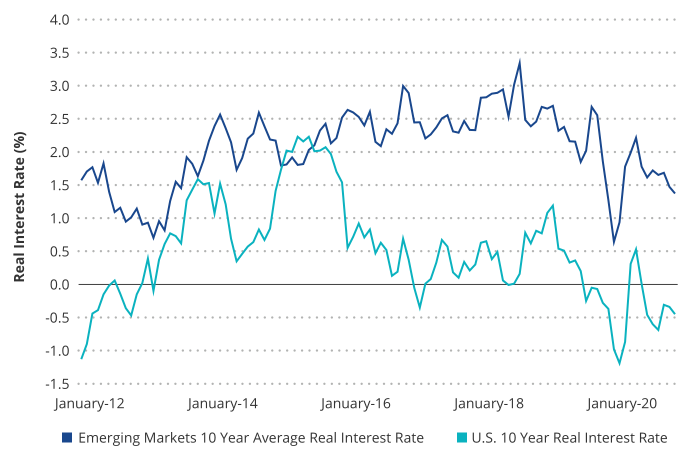
Bron: Bloomberg, as of 31/12/2020.
Lastly, EMFX remains near historical lows from a valuation perspective against the U.S. dollar. Technicals coming into 2021 favored the U.S. dollar, as many global portfolios had established large short positions. However, massive deficits and debt levels, with more stimulus and borrowing expected, as well as increased political risks are not supportive for the U.S. dollar, even though predicting when, or if, that may be reflected in its value is nearly impossible. Higher growth and more favorable debt dynamics in emerging markets will ultimately favor EMFX in the long-term, in our opinion. In the meantime investors can benefit from the yield pickup that emerging markets local currency bonds still provide as well as the diversification benefit within a global bond portfolio, with low correlation against other U.S. dollar denominated bonds.
Uitsluitend voor informatie- en advertentiedoeleinden.
Deze informatie is afkomstig van VanEck (Europe) GmbH. VanEck (Europe) GmbH is aangesteld als distributeur van VanEck-producten in Europa door VanEck Asset Management B.V., een beheermaatschappij onder Nederlands recht en geregistreerd bij de Nederlandse Autoriteit Financiële Markten (AFM). VanEck (Europe) GmbH, met als vestigingsadres Kreuznacher Str. 30, 60486 Frankfurt, Duitsland, is een financiële dienstverlener die onder toezicht staat van BaFin, de Duitse toezichthouder voor de financiële markten. De informatie is uitsluitend bedoeld om beleggers te voorzien van algemene en voorlopige informatie en mag niet worden opgevat als beleggings-, juridisch of fiscaal advies. VanEck (Europe) GmbH en de aan VanEck (Europe) GmbH verbonden en gelieerde bedrijven (samen "VanEck") wijzen elke aansprakelijkheid van de hand met betrekking tot beslissingen die de belegger op basis van deze informatie neemt ten aanzien van het kopen, verkopen of aanhouden van beleggingen. De visies en meningen die hier worden gegeven, zijn die van de auteur(s) en komen niet noodzakelijkerwijs overeen met die van VanEck. De meningen zijn actueel op de datum van publicatie en kunnen worden aangepast op basis van veranderende marktomstandigheden. Bepaalde verklaringen in deze bijdrage kunnen ramingen, voorspellingen en andere op de toekomst gerichte verklaringen zijn die niet overeenkomen met de werkelijkheid. Wij achten de informatie die afkomstig is van derden, betrouwbaar. Deze informatie is echter niet onafhankelijk gecontroleerd. De nauwkeurigheid en volledigheid ervan kunnen daarom niet worden gegarandeerd. Alle indices die worden vermeld, zijn maatstaven voor het vergelijken van algemene marktsectoren en rendementen. Het is niet mogelijk om rechtstreeks in een index te beleggen.
Alle rendementsgegevens hebben betrekking op het verleden en bieden geen garantie voor toekomstige resultaten. Beleggen brengt risico's met zich mee, waaronder mogelijk verlies van de hoofdsom. Lees het prospectus en de essentiële beleggersinformatie voordat u gaat beleggen.
Niets in dit materiaal mag in welke vorm dan ook worden verveelvoudigd en er mag ook niet naar worden verwezen in andere publicaties zonder de uitdrukkelijke schriftelijke toestemming van VanEck.
© VanEck (Europe) GmbH