Gold Drives Commodities Amid Energy Challenges
14 October 2024
Read Time 3 MIN
Mixed Performance in Q3: Precious Metals Shine While Energy Declines
Commodity index returns were mixed in the third quarter. The energy sector declined sharply due to concerns over slowing global growth and potential oversupply from OPEC’s (Organization of the Petroleum Exporting Countries) spare capacity. The precious metals sector, led by gold, was the strongest performer during the quarter. The UBS Constant Maturity Commodity Index (CMCITR) underperformed the Bloomberg Commodity Index (BCOM), which has a significantly larger exposure to gold and silver.
In the third quarter, CMCITR’s performance declined by approximately 0.86%, while BCOM rose by 0.68%. Despite this CMCITR still outperformed BCOM year-to-date by about 0.39% (6.25% versus 5.86%).
Sector Review: Gold’s Gain Spearheaded Positive Returns
The energy sector overall declined by 10%, with both WTI Crude Oil and Brent Crude Oil also falling by about 10%. The gains seen in the energy sector during the first half of the year were essentially reversed in the third quarter due to slowed economic growth in China and the European Union (EU). WTI Crude Oil traded in a range from $65 to $80, ending the quarter near the year's lows. OPEC is expected to modestly increase output in December. The ongoing war in the Middle East should continue to support prices, keeping crude within a trading range.
The precious metals sector was the top performer this past quarter, climbing approximately 12%. Gold spearheaded the gains with a 13% rise, while silver increased by 6%. Year-to-date, gold has surged 30%, outpacing all other commodity sectors. This surge is driven by investor demand for gold as a safe-haven asset amidst two wars (Middle East and Russia-Ukraine) and the U.S. election. BCOM has a 20% allocation to the precious metals sector, compared to CMCI's almost 7% allocation.
The agriculture sector gained about 3%. Additionally, coffee, cocoa and sugar led the sector higher and have been the strongest agricultural commodities all year. CMCITR has exposure to cocoa, whereas and BCOM does not. This difference in exposure has given CMCITR an advantage over BCOM.
The industrial metals sector rose approximately 2.5% in the quarter, with zinc and copper increasing by 5% and 3%, respectively. The outlook for copper improved early in the fourth quarter after China announced aggressive economic stimulus policies. CMCITR has a 25% exposure to the sector, compared to BCOM's 16% exposure. This could benefit CMCITR over BCOM in the fourth quarter.
The livestock sector rose approximately 3.5% in the quarter, with both cattle and hogs experiencing modest rallies.
Comparative Index Sector Weights
CMCITR’s higher weighting to Industrial Metals and Agriculture sectors helped offset negative performance in Q3 2024.
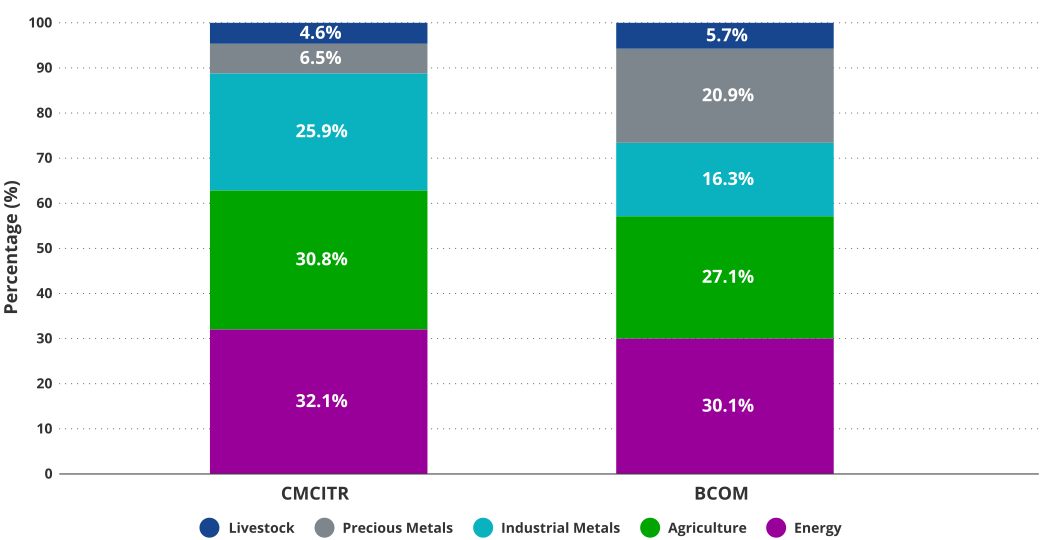
Source: VanEck, Bloomberg. Data as of September 2024.
Outlook: Opportunities in Metals and Agriculture
While the energy sector faces challenges from global economic conditions and potential oversupply, precious metals and industrial metals offer avenues for growth backed by geopolitical and economic developments. The agriculture sector is expected to remain robust, while the livestock sector is likely to see stable growth. Overall, we expect commodities to continue to perform positively during the fourth quarter.
Related Insights

Related Insights
04 November 2025

28 October 2025

16 September 2025
04 November 2025
Nuclear energy demand is growing. Here are the top ten nuclear energy companies shaping the future of clean power, along with key investing insights.
28 October 2025
14 October 2025
Commodities had mixed results as fundamentals and policy shifts took hold. Gold and copper strengthened, while energy and agriculture eased. Low-cost, disciplined producers led gains, and long-term trends remain supportive.
16 September 2025
04 August 2025
Natural resources offer a rare combination of inflation protection, portfolio diversification, and the opportunity to tap into global growth and key secular trends.