The Quiet Outperformer: Why EM Bonds Deserve a Second Look
25 June 2025
Read Time 4 MIN
The fundamental case for investing in emerging markets (EM) bonds has been building for some time, but investors have shown little interest in the asset class over the past several years. However, we believe that is changing. Ongoing tariff drama has served as a catalyst, but the long-term drivers of this shift are not new, and we believe are set to continue. Recent and longer-term returns reflect this. Emerging markets bonds have strongly outperformed U.S. and global aggregate bonds this year, as well as investment grade and high yield U.S. credit. Longer term, emerging markets bonds have been quietly outperforming the U.S. and global broad markets over the past decade, and in particular since 2022.
EM Bonds Have Outperformed Global and U.S. Markets Over the Last Decade
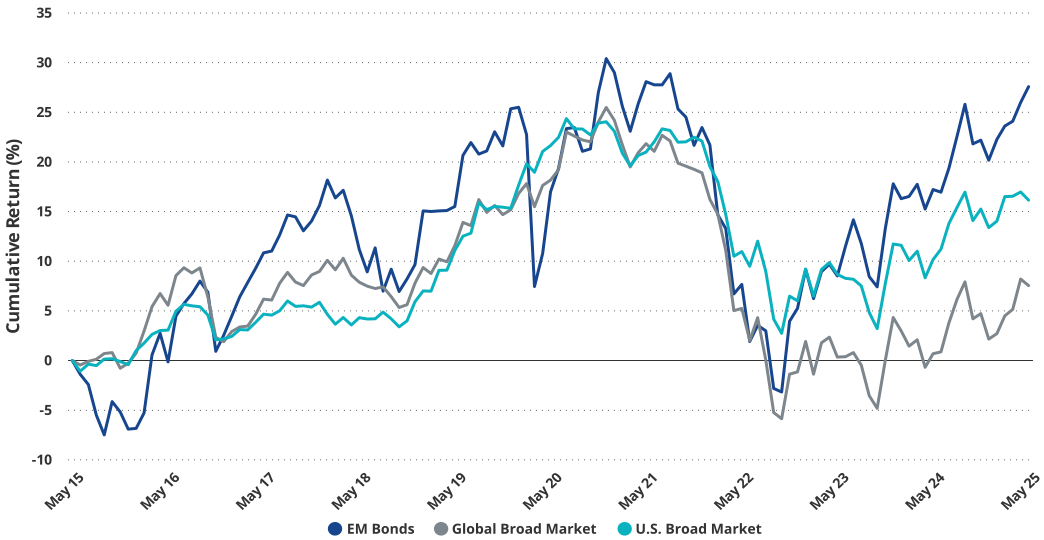
Source: Morningstar as of 5/31/2025. EM Bonds is represented by the 50% J.P. Morgan EMBI Global Diversified Index/50% J.P. Morgan GBI-EM Global Diversified Index; Global Broad Market is represented by the ICE BofA Global Broad Market Index; U.S. Broad Market is represented by the ICE BofA US Broad Market Index. Past performance is no guarantee of future results. Index performance is not representative of fund performance. It is not possible to invest directly in an index.
Performance Is Speaking Loudly
A key driver in this outperformance is the higher yield. As of May 31, 2025 EM bonds yielded 7.5%, a 2.8% increase over the broad U.S. bond market and more than 3% above the 10-year U.S. Treasury bond yield. In addition to these high nominal yields, real yields in emerging markets have been significantly higher than those in developed markets, favoring the case for local currency bonds in particular. Central banks have demonstrated a strong focus on keeping inflation under control, by hiking rates far before most developed markets and keeping real rates high. High real rates support emerging markets foreign exchange (EMFX) rates, providing central banks flexibility to ease rates if needed to support economic growth. Further, fundamental metrics, such as debt-to-GDP ratios, fiscal deficits, and current account balances compare favorably to developed markets.
Developed Markets: Growing Risk, Diminishing Reward
In addition to the long-term fundamental strength we see in emerging markets, we also see increasing risk in developed markets. Ongoing political dysfunction and the inability to address increasing debt levels means that investors may not be adequately compensated for the risk they are taking. These dynamics, as well as continued inflationary pressures, put pressure on developed markets rates, which could drive underperformance. The dollar’s ongoing role globally has started to be questioned, and recent behavior of U.S. rates and the U.S. dollar has not followed historical patterns. Heightened geopolitical risk may keep commodity prices high, stoking inflation and pushing yields higher in the U.S. while putting further pressure on the U.S. dollar – while benefiting emerging markets.
Why Now? Diversification and Dollar Dynamics
Altogether, we see a strong case for diversifying a U.S.-centric fixed income portfolio towards emerging markets bonds, given low to moderate correlation with other fixed income asset classes and strong negative correlation to the U.S. dollar (particularly local currency denominated bonds). Many investors are underinvested in EM bonds, and we believe now is the time to consider higher exposure to the asset class. With risks growing in developed markets, stronger fundamentals in EM and more attractive EM bond yields we believe outperformance can continue.
VanEck Solutions
VanEck offers active and passive investment solutions for investors to access the benefits of emerging markets bonds in their income portfolios:
The VanEck J.P. Morgan EM Local Currency Bond ETF provides exposure to local currency bonds issued by emerging market sovereign issuers. It seeks to track the J.P. Morgan GBI-EM Global Core Index, part of the most widely followed local currency benchmarks globally due to the design around liquidity and investability.
For investors seeking the higher yields available through EM corporate bonds, the VanEck Emerging Markets High Yield Bond ETF provides exposure to non-sovereign EM issuers rated below investment grade.
Related Insights

Related Insights
18 diciembre 2025
04 diciembre 2025
28 octubre 2025
26 junio 2025

18 diciembre 2025
Prepare su portafolio para 2026 con información detallada del equipo de inversiones de VanEck sobre los factores que determinarán el riesgo y los rendimientos en sus respectivas clases de activos.
04 diciembre 2025
La deuda de alto rendimiento de mercados emergentes ha extendido su dinamismo en 2025, ofreciendo un carry sólido y rendimientos atractivos. Gracias a una mayor calidad crediticia y a menores tasas de incumplimiento, este segmento presenta un perfil de riesgo más favorable que la deuda estadounidense de alto rendimiento.
28 octubre 2025
El equipo de deuda de mercados emergentes acaba de regresar de las reuniones anuales de otoño del FMI; estas son sus conclusiones.
26 junio 2025
Los riesgos de estanflación, el aumento de las probabilidades de recesión y la dinámica cambiante del poder mundial están reconfigurando el panorama de inversión, lo que obliga a los inversores a replantearse dónde reside realmente la seguridad y las oportunidades.
16 mayo 2025
Los bonos locales de los mercados emergentes están obteniendo mejores resultados en 2025, ya que ofrecen un alto rendimiento, diversificación y sólidos fundamentos en medio de la debilidad del mercado estadounidense.