El próximo ciclo de inversión en energía podría estar tomando forma
25 junio 2026
Read Time Más de 10 min
Conclusiones clave:
- La inversión en energía, y no solo los precios del petróleo, podría convertirse en un factor clave de la siguiente fase del ciclo energético.
- Las perspectivas de demanda de largo plazo siguen siendo objeto de amplio debate, determinadas por los mercados emergentes, los petroquímicos, las tendencias del transporte y el aumento de las necesidades de electricidad.
- Las empresas de servicios para yacimientos petroleros y las refinadoras podrían beneficiarse si se acelera el gasto en toda la cadena de valor de la energía.
Por qué la infraestructura energética importa más que los precios del petróleo en este momento
Cuando los mercados energéticos ocupan los titulares, la conversación suele centrarse en una sola cosa: hacia dónde se dirigen los precios del petróleo. Sin embargo, enfocarse exclusivamente en los precios de las materias primas podría hacer que los inversionistas pasen por alto una cuestión más amplia: si el sistema energético mundial cuenta con capacidad, equipos e infraestructura suficientes para cubrir las necesidades energéticas futuras bajo una amplia variedad de escenarios. Ya sea que la demanda crezca más rápido de lo previsto, que las disrupciones geopolíticas reduzcan la oferta o que el consumo de electricidad se acelere junto con el desarrollo de la inteligencia artificial (IA) y los centros de datos, cada escenario apunta en última instancia al mismo desafío: mantener una infraestructura energética adecuada.
Durante la última década, los productores de petróleo y gas han priorizado en gran medida la disciplina de capital, la reducción de deuda y la rentabilidad para los accionistas por encima de un crecimiento agresivo de la producción. Ese cambio ayudó a fortalecer los balances generales en toda la industria, pero también contribuyó a un periodo prolongado de gasto contenido en comparación con ciclos anteriores. Si bien este enfoque fue bien recibido por los inversionistas, dejó tras de sí una pregunta cada vez más relevante: ¿serán suficientes los niveles actuales de inversión para cubrir las necesidades energéticas futuras?
Esa pregunta se ha vuelto cada vez más relevante a medida que las perspectivas de demanda energética de largo plazo siguen siendo inciertas, las tensiones geopolíticas continúan afectando las cadenas de suministro y los requerimientos de infraestructura se vuelven más complejos. Al mismo tiempo, el aumento del consumo de electricidad vinculado a la inteligencia artificial (IA), los centros de datos y el desarrollo industrial está creando nuevas fuentes de demanda que van más allá de los mercados tradicionales de transporte.
En conjunto, estas fuerzas sugieren que el siguiente capítulo de la historia energética podría definirse no solo por el precio de un barril de petróleo, sino también por la cantidad de capital necesaria para producir, transportar y refinar la energía que el mundo sigue consumiendo.
En un sentido más fundamental, el desafío que enfrentan los responsables de las políticas públicas, los productores y los inversionistas no consiste simplemente en proyectar la demanda futura. Consiste en asegurar que exista suficiente capacidad de producción, transporte y procesamiento para cubrir las necesidades energéticas bajo una variedad de resultados potenciales. Esa realidad podría ayudar a explicar por qué las tendencias de inversión se están volviendo cada vez más importantes para las perspectivas del sector energético.
La historia de la demanda es más compleja que el debate sobre el "pico de la demanda de petróleo"
Pocos temas generan más debate en los mercados energéticos que la cuestión del pico de la demanda de petróleo. Si bien el concepto se ha convertido en un punto focal tanto para inversionistas como para responsables de las políticas públicas, la realidad es considerablemente más matizada que una simple narrativa de crecimiento frente a declive.
Gran parte de la incertidumbre se deriva del hecho de que las tendencias de demanda mundial divergen cada vez más por región. En muchas economías desarrolladas, las mejoras en la eficiencia del combustible, los cambios demográficos y la adopción creciente de vehículos eléctricos han contribuido a un crecimiento más lento del consumo. En contraste, la demanda en muchas economías emergentes sigue expandiéndose a medida que la industrialización, la urbanización y el aumento de los ingresos respaldan un mayor uso de energía.
China sigue siendo central en esta discusión. El país se ha consolidado como líder mundial en la adopción de vehículos eléctricos, lo que plantea preguntas legítimas sobre la demanda futura de gasolina. Sin embargo, China también sigue siendo uno de los mayores consumidores de petróleo crudo del mundo, mientras que economías vecinas como India continúan registrando un crecimiento significativo en el consumo de energía. Como resultado, es probable que la evolución en Asia siga estando entre los determinantes más importantes de la demanda mundial futura.
También es importante recordar que los combustibles para transporte representan solo una parte de la ecuación de la demanda de petróleo. El petróleo crudo sirve como materia prima clave para los petroquímicos utilizados en todo, desde plásticos y empaques hasta fertilizantes y productos de consumo. Incluso en escenarios en los que se modere el crecimiento de la demanda de gasolina, estas aplicaciones industriales podrían seguir respaldando un papel relevante del petróleo en la economía mundial.
Para los inversionistas, la conclusión más importante podría ser que la incertidumbre opera en ambos sentidos. Independientemente de dónde termine situándose la demanda, el sistema energético debe ser capaz de cubrir las necesidades de consumo bajo una variedad de resultados potenciales.
Qué significa la política de la OPEP+ para la estabilidad del mercado energético
Si bien la demanda suele dominar las discusiones sobre las perspectivas de largo plazo, las decisiones del lado de la oferta pueden tener una influencia igual de importante en los mercados energéticos.
En los últimos años, la política de producción de la OPEP+ ha seguido siendo una variable central en las perspectivas de la oferta mundial. Los objetivos de producción se han ajustado en respuesta a cambios en las condiciones del mercado, mientras que Arabia Saudita a menudo ha adoptado medidas voluntarias adicionales orientadas a gestionar el ritmo del crecimiento de la oferta. Para los inversionistas, estas decisiones importan no solo porque pueden influir en los precios del petróleo, sino también porque afectan la cantidad de capacidad ociosa de producción disponible durante periodos de tensión en el mercado.
La relevancia de estas decisiones va más allá de los movimientos diarios de los precios de las materias primas. La política de la OPEP+ sigue siendo especialmente importante porque varios países miembros concentran la capacidad ociosa de producción más observada del mercado. En la práctica, la capacidad disponible del grupo funciona como uno de los pocos amortiguadores relevantes frente a posibles choques para el sistema energético mundial.
Al mismo tiempo, los inversionistas siguen monitoreando las cuestiones relacionadas con el cumplimiento de cuotas y la dinámica interna entre los países miembros. Equilibrar las necesidades nacionales de ingresos, las consideraciones de participación de mercado y los objetivos estratégicos de largo plazo no siempre ha sido sencillo, y esas tensiones pueden influir en la evolución de las políticas de producción con el tiempo.
Para los inversionistas en energía, entender a la OPEP+ no consiste simplemente en proyectar los precios del petróleo. Las acciones del grupo pueden influir en los planes de gasto corporativo, en la economía de los proyectos y, en última instancia, en cuánta capacidad ociosa tendrá disponible el sistema energético mundial cuando ocurran disrupciones inesperadas.
Por qué el shale de EE. UU. podría verse diferente esta vez
Durante gran parte de la última década, los productores de shale de EE. UU. fueron vistos como la fuente marginal de crecimiento de la oferta mundial. El aumento de los precios solía llevar a una mayor actividad de perforación, lo que a su vez incorporaba nueva producción al mercado y ayudaba a moderar los picos de precios.
Hoy, sin embargo, las prioridades de la industria parecen estar cambiando.
Una ola de consolidación ha reconfigurado el panorama de exploración y producción, creando empresas más grandes con amplios inventarios y balances generales más sólidos. En lugar de perseguir crecimiento a cualquier costo, muchos operadores han puesto énfasis en la generación de flujo de caja libre, la disciplina de capital y la rentabilidad para los accionistas.
Al mismo tiempo, los observadores de la industria siguen debatiendo las perspectivas de productividad de largo plazo para las principales cuencas de shale. Las dudas en torno a la calidad de la superficie principal, la profundidad del inventario de perforación y los cambios en los inventarios de pozos perforados pero no terminados han contribuido a unas perspectivas más moderadas para el crecimiento futuro de la producción.
Si bien el shale de EE. UU. sigue siendo una fuente crítica de oferta mundial, muchos inversionistas ya no asumen que puede compensar por sí solo los desafíos de oferta en otras partes del mundo.
A medida que los inversionistas evalúan las perspectivas de los mercados energéticos, varios temas interconectados podrían ayudar a dar forma a la siguiente fase del ciclo de inversión en energía.
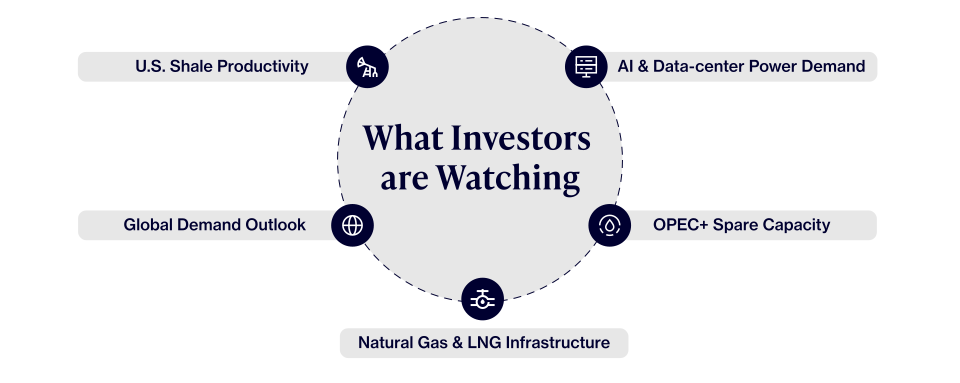
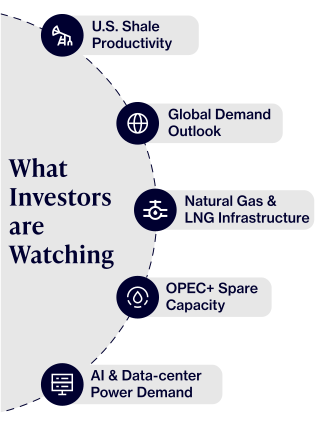
Figura 1. Varios factores interconectados podrían influir en las decisiones futuras de inversión en energía, incluidas las tendencias de demanda, la capacidad de oferta, el desarrollo de infraestructura y las fuentes emergentes de demanda de electricidad.
En conjunto, estos temas ponen de relieve la complejidad del panorama energético actual y ayudan a explicar por qué las necesidades de inversión siguen siendo un punto central de atención para productores, responsables de las políticas públicas e inversionistas por igual.
Lo que significan la geopolítica y la demanda de IA para la infraestructura energética
Aunque las proyecciones difieren sobre la trayectoria futura de la demanda energética, un tema aparece de forma consistente en muchos escenarios: mantener una capacidad energética adecuada requiere inversión continua. Ya sea que el crecimiento de la demanda supere las expectativas, surjan interrupciones en la oferta o se acelere el consumo de electricidad, el sistema energético debe estar preparado para enfrentar esos desafíos.
Varios factores estructurales podrían respaldar esa posibilidad. La inversión global en actividades upstream se mantiene por debajo de los niveles observados durante ciclos anteriores de materias primas, a pesar del crecimiento continuo de la demanda. Al mismo tiempo, muchas regiones productoras enfrentan el desafío de mantener la producción de campos maduros, un proceso que a menudo requiere actividad continua de perforación, mejoras de infraestructura y técnicas de recuperación mejorada.
Las disrupciones geopolíticas han añadido otra capa de complejidad. Ya sea reconstruir infraestructura dañada, ampliar instalaciones de exportación o modernizar sistemas energéticos envejecidos, estos proyectos suelen requerir capital significativo, experiencia en ingeniería y largos plazos de desarrollo.
La aparición de la IA y de los centros de datos a gran escala pone de relieve lo difícil que puede ser la planeación energética. Las proyecciones de la demanda futura de electricidad varían ampliamente, pero muchas implican la necesidad de infraestructura adicional de generación, transmisión y combustibles. Aunque se espera que las fuentes de energía renovable desempeñen un papel cada vez más importante, el gas natural suele considerarse una fuente potencial de energía despachable capaz de respaldar la confiabilidad de la red.
En conjunto, estas tendencias apuntan hacia un futuro en el que la seguridad energética podría depender tanto de la inversión y del desarrollo de infraestructura como de la disponibilidad de recursos.
Qué sectores energéticos podrían beneficiarse a medida que aumenta el gasto de capital (capex)
Si mantener una capacidad energética adecuada requiere una mayor inversión, distintos segmentos de la cadena de valor de la energía podrían beneficiarse de diferentes maneras.
Servicios petroleros
Las empresas de servicios petroleros proporcionan los equipos, la tecnología y la experiencia que respaldan las actividades de exploración, desarrollo y producción. Sus servicios abarcan perforación, terminación de pozos, bombeo a presión, ingeniería y mantenimiento de pozos, lo que las vincula estrechamente con los niveles generales de actividad en toda la industria.
Dado que sus ingresos suelen estar influidos por las decisiones de gasto de capital más que únicamente por los precios de las materias primas, algunos inversionistas consideran a las empresas de servicios petroleros como una forma de obtener exposición a tendencias de inversión más amplias dentro del sector energético.
Refinación
Las refinerías ocupan una posición distinta, pero igualmente importante, dentro del ecosistema energético.
En los años posteriores a la pandemia de COVID-19, varias instalaciones de refinación cerraron de forma permanente, particularmente en mercados desarrollados. Aunque se ha añadido nueva capacidad en partes de Asia y Medio Oriente, la refinación sigue siendo un segmento estratégicamente importante del sistema energético global.
La economía de la refinación está influida por una variedad de factores, entre ellos los diferenciales en la calidad del petróleo crudo, la demanda de productos y los márgenes de refinación. La demanda de diésel, combustible para aviones y otros productos destilados también está estrechamente vinculada con la actividad industrial, el transporte de carga y el comercio global, lo que genera un conjunto de dinámicas de mercado distinto en comparación con la demanda de gasolina por sí sola.
Como resultado, algunos inversionistas consideran a las refinerías como otra forma de obtener exposición a la evolución de los fundamentos del mercado energético.
Riesgos clave para las perspectivas de la infraestructura energética
Aunque la tesis de una mayor inversión energética ha atraído una atención creciente, varios riesgos podrían modificar las perspectivas.
Una desaceleración económica global podría debilitar la demanda energética y reducir la necesidad de capacidad adicional de producción. Una adopción acelerada de vehículos eléctricos, tecnologías de almacenamiento en baterías o fuentes alternativas de energía también podría reducir la demanda de hidrocarburos a largo plazo más rápido de lo que muchas proyecciones anticipan actualmente.
Los cambios en la estrategia de la OPEP+, un crecimiento inesperado de la oferta o variaciones en la política gubernamental podrían afectar aún más la dinámica del mercado. Además, los mercados energéticos siguen siendo sensibles a los acontecimientos geopolíticos, las fluctuaciones cambiarias y los cambios en las expectativas sobre tasas de interés.
Estas incertidumbres subrayan la importancia de evaluar múltiples escenarios al analizar oportunidades de largo plazo dentro del sector energético.
Cómo invertir en la cadena de valor de la energía con fondos cotizados en bolsa (ETF)
Los inversionistas que buscan exposición a estos temas podrían considerar estrategias que proporcionen acceso a distintos segmentos de la cadena de valor de la energía, incluidos:
VanEck Oil Services ETF (OIH): Proporciona exposición a empresas listadas en EE. UU. involucradas en servicios petroleros, equipos petroleros y actividades de perforación petrolera.
VanEck Oil Refiners ETF (CRAK): Proporciona exposición a empresas involucradas en la refinación de petróleo crudo y la producción de productos petrolíferos refinados, incluidos gasolina, diésel y combustible para aviones.
Lo que significa el próximo ciclo energético para los inversionistas de largo plazo
La dirección futura de los precios del petróleo seguirá siendo una consideración importante para los inversionistas en energía. Sin embargo, es posible que los precios de las materias primas por sí solos no cuenten toda la historia.
El debate en torno a los mercados energéticos a menudo se centra en las proyecciones de demanda y las expectativas de precios. Sin embargo, otra pregunta podría resultar igualmente importante en los próximos años: si el sistema energético global cuenta con suficiente capacidad de producción, transporte, procesamiento y refinación para satisfacer la demanda bajo una variedad de resultados posibles.
El crecimiento de la demanda podría evolucionar de maneras inesperadas, las disrupciones geopolíticas pueden surgir sin previo aviso y el aumento de las necesidades de electricidad podría ejercer presión adicional sobre la infraestructura existente. Independientemente del escenario que se materialice, mantener una capacidad adecuada en toda la cadena de valor de la energía probablemente requerirá inversión continua.
Para los inversionistas, eso podría hacer que las empresas responsables de construir, mantener y ampliar la infraestructura energética sean cada vez más importantes de seguir a medida que se desarrolla la siguiente fase del ciclo energético.
Related Insights


Related Insights
14 julio 2026
06 julio 2026
19 mayo 2026
19 mayo 2026
14 julio 2026
Los shocks geopolíticos del segundo trimestre de 2026 hicieron que las materias primas subieran y bajaran con fuerza. La selección activa de valores resultó fundamental, ya que el petróleo retrocedió, el oro registró una caída y el acero subió a máximos de varios años.
06 julio 2026
La energía nuclear está cobrando impulso como una solución limpia y confiable, impulsada por la innovación en la minería, la tecnología y las empresas de servicios públicos.
19 mayo 2026
Un conjunto poco visible de materiales de subproducto impulsa la vida moderna, y su suministro depende por completo de las decisiones que se toman para otras industrias. Conozca las materias primas acompañantes y por qué son relevantes ahora.
20 abril 2026
Los puntos de quiebre globales están cambiando. Los activos reales ya no son solo una cobertura; ahora están en el centro de la forma en que los portafolios resilientes enfrentaron un trimestre turbulento y marcado por tensiones geopolíticas.
16 abril 2026
Desde precios récord del oro hasta un shock en el suministro de fertilizantes, el cierre del Estrecho de Ormuz transformó los mercados de materias primas en el primer trimestre de 2026, acelerando un cambio estructural en la forma en que se valoran los recursos globales.