


Investing in ETFs can be less risky than investing in individual securities, as ETFs tend to invest in a broader number of securities. Nevertheless, ETFs are also inherently risky. Before starting to invest in them, one should be well aware of the risks involved.
- Volatility Risk: Equities in ETFs are more volatile than bonds, leading to larger price swings, especially during market crises. However, long-term investments often recover and grow over time.
- Market Risk: ETFs are affected by broad market movements. Stocks with higher beta, like tech, experience more significant swings in both directions.
- Concentration Risk: A lack of diversification can increase risk. Spreading investments across sectors, regions, and asset classes helps reduce this risk.
- Synthetic ETFs: These ETFs use derivatives, introducing counterparty risk. Physical ETFs, which own underlying assets, avoid this risk.
- Securities Lending Risk: ETFs that lend securities can generate extra income, but also carry the risk of borrower default.
Volatility as the First of the ETF Risks
Volatility refers to the extent of price fluctuations in an investment. The higher the volatility, the greater the risk an ETF carries. Broadly, equities are more volatile than bonds, meaning they experience larger price swings. This makes them more prone to significant losses and gains, which investors must be prepared for.
Volatility in Action: The 2008 Financial Crisis
Historical Drawdowns and Recoveries
Volatility of Different Asset Classes
Risk and Return Trade-Off
Market Risk and Its Impact on ETFs
Market risk belongs as well to the group of ETF risks and it refers to the risk of the general price movements in a market, such as a stock market. All stocks, bonds or ETFs that invest in them are influenced by the general market movements – if the whole market goes down, or up, your investment may react as well.
Two Types of Investment Risk
In financial markets, investments are typically subject to two distinct types of risk:
- Idiosyncratic Risk: This risk stems from the specific characteristics of an individual company or asset. It includes factors such as poor management decisions, product failures, or operational inefficiencies that could affect the company's stock price. Fortunately, idiosyncratic risk can usually be mitigated or "diversified away" by building a well-balanced portfolio. A portfolio of assets that are not perfectly correlated (i.e., they don’t move in sync with each other) can significantly reduce this type of risk.
- Market Risk (Systematic Risk): This type of risk is much broader and stems from the overall market dynamics and economic conditions. It represents factors like economic downturns, geopolitical events, or market-wide trends that influence the entire market. Unlike idiosyncratic risk, market risk cannot be diversified away, as it affects all assets to some degree.
Risk and Return Trade-Off
Visualizes how higher risk (e.g., equities) corresponds with higher potential returns, and how lower risk (e.g., bonds) corresponds with more stable returns.
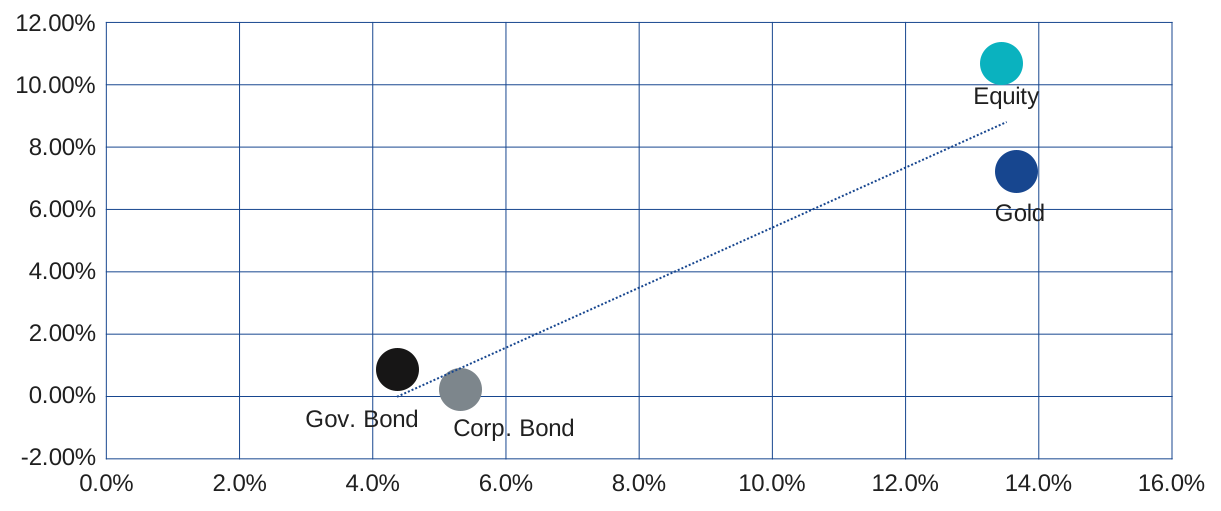
Source: Bloomberg, VanEck. Equities represented by the MSCI World, Gov. Bonds by the Markit iBoxx EUR Liquid Sovereign Diversified 1-10 Index, Corp. Bonds by the iBoxx SD-KPI EUR Liquid Corporates Index, Commodities by the Bloomberg Commodity Index and Gold by the ICE Gold Index. Data as of 2/12/2024.
Beta: A Measure of Market Risk

Market risk is often quantified using a metric known as beta. Beta measures the sensitivity of an asset (such as an ETF) to the overall market movements. An asset with a beta of 1 means it moves in line with the market—if the market goes up by 10%, the asset is likely to increase by the same percentage. A beta greater than 1 indicates that the asset is more volatile than the market, meaning it will likely amplify market movements in both positive and negative directions. Conversely, a beta less than 1 suggests that the asset is less volatile than the market.
For example, tech stocks, like those in the Nasdaq index, typically have a higher beta, meaning they experience larger fluctuations than the broader market. This heightened market sensitivity can result in higher gains during bullish markets but can also amplify losses in downturns.
The Role of Beta in ETF Investing

When investing in ETFs, it’s important to consider the beta of the underlying assets within the ETF. ETFs that track stocks with higher betas can be more volatile, offering the potential for higher returns but also exposing the investor to greater risk during periods of market downturns.
Managing Market Risk
While market risk cannot be avoided, it can be managed by adjusting the asset allocation in your portfolio. Investors with a higher risk tolerance may opt for ETFs that track high-beta stocks for the potential of higher returns, while those with a lower risk tolerance may prefer ETFs that track low-beta stocks or more stable asset classes like bonds.
Concentration Risk in ETF Portfolios
Concentration risk is a type of risk that is often underestimated by retail investors. It occurs when a portfolio is overly concentrated in a small number of assets, whether in terms of stocks, sectors, or regions. The more concentrated the portfolio, the higher might become its volatility. Even if an investor holds multiple stocks, if those stocks are from just a few sectors, countries, or investment styles, they are still exposed to significant concentration risk.
For instance, if a portfolio is heavily invested in a single sector like technology, it can be highly affected by sector-specific risks—such as regulatory changes or technological disruptions—even though the individual stocks themselves might be diverse. Similarly, a portfolio focused on one geographic region or currency may be exposed to regional economic downturns or political instability.
Diversification is the key strategy to mitigate concentration risk. By spreading investments across various asset classes, sectors, geographies, and investment styles, investors can lower the overall risk of their portfolio. This helps ensure that poor performance in one area does not disproportionately affect the entire portfolio.
Sector and Geographic Exposure in ETFs
These two graphs shows the asset allocation of a well-diversified ETF versus a concentrated one. The diversified ETF has more even distributions across sectors and regions, while the concentrated one shows heavy exposure to one sector (technology) and region(United States).
Source: Bloomberg, VanEck. Data as of 7/11/2024.
As discussed in previous sections of the ETF academy, diversification is the most effective way to reduce concentration risk. Here are a few ways to achieve a well-diversified portfolio:
- Asset Classes: Diversifying across asset classes—such as stocks, bonds, commodities, and real estate—can smooth out returns. While equities may provide higher returns over time, bonds can offer stability and lower volatility.
- Geographical Diversification: Investing in different geographic regions, such as North America, Europe, developed Asia, and emerging markets, reduces the impact of economic downturns or political instability in any one region.
- Sector and Industry Diversification: A well-balanced portfolio should include stocks from a variety of sectors (e.g., technology, healthcare, consumer goods) and industries (e.g., energy, financials, materials). This ensures the portfolio is not too exposed to any one sector’s risks.
- Investment Styles: Combining different investment styles—such as growth, value, and dividend investing—can help balance risk and return. Growth stocks may offer high returns but come with higher volatility, while value stocks tend to be more stable, providing steady growth over time.

Benefits of Diversification
The benefits of diversification are well-documented in financial literature. By spreading risk across different assets and markets, investors reduce the likelihood of a significant drawdown in their portfolios. Diversification helps to:

Reduce Volatility
A diversified portfolio is less sensitive to the swings of individual assets or sectors.

Improve Risk-Adjusted Returns
With proper diversification, investors can achieve more stable returns relative to the level of risk they are willing to take.

Protect Against Market Downturns
In the event of a market crash or sector-specific event, diversified portfolios are likely to be less affected than concentrated ones.
Interest Rate Risk in Bond ETFs
Interest rate risk is a key consideration for investors in bond ETFs. This type of risk arises from the inverse relationship between interest rates and bond prices: when interest rates rise, bond prices generally fall. This dynamic occurs because newly issued bonds with higher yields become more attractive, reducing the market value of existing bonds with lower yields.
Bond ETFs, which track a basket of bonds, are directly impacted by this phenomenon. Even ETFs holding high-quality government bonds, are vulnerable to price declines during periods of rising rates. These declines are not indicative of the issuer’s creditworthiness but rather reflect the market adjustment to higher interest rates.

Why Bond ETFs Are Sensitive to Interest Rates
Bond ETFs trade on the secondary market, meaning their prices fluctuate throughout the day based on supply and demand. When interest rates rise, investors may sell their bond ETFs in anticipation of further declines, amplifying the price impact. This dynamic is particularly evident in bond ETFs with longer durations, as longer-term bonds are more sensitive to interest rate changes than short-term bonds.

Duration measures a bond's sensitivity to interest rate changes. For example, a bond with a duration of 5 years might lose approximately 5% of its value if interest rates rise by 1%. Bond ETFs with longer average durations are more exposed to interest rate risk because they hold bonds with extended maturities. Investors in these ETFs should be aware of their portfolio's duration and the implications of rising rates.
To better understand the impact of rising interest rates, we analyze the performance of the VanEck iBoxx EUR Sovereign Capped AAA-AA 1-5 UCITS ETF (TAT) during key periods of monetary tightening. For example, during the U.S. Federal Reserve's and European Central Bank rate hikes in 2022, bond ETFs, including TAT, faced notable declines as markets adjusted to the changing rate environment. Although TAT invests in high-quality government bonds, its value experienced decreases, demonstrating that even investments in secure assets are not immune to macroeconomic pressures. This performance underscores the sensitivity of bond ETFs like TAT to broader interest rate trends.

x
x
Source: VanEck.
Investors can mitigate interest rate risk in several ways:

Diversification Across Durations
Investing in ETFs with a mix of short- and long-term bonds can help balance sensitivity to rate changes.
Focus on Short-Duration ETFs
Shorter-duration bond ETFs are less affected by rising rates and may provide more stability during periods of rate volatility.

Consider Floating-Rate Bond ETFs
Floating-rate bonds adjust their interest payments in response to rate changes, making them less vulnerable to rising rates.
Credit Risk in Bond ETFs
Credit risk is an inherent factor in bond investing, including bond ETFs, and it arises from the possibility that the bond issuer may fail to meet its financial obligations. This failure, known as default, can result in the loss of principal and interest payments for bondholders. Bond ETFs, which pool investments in various bonds, aggregate the credit risks of their underlying holdings. While diversification within ETFs can reduce the impact of a single issuer defaulting, credit risk still plays a significant role in influencing the performance and stability of bond ETFs.
The Role of Credit Ratings in Evaluating Risk
Credit ratings, assigned by agencies such as Standard & Poor’s (S&P), Moody’s, or Fitch, provide investors with a standardized measure of an issuer’s creditworthiness. Bonds are typically categorized into two broad groups based on their ratings:

Investment Grade Bonds
These bonds have higher credit ratings (e.g., AAA to BBB-) and are considered less likely to default. Bond ETFs that focus on investment-grade bonds tend to offer lower yields but are more stable.

High-Yield (Junk) Bonds
These bonds have lower credit ratings (e.g., BB+ and below) and carry a higher probability of default. High-yield bond ETFs often provide higher income potential but with increased risk.
Although credit ratings are useful, they are not foolproof. Historical examples, such as the 2008 financial crisis, have shown that even highly rated bonds can default. This highlights the importance of not relying solely on credit ratings when assessing credit risk in bond ETFs.
Yield as an Indicator of Credit Risk
Bond yields serve as another important metric for evaluating credit risk. Higher yields typically indicate higher credit risk, as investors demand greater compensation for taking on increased uncertainty. For instance:

Low-Yield Bonds
Often issued by entities with strong credit ratings and stable financial conditions, such as government or blue-chip corporate bonds.

High-Yield Bonds
Often associated with issuers facing financial challenges or operating in volatile industries. While these bonds offer attractive returns, they carry a greater likelihood of default.
For investors, balancing yield and credit risk is critical. While higher yields may be enticing, they come with the potential for greater losses if issuers default. Monitoring the yield curve of a bond ETF can provide insights into the overall risk profile of its holdings.
Examples of Credit Risk in Bond ETFs
Credit risk is not limited to corporate bonds; even government bonds can carry credit risk, particularly in emerging markets or during economic downturns. For instance:

Emerging Market Bonds
Bond ETFs focusing on emerging market debt often offer higher yields but are exposed to risks such as currency volatility, political instability, and weaker financial systems.

Corporate Bond Defaults
High-yield bond ETFs, which invest in lower-rated corporate bonds, are particularly susceptible to credit events. Companies in industries like energy or retail may struggle during economic downturns, increasing the likelihood of default.
Diversified bond ETFs mitigate some of these risks by spreading exposure across multiple issuers and sectors, but the level of credit risk depends on the ETF’s composition.
Strategies to Manage Credit Risk in Bond ETFs
Investors can take several steps to manage credit risk while investing in bond ETFs:
Diversification
Choose bond ETFs that hold a broad mix of issuers across industries and geographic regions to reduce the impact of any single default.

Focus on Investment-Grade ETFs
Opt for ETFs that invest in higher-rated bonds to minimize credit risk, even if the yields are lower.

Monitor Credit Downgrades
Keep track of changes in credit ratings for the ETF's holdings, as downgrades can signal increasing credit risk.
Understand the ETF’s Yield
Higher yields may indicate higher credit risk, so consider whether the potential returns justify the associated risks.
Blend Risk Levels
Combine high-yield bond ETFs with investment-grade ETFs to balance income generation and stability.
The Importance of Due Diligence
Credit risk can significantly influence the risk-return profile of a bond ETF. While credit ratings and yields are valuable tools for evaluating this risk, investors should also assess broader economic factors, such as interest rate trends and industry-specific risks, that may affect issuers’ ability to meet their obligations. By understanding these dynamics, investors can make informed decisions that align with their risk tolerance and financial objectives.
Synthetic ETFs and Associated Risks
Exchange-Traded Funds (ETFs) typically fall into two categories: synthetic ETFs and physical ETFs. Both offer exposure to a variety of indexes, but the risks and mechanisms of each differ significantly.
Roughly two types of ETFs exist:
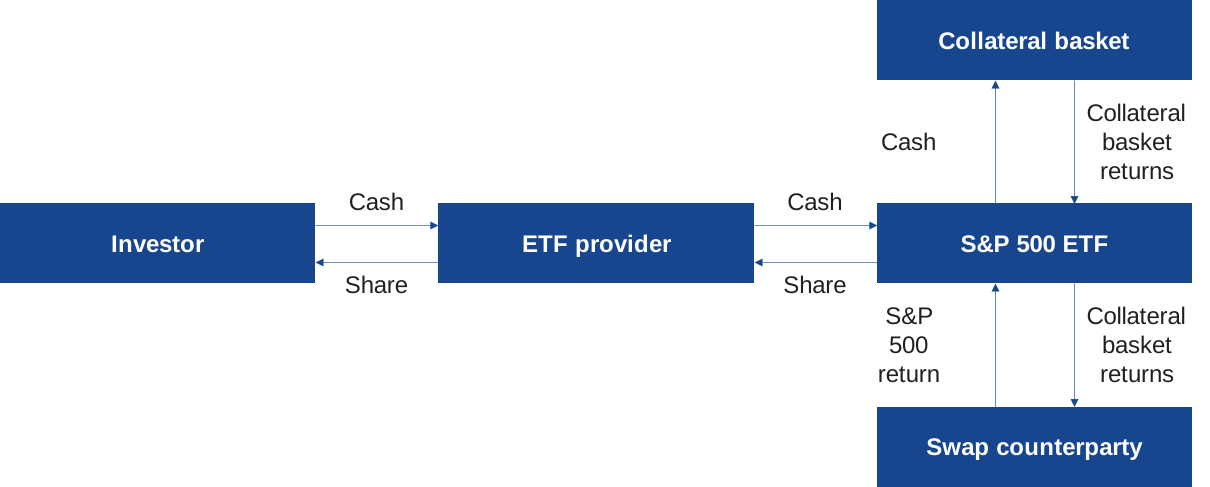
Synthetic ETFs replicate the performance of an index, but instead of investing directly in the underlying stocks or bonds, they use derivatives. These derivatives—such as swaps—are contracts where two or more parties exchange cash flows at regular intervals. In a typical arrangement, the counterparty (e.g., a bank) pays the total return on the index, while the ETF issuer pays a return on a collateral basket of securities.
Synthetic ETFs are exposed to potential counterparty risk, a key factor that makes them riskier compared to physical ETFs. Counterparty risk refers to the possibility that the institution backing the synthetic ETF may fail to meet its financial obligations, which can result in severe consequences for investors. This became a significant concern following the 2008 financial crisis, when counterparty risks became a focal point for many investors. As a result, the popularity of synthetic ETFs has declined, with their market share dropping from 40% pre-COVID to less than 15% today.
While synthetic ETFs are typically backed by collateral investments, the underlying risk remains. If the counterparty defaults or faces financial troubles, and the value of the collateral has not (yet) been adjusted for the value of the exposure (so called “basis risk”), the investor carries the risk.
Derivatives Flowchart
This chart explains how synthetic ETFs work, showing the process of swaps, counterparty risk, and collateral.
Source: VanEck.
1 Source: ETF Stream. Data as of 22nd of May 2024.
Physical ETFs: More Transparency, Less Risk
In contrast to synthetic ETFs, physical ETFs directly invest in the underlying securities—whether stocks or bonds—of the index they track. This structure offers more transparency, as investors can see exactly how their money is being deployed by the fund manager.
- No Counterparty Risk: Unlike synthetic ETFs, physical ETFs do not rely on derivatives or the creditworthiness of third parties. The fund holds the actual securities, reducing exposure to counterparty risk.
- Transparency: Investors can clearly see the assets held within the ETF, providing greater visibility into their investments.
In the case of optimized ETFs, fund managers may not hold every single security in an index but will instead invest in a representative sample. This allows for efficient management while still achieving performance that closely tracks the index.
At VanEck Europe, we currently exclusively offer physical ETFs.
Securities Lending and Its Hidden Risks
Securities lending is a lesser known but potential risk factor that falls under the broader category of ETF risks. In securities lending, ETF managers temporarily lend out the stocks or bonds held within the ETF to third parties, often institutional investors such as hedge funds. These borrowing parties typically use the securities to engage in activities like short selling, where they speculate on the decline in stock prices.
- Lending for Profit: ETF managers often enter into securities lending agreements to generate extra income. The borrower pays a fee to the ETF manager for the right to temporarily use the securities, and a portion of this fee is passed on to ETF investors. This additional income can benefit investors by providing a potential uptick in returns.
- The Risk of Borrower Default: While the income from securities lending is an attractive feature, it does come with a potential risk of loss. If the borrowing party defaults or goes bankrupt, there’s a risk that the ETF might not recover the lent securities or the associated income.
- Risk Mitigation: In many cases, the borrowing party is required to provide collateral to safeguard the ETF from losses. However, the collateral may not fully cover the losses if the borrower defaults, especially if the market value of the lent securities fluctuates significantly.
Securities Lending Flowchart
An infographic that shows the securities lending process, emphasizing the role of collateral.
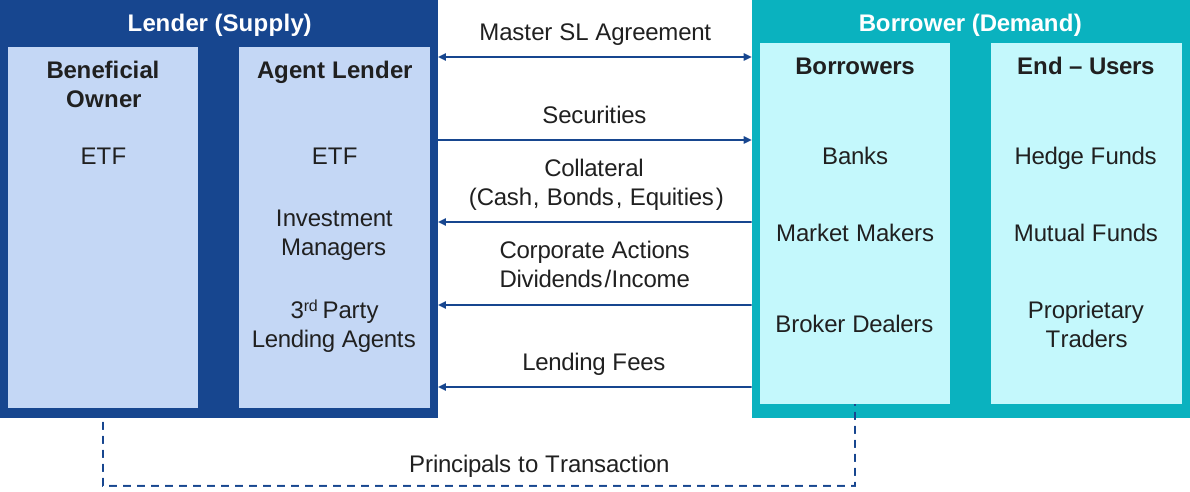
Source: VanEck following insights from Securities Lending An Introductory Guide (ISLA 2010).
Securities lending can be an opaque process, especially for individual investors. While it offers potential rewards, many investors may not be fully aware of the associated risks. The lending split, or the proportion of profits shared between the ETF issuer and investors, can sometimes favor the issuer more than the investors, especially if the ETF manager keeps a larger share of the lending income. This reduces the benefit that investors might expect from lending activities.