China’s Growth Slump – For How Much Longer?
31 October 2022
China Growth Outlook
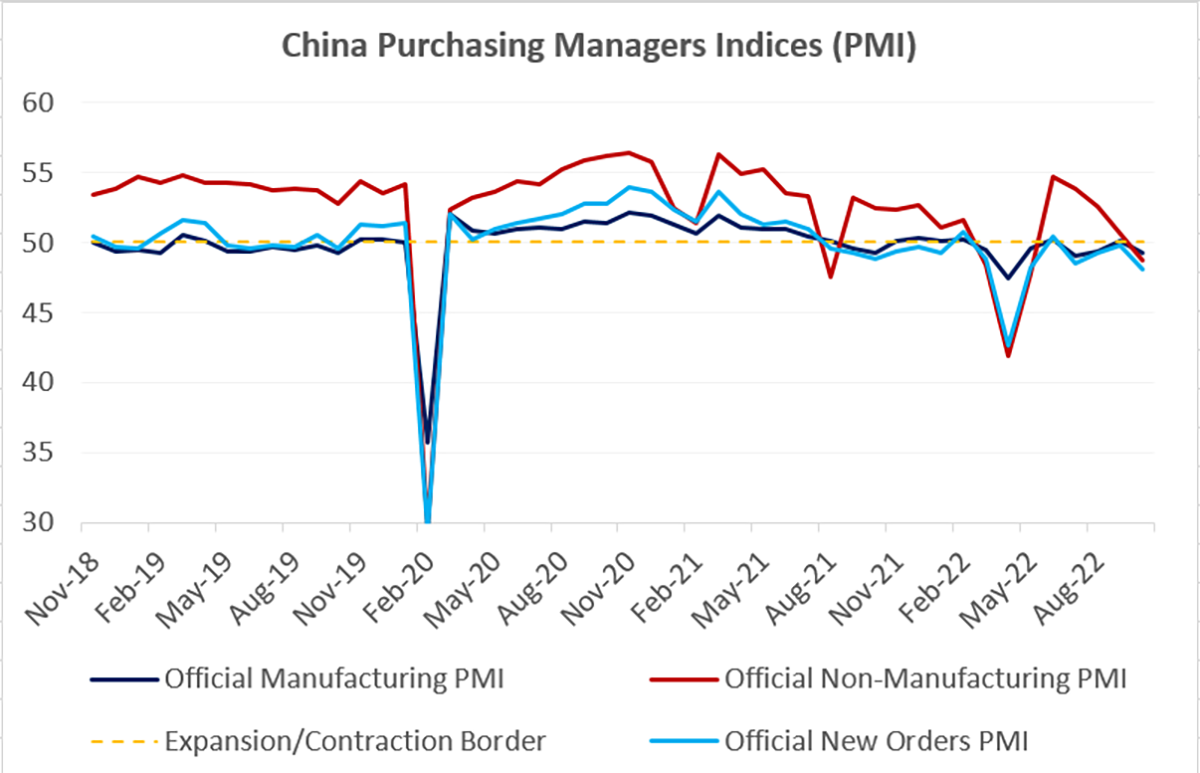
China’s upside growth surprises do not seem to last. A better-than-expected Q3 GDP print was swiftly followed by the disappointing October activity gauges, most of which ended up in the contraction zone (see chart below). This particular downside surprise was probably not completely unexpected, given that we are dealing with the same set of underlying reasons, including the zero-COVID policy (note that the survey was taken before the latest round of lockdowns) and the housing sector disruptions. The question is what authorities are going to do about it, given (a) that China had already used a lot of policy space (especially on the fiscal side) and (b) that we saw a re-arrangement of priorities during the 20th congress of the communist party (CPC), with security and social stability now ranking higher than the continuity of economic policy (albeit one can argue that growth and social stability are closely related, especially if the labor market pressures persist).
China Policy Space
China is bucking the global policy-tightening trend – an exception among systemically important economies. China is expected to post the largest primary fiscal deficit among major emerging markets (EM) and developed markets (DM) both in 2022 and 2023 (as % of GDP, according to the IMF projections). The central bank made some small interest rate cuts and pledged – on several occasions - to step up credit support for “struggling” sectors. The latest “crop” of weaker-than-expected activity signals generated more calls from observers for “comprehensive policy easing” (or something along these lines). The central bank can do more, for sure. However, the impact of additional easing on the real economy is likely to be muted as long as the zero-COVID policy stays in place.
China Growth Targets
So, are Chinese authorities OK with a slower growth path? The next set of official gatherings - including the Central Economic Work Conference in December - should shed more light on the 2023 official growth target. The IMF sees China expanding by 4.4% next year - well below the customary 5-5.5% threshold – and the CPC’s reference to a more challenging global environment and rising geopolitical risks suggest that weaker growth might be tolerated for longer. China’s upcoming credit and monetary aggregates (out next week) will be closely watched for signals of whether this is indeed the case. Stay tuned!
Chart at a Glance: China Activity Gauges – Stuck in Contraction Zone1
Source: Bloomberg LP
1We believe PMIs are a better indicator of the health of the Chinese economy than the gross domestic product (GDP) number, which is politicized and is a composite in any case. The manufacturing and non-manufacturing, or service, PMIs have been separated in order to understand the different sectors of the economy. These days, we believe the manufacturing PMI is the number to watch for cyclicality.
Related Insights

Related Insights
07 April 2025
06 March 2025
20 February 2025
16 January 2025
07 April 2025
Trump’s tariffs spark trade war fears, fueling market volatility, inflation risk, and recession threats. With global retaliation likely, near-term growth is clearly at risk.
06 March 2025
Trump’s tariffs, AI’s next phase, and a potential U.S. gold revaluation could shake markets—investors who stay ahead of these transitions will be best positioned.
20 February 2025
China's AI breakthrough, persistent inflation, gold’s outperformance, and rising energy demand underscore a shifting investment landscape.
16 January 2025
In 2025, navigating turbulence means balancing tech innovation, inflation hedges, energy shifts, and risks from spending cuts and inflation.
05 December 2024
"Trump Trade 2.0" fueled U.S. equity and digital asset rallies, while real assets faltered under a strong dollar, with global markets reacting unevenly to pro-growth policies.