EM High Yield Bonds Withstand Rising Rates
01 June 2021
Read Time 2 MIN
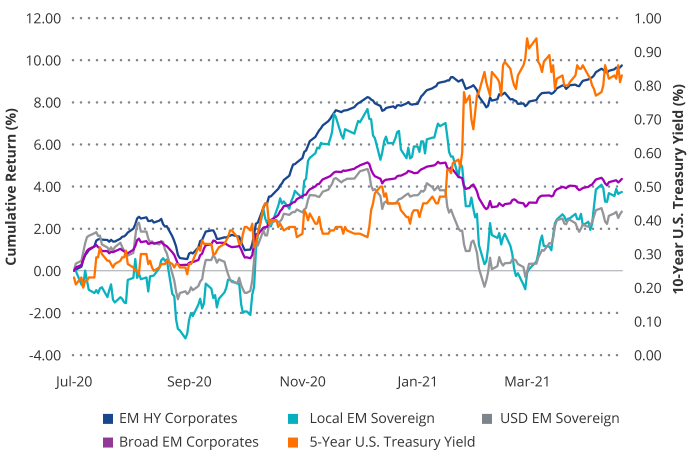
Emerging markets high yield corporate bonds have been the brightest spot within emerging markets debt in the past year, despite the increase in U.S. interest rates that began last summer and accelerated at the beginning of 2021.1 This segment of the market may also be relatively more insulated from higher local interest rates and fluctuations in the U.S. dollar, while the global exposure of many of the issuers allows the category to benefit from the spike in expected global growth rates this year. At the same time, emerging markets high yield corporates are one of the few areas where investors can still find yields that are still well above 5%.
Emerging Markets High Yield Corporates Have Outperformed Amid Rising Rates
| Index | Wtd. Average Yield | Effective Duration | |
| EM HY Corporates | ICE BofA Diversified High Yield US Emerging Markets Corporate Plus Index | 5.41 | 3.6 |
| Local EM Sovereign | JPM GBI-EM Global Diversified Index | 4.81 | 5.2 |
| USD EM Sovereign | JPM EMBI Global Diversified Index | 4.44 | 7.9 |
| Broad EM Corporates | ICE BofA US Emerging Markets Liquid Corporate Plus Index | 3.46 | 5.3 |
Source: ICE Data Indices, J.P. Morgan and Morningstar, as of 5/21/2021. Timeframe for data reflects rise of interest rates.
The lower interest rate sensitivity of emerging markets high yield corporates, compared to other U.S. dollar denominated emerging markets debt sectors, has been a key driver of outperformance versus broad emerging markets corporate debt over the past year as interest rates rose (see index definitions in table above). Emerging markets high yield corporates have a duration of 3.6, compared to 5.3 of broad emerging markets corporates and nearly 8 of USD emerging markets sovereigns. Further, the segment’s duration has remained close to where it was five years ago. The duration of USD emerging markets sovereigns, on the other hand, has extended significantly from about 6.7 five years ago, while the duration of broad emerging markets corporates was about 4.6 five years ago.2
In addition to the shorter duration, emerging markets high yield corporates benefit from a high average spread, which provides a potential cushion against rising rates. Year-to-date through 5/21/21, the average spread has tightened by 41 basis points, nearly offsetting the 47 basis point increase in the 5-Year U.S. Treasury Yield. The upshot, of course, is that spreads are now at historically tight levels. However, emerging markets high yield corporates continue to provide a spread pickup of 135 basis points versus U.S. high yield corporate bonds3. Further, with what we view as expected strong global growth, continued accommodation by central banks and very benign credit conditions, it is difficult to identify a likely catalyst for widening out, particularly if the recent calmer tone in U.S. interest rates continues. In addition, we believe with the current high exposure to Energy (15%) and Basic Industry (16%), emerging markets yield corporates may continue to benefit from the upswing in global commodity prices.
Related Insights

Related Insights
08 October 2026
11 September 2026
08 October 2026
EMBX fell 2.65% in September but beat Treasuries by a full point and is up 1.41% YTD. Conditions continue to favor EM over DM, and markets are starting to price it.
11 September 2026
EM bonds, gold, and Chinese government bonds are rising while the assets built to absorb risk are falling. The market is rethinking what counts as safe.
28 August 2026
A debt sustainability framework for a Venezuelan bond restructuring, and what it implies for recovery values.
10 August 2026
Fiscal dominance, sanctions, and war footings are combining to make DM risks clearer to markets, with Japan and Europe as the key focal points.
16 July 2026
When global risk fades, EM fundamentals take center stage; and right now, inflation discipline, high real rates, and Chinese bond resilience make a compelling case for the asset class.