Technical Tailwinds May Lift EMFX
26 November 2021
Read Time 2 MIN
Performance of emerging markets local currency bonds has been negatively impacted by the U.S. dollar’s strength since mid-year, despite the higher real yields and upside growth surprises in many emerging markets. However currency returns can be volatile, and external factors can have a bigger short-term impact on an emerging markets currency (EMFX) even if relatively attractive fundamentals may provide longer term support. In addition, we believe there are technical factors that may serve as a tailwind to emerging markets local currency bonds, particularly if there is a pause or reversal of recent dollar strength.
First, flows into the asset class have been extremely subdued, and have significantly lagged other sectors of emerging markets debt. In fact, cumulative net flows over nearly a decade have been flat, and mostly negative over the period. Over the same period, the market value of emerging markets local currency debt increased by approximately 50%1, and cumulative net inflows into U.S. dollar denominated debt have steadily increased since 2016.
Cumulative Flows into Dedicated Emerging Markets Bond Funds
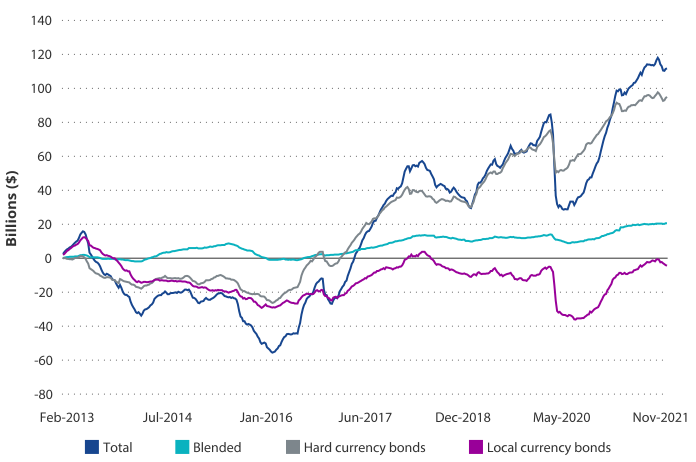
Source: EPFR Global, Barclays Research.
Another factor we believe may provide technical support is the level of foreign ownership of EM sovereign bonds. The level of foreign investor participation varies in each market, and operational, regulatory and tax considerations can limit the ease at which a foreign investor can trade local bonds, in addition to a market’s relative attractiveness and liquidity. Among countries represented in the J.P. Morgan GBI-EM Global Diversified Index, the level of foreign ownership ranges from 4% to 48%, with a weighted average of approximately 21%, which has generally declined over the past six years.2 That compares to approximately 33% in the U.S.3 Only 5% of government bonds in China, which has a 10% weight in the index, is owned by foreigners. The relative attractiveness versus developed markets, easing of investment restrictions, and global index inclusion are factors that we believe will lead to continued increases in this level. India, which is not currently included in global bond benchmarks but is on index watch for inclusion by J.P. Morgan with the potential to reach a 10% weight, has only 2% foreign participation in its sovereign bonds.
Related Insights

Related Insights
13 May 2026
Emerging markets bonds continue to perform well during the most challenging geopolitical environment of our lifetimes.
28 April 2026
The Emerging Markets Debt team just returned from Spring 2026 IMF meetings in Washington, meeting with finance, banking, and political authorities from around the world.
10 April 2026
The Iran war reshaped global dynamics, boosting EM commodities exporters and CNY as key anchors for emerging market stability.
11 March 2026
Iran-driven risks are reshaping EM debt markets. EMBX reduced Gulf exposure as valuations failed to reflect rising conflict risk and shifted toward resilient Latam and SSA commodity exporters.
06 March 2026
EM bonds outperformed in 2025 and the case of allocating continues to be supported by a weaker US dollar and stronger EM fundamentals in 2026.