What Do Inflation and Growth Mean for EMFX?
28 January 2021
Read Time 2 MIN
With reflation back on investors’ radars, emerging markets currency (EMFX) performance has been mixed at the start of the year after rallying at the end of 2020 amid U.S. dollar weakness. A lot of attention is being given to rising yields in the U.S. and the potential impact on EMFX. Longer-term, we believe there are many reasons why emerging markets local currency bonds may be attractive, and should be considered as part of a global bond portfolio.
Rising U.S. rates can have a significant impact on EMFX. However, the reason behind rising rates is ultimately more important. In this case, it is driven in part by expectations for higher growth and inflation in the U.S. this year, as vaccines are rolled out and the impact of fiscal stimulus measures kicks in. Combined with the already impressive growth out of China, global growth should benefit, and emerging markets and their currencies may be primary beneficiaries. This is not to say that growth expectations are stellar across emerging markets, but ultimately the growth pickup versus developed markets may be more meaningful.
Further, we believe a modest rise in longer term U.S. rates will be unlikely to satisfy investors’ insatiable appetite for higher yields. The 10-year rate is still nearly 0.90% below where it started in 2020 despite its gradual rise over the past several months. Further, interest rate volatility is generally more of a concern than a gradual increase and can be associated with larger unanticipated selloffs in other asset classes. Volatility in U.S. rates, however, remains low. Perhaps more importantly, real interest rates still provide a significant pickup, as shown in the chart below. Inflation expectations in the U.S. have increased, while the story has been more mixed among emerging markets. Some central banks have become more hawkish, and this may provide support for EMFX even as the Federal Reserve pins short-term rates at or near zero for the foreseeable future despite rising inflation expectations. Emerging markets central banks also benefit from “dry powder” to cut rates if needed to stimulate growth. This is exactly what many did last year, providing some support to emerging markets local bond investors.
Emerging Markets Real Interest Rates Remain Attractive
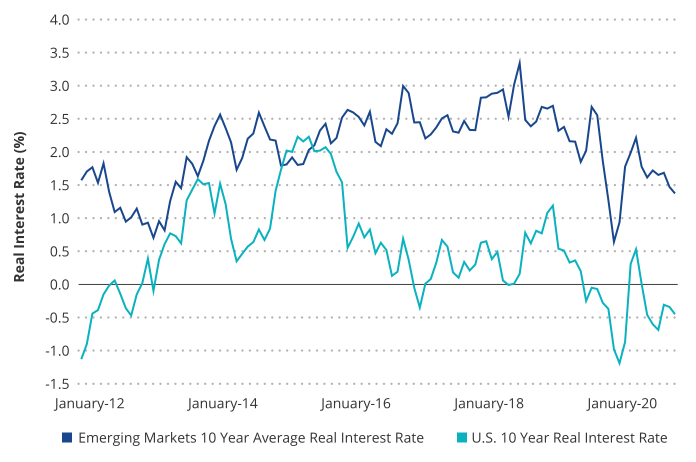
Source: Bloomberg, as of 12/31/2020.
Lastly, EMFX remains near historical lows from a valuation perspective against the U.S. dollar. Technicals coming into 2021 favored the U.S. dollar, as many global portfolios had established large short positions. However, massive deficits and debt levels, with more stimulus and borrowing expected, as well as increased political risks are not supportive for the U.S. dollar, even though predicting when, or if, that may be reflected in its value is nearly impossible. Higher growth and more favorable debt dynamics in emerging markets will ultimately favor EMFX in the long-term, in our opinion. In the meantime investors can benefit from the yield pickup that emerging markets local currency bonds still provide as well as the diversification benefit within a global bond portfolio, with low correlation against other U.S. dollar denominated bonds.
Related Insights

Related Insights
11 September 2026
11 September 2026
EM bonds, gold, and Chinese government bonds are rising while the assets built to absorb risk are falling. The market is rethinking what counts as safe.
28 August 2026
A debt sustainability framework for a Venezuelan bond restructuring, and what it implies for recovery values.
10 August 2026
Fiscal dominance, sanctions, and war footings are combining to make DM risks clearer to markets, with Japan and Europe as the key focal points.
16 July 2026
When global risk fades, EM fundamentals take center stage; and right now, inflation discipline, high real rates, and Chinese bond resilience make a compelling case for the asset class.
09 June 2026
EM bonds keep winning: low debt, commodity exports, and political tailwinds favor EM over stagflation-plagued DM - but active positioning matters, as not all EMs are created equal.