Floating Rates: Capturing Short-Term Yields as the Yield Curve Normalizes
25 November 2025
Read Time 3 MIN
Key Takeaways:
- Investors may benefit from shifting toward floating rate notes to capture higher yields and move beyond low-return cash holdings.
- Investment grade floating rate notes currently yield 5.12%, offering attractive income potential while minimizing duration risk.
- Combining FRNs with CLO exposure can enhance portfolio resilience through diversified, floating-rate income streams.
After two years of inversion, the yield curve has normalized. On October 31, 2025, the 2s/10s spread closed at +0.49% following the late October policy cut, with longer-maturity yields remaining elevated as markets reassess inflation and Treasury supply conditions. The Fed lowered the policy rate to 3.75%–4.00% on October 29 and indicated it will halt balance-sheet runoff on December 1.
Investors, however, continue to sit on record levels of cash with money market fund assets at approximately $7 trillion. While cash has been a safe rate-sensitive haven, it provides limited upside once policy rates peak. With the curve only modestly positive, a rate cutting cycle that is expected to be shallow, and continued pressure on long-term bond yields, investment-grade floating-rate notes (FRNs) remain a compelling short duration income option.
The Curve Continues to Normalize
The steepening marks a transition from the “higher-for-longer” stance that defined 2023 - 2024. However, the slow pace and shallow magnitude of rate cuts have continued to make floating rate an attractive option within an income portfolio. Market-implied expectations point to modest, maybe 2 or 3, additional cuts through 2026, contingent on data. If the labor market softens faster, easing could come sooner; if growth holds, cuts may be delayed. Elevated inflation, widening fiscal deficits and geopolitical tension have kept upward pressure on long term yields even as the Fed cuts rates.
Difference Between 10-Year and 2-Year US Treasury Yields
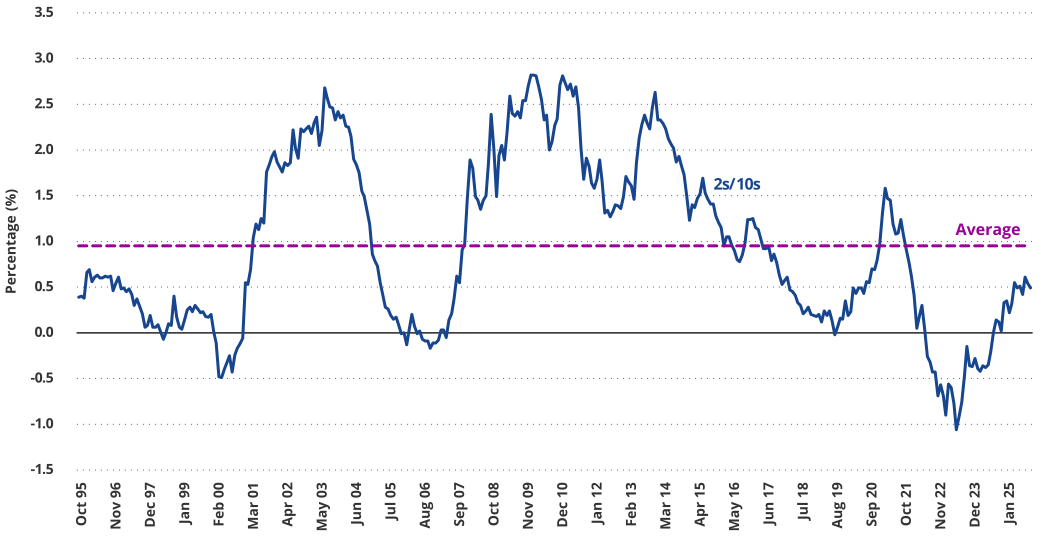
Source: ICE Data Services, VanEck.Past performance is no guarantee of future results.
For investors, this environment challenges traditional playbooks. Long-duration bonds, which prospered during decades of falling yields, now offer limited price appreciation and heightened downside if yields rise again. The recent volatility in Treasuries reflects shifting expectations for inflation and policy. Extending duration preemptively could prove costly should long yields remain stubbornly high.
Why Floating Rate Notes Still Make Sense
We believe that these factors continue to support an allocation to the short end of the yield where FRNs may provide a way to earn attractive income while minimizing exposure to rate volatility.
Floating rate notes, such as the VanEck IG Floating Rate ETF (FLTR), offer an efficient way to navigate today’s shifting rate environment. FRNs pay coupons that reset, usually quarterly, based on SOFR plus fixed spread, giving them near-zero duration and insulating prices from rate swings.
At the end of October, IG FRNs yielded 5.12%, comparing favorably with short- and fixed-rate corporate bonds (3.82% and 4.82%, respectively). Because their coupons adjust with market rates, FRNs exhibit low price sensitivity across both tightening and easing cycles. This structure helps reduce mark-to-market volatility while preserving income potential.
In short, FRNs capture today’s elevated short-term yields without adding duration risk. If short term rates decline, coupon income adjusts lower, but prices typically remain stable, a balanced trade-off between income and capital stability.
Building Resilience Through Diversification
To further strengthen an ultrashort duration approach, investors can pair FRNs with exposure to CLOs through VanEck CLO ETF (CLOI) and VanEck AA–BB CLO ETF (CLOB). CLOs are portfolios of senior secured loans with floating coupons and structural credit protection.
- CLOI focuses on IG tranches which were yielding yields 4.95% and have low credit risk. Notably, no investment grade CLO has ever defaulted post GFC.
- CLOB primarily holds AA–BB rated tranches which recently offered yields of 6.82%.
CLO structures also include built-in protections such as diversification across hundreds of loans and priority in payment waterfalls. These features have helped maintain strong performance through past cycles. For investors seeking to maintain income without extending duration, CLOs represent an attractive complement to corporate FRNs.
Related Insights

Related Insights

08 April 2026
High yield munis offer tax-exempt income, historically lower default rates than corporate high yield, and distinct sector exposure. Here's what defines this asset class.
08 April 2026
Traditional sector ETFs may not fully capture the mega-cap companies that drive sector returns, as regulatory diversification caps can limit exposure to the largest holdings.
06 April 2026
Municipal bonds offer tax-free income and improved yields, making them attractive for investors seeking higher after-tax returns. With tax-equivalent yields rising, munis present a compelling opportunity today.
02 April 2026
The setup for long-duration municipal bonds is as favorable as it's been in years. Rates, the muni curve, and credit quality all point in the same direction for MLN investors.
31 March 2026
Returns in floating rate notes are driven by two main components: short-term interest rates and credit spreads.