How Floating Rate Notes Perform When Credit Spreads Widen
23 February 2026
Read Time 3 MIN
Key Takeaways :
- When credit spreads widen, corporate FRN prices may decline temporarily as investors demand greater compensation for credit risk.
- Despite spread-driven volatility, the higher income associated with investment-grade FRNs has historically supported recovery over longer horizons.
- Because FRNs have minimal interest-rate duration, they have typically experienced smaller drawdowns than traditional fixed-rate corporate bonds during rate-driven selloffs.
How Floating Rate Notes Perform When Credit Spreads Widen
Corporate floating Rate Notes (FRNs) are often discussed when talking about interest rate risk, but credit conditions also play an important role in shaping returns. While FRN coupons adjust with prevailing short-term interest rates, changes in credit spreads can affect valuations and introduce short-term volatility.
Interest Rate Sensitivity vs. Credit Sensitivity in Corporate FRNs
FRN coupons reset periodically based on short-term reference rates, which means prices have virtually no sensitivity to changes in interest rates. Investors generally do not experience significant price losses when rates rise, nor do they benefit meaningfully from falling rates through price appreciation.
Credit conditions, however, do matter. The fixed spread over the reference rate compensates investors for credit risk, and changes in issuer creditworthiness or broader market sentiment can affect valuations as market credit spreads move.
What Happens to Corporate FRNs When Credit Spreads Widen?
When credit spreads widen, FRN prices may decline to compensate investors for the higher perceived level of risk. This spread exposure can lead to short-term volatility and drawdowns that are larger than those seen in non-credit-sensitive instruments such as Treasury FRNs or T-bills. However, the higher yield associated with credit exposure has historically allowed investment-grade FRNs to recover and outperform over longer horizons, particularly relative to traditional fixed-rate corporate bonds.
Recent Examples of Spread Widening and FRN Performance
Recent market experience illustrates this behavior. For example, during brief credit-spread widening episodes in 2023 and mid-2025 driven by economic slowdown concerns, IG FRNs experienced limited, short-lived price declines before quickly recovering as corporate fundamentals remained solid.
Although credit spreads can impact valuations, the low interest-rate duration of FRNs helped shield investors from the larger rate-driven drawdowns that can affect traditional fixed-rate bonds during periods such as 2022.
IG FRNs Outperformed (10 Years)
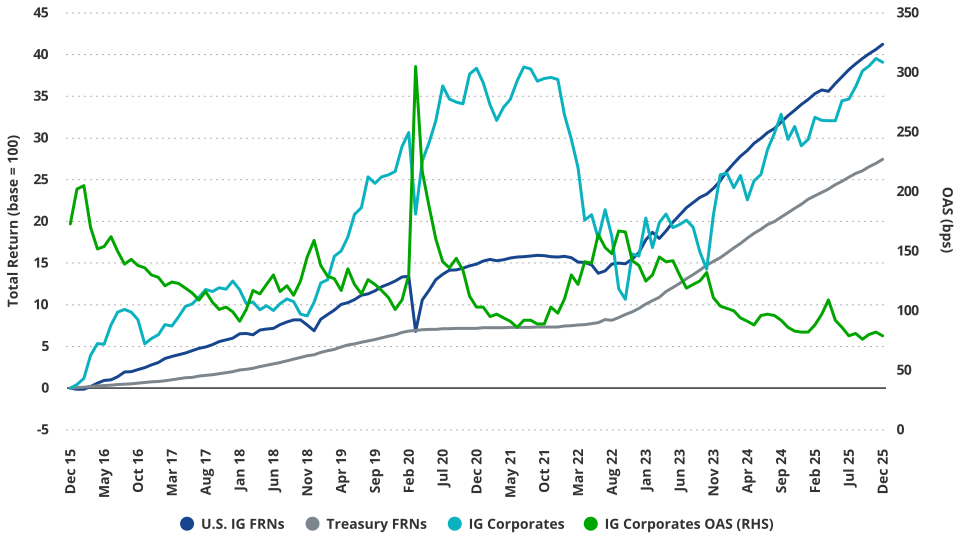
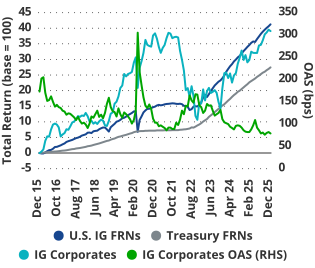
Source: Morningstar Direct, as of 11/30/2025. IG FRNs represented by MVIS US Investment Grade Floating Rate Index, US Treasury FRN by ICE BofA US Floating Rate Treasury Index, IG Corporates OAS (RHS) by ICE BofA US Corporate Index Option-Adjusted Spread.
(Right Hand Side) and IG Corporates by ICE BofA US Corporate Index. Past performance is no guarantee of future results. Index performance is not representative of fund performance. It is not possible to invest directly in an index.
Corporate FRNs and Drawdowns Over Longer Horizons
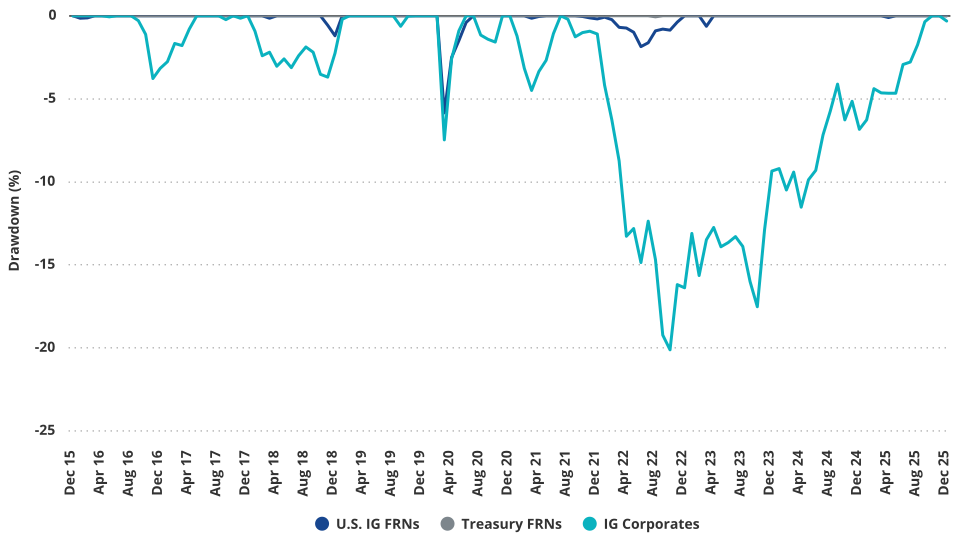
Over longer time horizons, the combination of low interest-rate duration and higher income has resulted in more stable return profiles for investment-grade FRNs relative to traditional investment-grade corporate bonds. Historically, this has translated into lower drawdowns and reduced volatility, even during periods of spread widening.
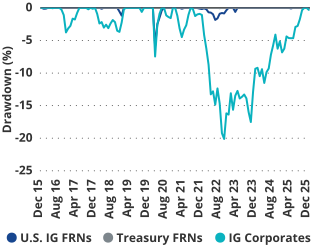
IG FRNs Lower Drawdowns than IG Corporates (10 Years)
Comparing Volatility and Drawdowns Across Fixed Income Segments
| 1 Year | 3 Years | 5 Years | 10 Years | Std Dev 10Y | Max Drawdown 10Y | |
| US IG FRNs | 5.48 | 6.78 | 4.16 | 3.46 | 2.52 | -5.84 |
| Treasury FRNs | 4.43 | 5.16 | 3.45 | 2.42 | 0.58 | -0.05 |
| IG Corporates | 6.20 | 6.32 | 0.27 | 3.30 | 6.73 | -20.11 |
Source: Morningstar Direct, as of 11/30/2025. IG FRNs represented by MVIS US Investment Grade Floating Rate Index, US Treasury FRN by ICE BofA US Floating Rate Treasury Index and IG Corporates by ICE BofA US Corporate Index. Past performance is no guarantee of future results. Index performance is not representative of fund performance. It is not possible to invest directly in an index.
How to invest in FRNs
Investors seeking exposure to investment grade corporate floating rate notes can access the asset class through the VanEck IG Floating Rate ETF (FLTR). FLTR’s underlying index has a bias towards longer-maturity notes, which tend to have greater yield without an increase in interest rate risk.
Index Descriptions:
ICE BofA US Floating Rate Treasury Index: Tracks the performance of U.S. dollar-denominated floating rate Treasury securities publicly issued in the U.S. domestic market.
ICE BofA US Corporate Index: Tracks the performance of US dollar denominated investment grade rated corporate debt publicly issued in the US domestic market.
ICE BofA US Corporate Index Option-Adjusted Spread (Right Hand Side): Is the ICE BofA US Corporate Index with a computed options adjusted spread (OAS) index of all bonds in a given rating category and a spot Treasury curve.
MVIS® US Investment Grade Floating Rate Index (MVFLTR): iA modified market capitalization-weighted index that consists of U.S. dollar-denominated floating rate notes issued by corporate issuers and rated investment grade.
Related Insights

Related Insights
24 February 2026
Preferred securities offer income potential above bonds and lower volatility than equities. Understanding sector differences helps investors position preferreds within diversified portfolios.
18 February 2026
Returns in floating rate notes are driven by two main components: short-term interest rates and credit spreads.
09 February 2026
Corporate FRNs pay floating coupons tied to short-term rates plus a credit spread, offering higher yields with minimal interest rate sensitivity. T-bills are short, zero-coupon Treasuries.
02 February 2026
BDCs and private credit funds finance middle-market firms but differ in access. BDCs offer liquidity and transparency; private credit funds are less liquid with limited access and longer lock-ups.
30 January 2026
Headline yield shows income potential, but taxes reduce what you keep. Equity investors should focus on after-tax yield. Preferreds may help boost income and improve tax efficiency.