What Drives Returns in Floating Rate Notes?
18 February 2026
Read Time 3 MIN
Key Takeaways
- Income rather than price is the primary driver of FRN returns.
- As policy rates and SOFR move, FRN coupons adjust accordingly, allowing income to rise in higher-rate environments and decline when rates fall.
- Credit spreads influence yield and spread-related volatility.
- FRNs can help manage interest rate risk within a fixed income allocation.
What Drives Returns in Floating Rate Notes?
Corporate floating rate notes (FRNs) are often used to help manage interest rate risk. Unlike fixed-rate bonds, FRNs are structured so that income adjusts with changes in short-term interest rates. As a result, their returns are driven primarily by income rather than price movements, making them potentially attractive when rates are rising or expected to remain elevated.
What Are Floating Rate Notes (FRNs)?
Corporate floating rate notes are bonds that pay a coupon linked to a short-term reference rate (usually SOFR), plus a fixed credit spread. The coupon resets periodically, allowing income to rise when short-term rates increase and decline when rates fall. Because coupons adjust regularly, FRN prices exhibit minimal sensitivity to changes in interest rates. Investors therefore avoid the duration-related price declines associated with traditional fixed-rate bonds, although they also do not benefit from falling rates through price appreciation.
Key Drivers of FRN Returns
Returns in corporate FRNs are driven by two main components: short-term interest rates and credit spreads.
Short-Term Interest Rates and Coupon Income
The primary source of FRN returns is coupons. As reference rates such as SOFR move in response to monetary policy, FRN coupons reset accordingly. When short-term rates rise, income increases; when rates fall, income declines. Given the low interest-rate duration of FRNs, price volatility from rate movements is minimal, leaving income as the dominant driver of performance.
Credit Spreads and Spread Duration
While interest rates drive the level of income, credit spreads determine how much additional yield investors earn for taking on issuer credit risk. Higher credit spreads generally result in higher income but also introduce sensitivity to changes in market credit conditions. This sensitivity, measured by spread duration, is distinct from interest-rate duration and reflects exposure to changes in credit conditions rather than policy rates. In general, a longer time to maturity is reflected in a higher spread duration.
How Interest Rate Environments Affect FRNs
FRNs in Rising Rate Environments
When short-term rates rise, corporate FRN coupons reset higher, increasing income. Because price sensitivity to rates is limited, rising yields do not create the same headwinds for FRNs as they do for fixed-rate bonds. Instead, higher income becomes the primary contributor to returns, as seen during recent “higher for longer” rate cycles.
FRNs When Rates Fall
The same dynamic works in reverse. During the period leading into the COVID-19 pandemic, rapid Federal Reserve rate cuts drove reference rates sharply lower, resulting in declining FRN coupons. While income fell, FRN prices remained relatively stable, reflecting their limited exposure to interest-rate-driven price volatility.
Short-Term Rates as the Primary Driver of FRN Income
Over time, corporate FRN returns reflect the combined effect of prevailing short-term rates and credit spreads. As policy rates and SOFR move, FRN coupons adjust accordingly, allowing investors to earn income that evolves with the rate environment while maintaining low interest-rate risk.
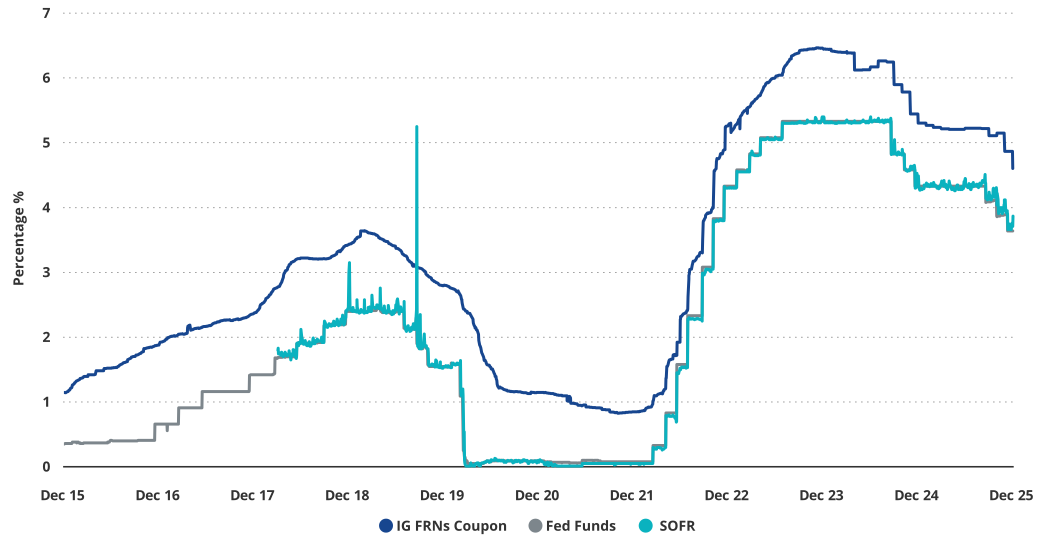
Source: New York Fed, ICE Data Services and VanEck. IG FRNs represented by MVIS US Investment Grade Floating Rate Index. Past performance is no guarantee of future results. Index performance is not representative of fund performance. It is not possible to invest directly in an index.
Why Floating Rate Notes May Help Manage Interest Rate Risk
Corporate FRNs offer a way to generate income while reducing sensitivity to rate changes. Although investors remain exposed to credit risk and spread volatility, FRNs allow returns to adjust with prevailing short-term rates rather than remaining locked into a fixed yield.
FRNs can serve as a low-duration income allocation for investors seeking yield with limited sensitivity to interest rate movements.
How to invest in FRNs
VanEck IG Floating Rate ETF (FLTR) delivers access to investment grade corporate floating rate notes. FLTR’s underlying index has a bias towards longer-maturity notes, which tend to have greater yield while maintaining relatively low interest rate sensitivity.
Related Insights

Related Insights
24 February 2026
With attractive yields, improving credit fundamentals, and a growing role as a liquid access point to private credit markets, BDCs offer a compelling alternative to traditional fixed income.
24 February 2026
Preferred securities offer income potential above bonds and lower volatility than equities. Understanding sector differences helps investors position preferreds within diversified portfolios.
23 February 2026
How do floating rate notes perform when credit spreads widen? Learn how spread risk, income and low duration shape corporate FRN returns.
09 February 2026
Corporate FRNs pay floating coupons tied to short-term rates plus a credit spread, offering higher yields with minimal interest rate sensitivity. T-bills are short, zero-coupon Treasuries.
02 February 2026
BDCs and private credit funds finance middle-market firms but differ in access. BDCs offer liquidity and transparency; private credit funds are less liquid with limited access and longer lock-ups.