Investing Beyond the Magnificent 7
20 December 2023
Read Time 3 MIN
The Morningstar® Wide Moat Focus IndexSM (the “Moat Index” or “Index”) underwent its quarterly review on December 15, 2023. The Index’s review process systematically targets attractively priced, high quality U.S. companies. Below are some key takeaways from the December review and how the Moat Index is positioned as we enter 2024.
Key Takeaways:
- You Already Own a Ton of the Magnificent 7; The Moat Index Doesn’t
The S&P 500 Index, widely owned by investors of all types by way of index funds, was also reconstituted and rebalanced last week. The result: more Magnificent 7 exposure. The “magnificent” seven companies that have dominated U.S. market returns in 2023 now account for the top eight holdings in the S&P 500 Index and approximately 28% of its weight (Alphabet (both share classes), Amazon, Apple, Meta, Microsoft, Nvidia, and Tesla). The Moat Index represents only 4.9% by way of Alphabet, Amazon, and Microsoft. In fact, the Moat Index has been consistently underweight these seven companies – even more impressive considering the Index’s stellar track record vs. the Magnificent 7-dominated S&P 500 Index.
- Value Bias with a Slight Smaller Cap Tilt
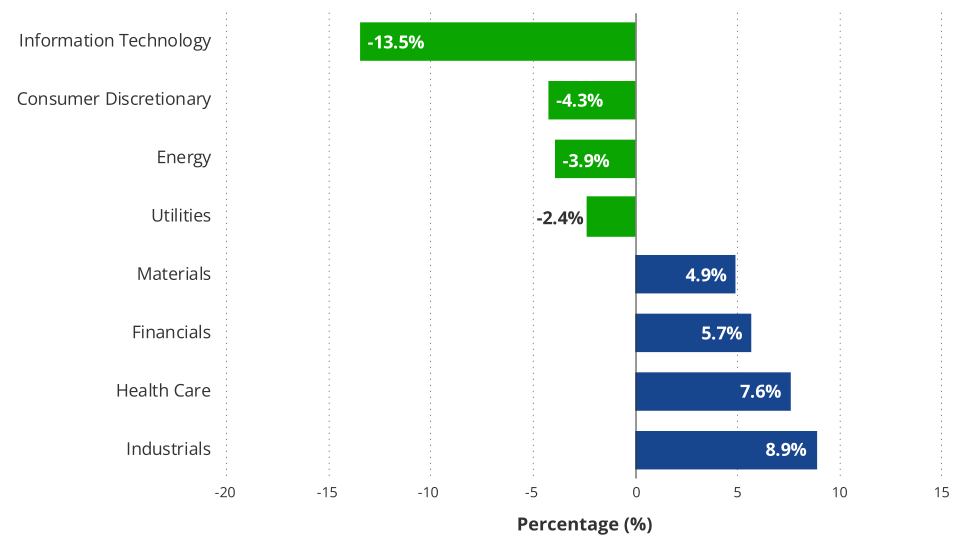
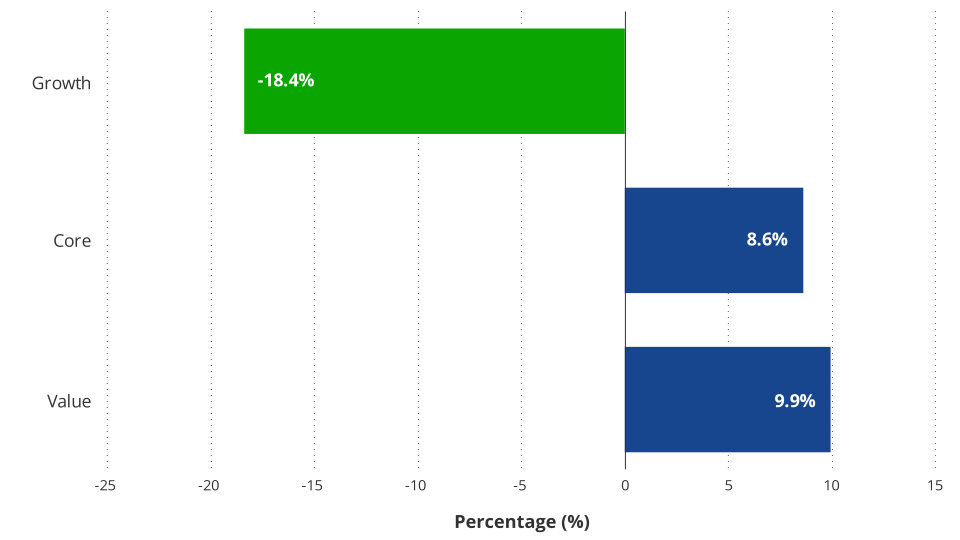
The Moat Index started the year with an overweight position in the tech sector following a particularly difficult 2022 for tech and growth stocks in general. Throughout 2023, the Index has migrated away from growth toward value stocks as valuations have signaled green pastures away from tech in more defensive sectors such as industrials, health care, and financials. Those trends continued with a modest shift further from tech and growth last week. The Index’s size profile is about as small as it has been in the last ten years. The equal weighting of the Moat Index introduces a structure market cap bias away from mega cap companies, but valuations have also pushed the Index slightly lower in the large cap segment throughout 2023.
- Identifying Pockets of Opportunity
The price/fair value ratio of the S&P 500 Index currently sits at 1.0. This implies that the companies in the S&P 500 are, overall, fairly valued according to Morningstar. This presents a challenge for investors with cash positions seeking an opportunity to invest in U.S. markets that have appreciated by more than 20% already this year. The Moat Index represents high quality companies currently mispriced by the market, in Morningstar’s view. It allows investors to consider a mix of well-positioned companies with upside potential. Currently, the Morningstar price/fair value ratio of the Moat Index is 0.83 implying a 17% discount to fair value.
4Q2023 Index Review Results
Moat Index Sector Shifts
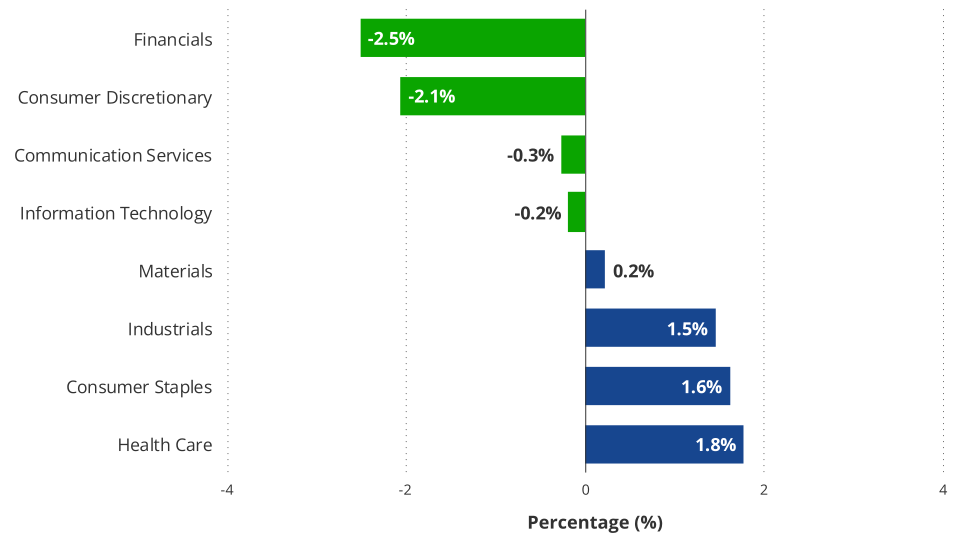
Moat Index Sector Exposure Relative to S&P 500 Index
Moat Index Style Exposure Relative to S&P 500 Index
Source: Morningstar. As of 12/15/2023 unless otherwise noted.
Access Quality Companies and Attractive Valuations
VanEck Morningstar Wide Moat ETF (MOAT) and VanEck Morningstar Wide Moat Fund seek to replicate as closely as possible, before fees and expenses the price and yield performance of the Morningstar Wide Moat Focus Index.
Related Insights

Related Insights
30 March 2026
The Moat Index added NVIDIA, Broadcom and new names following its quarterly review, as tech dislocations created opportunity, while maintaining a value tilt and notable discount to fair value.
11 March 2026
Valuation discipline and sector allocation tilted exposure towards consumer staples, industrials and health care, supporting gains as software lagged.
12 January 2026
A strong December capped a year of resilience for moat strategies, as quality stock selection and renewed exposure to mega-caps position them for 2026.
23 December 2025
The 4Q 2025 reconstitution of the Morningstar® Wide Moat Focus Index saw selective additions to the Magnificent 7, including NVIDIA and Meta, as AI-driven volatility created valuation opportunities. Despite adding growth-oriented tech names, the Index remains contrarian.
09 December 2025
Market breadth improved in November, lifting both the Moat Index and SMID Moat Index, with health care and materials driving gains despite weakness in technology and consumer names.