The Muni Brief: Big Flows, Low Drama
17 June 2026
Read Time 3 MIN
Key Takeaways:
- YTD realized volatility for broad investment grade munis is roughly 4–6%, versus 13–20%+ for major equity indices.
- Muni Sharpe ratios have held up well, supported by low volatility and solid underlying credit quality.
- Tax-equivalent yields (TEY) remain comparatively attractive on both investment grade and high yield munis.
The Muni Brief is an ongoing series of commentaries from VanEck Senior Municipal Strategist James Colby, examining current topics in the municipal bond market through the lens of the muni investor.
Record Flows
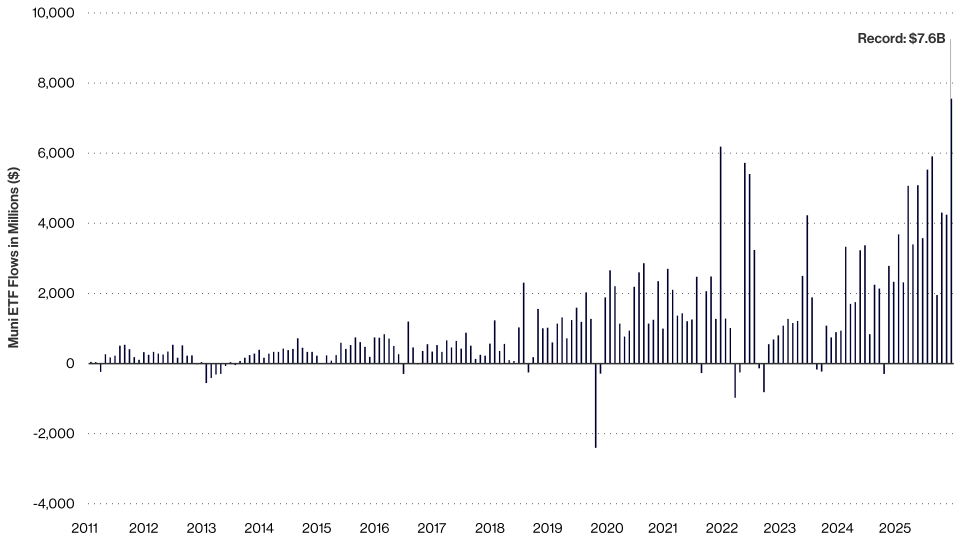
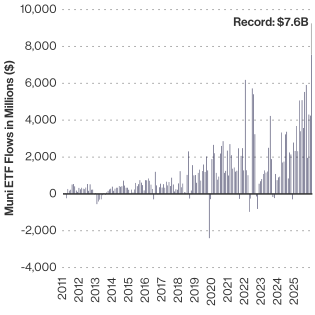
Munis continue to roll. Investors have poured roughly $24 billion in net flows into U.S. muni ETFs year-to-date, and last month set an all-time record with more than $7 billion in net inflows: the highest monthly total ever. That is big news.
Muni ETFs: May 2026 Posts Record Inflows
Source: Morningstar. As of 5/31/26.
The Volatility Gap
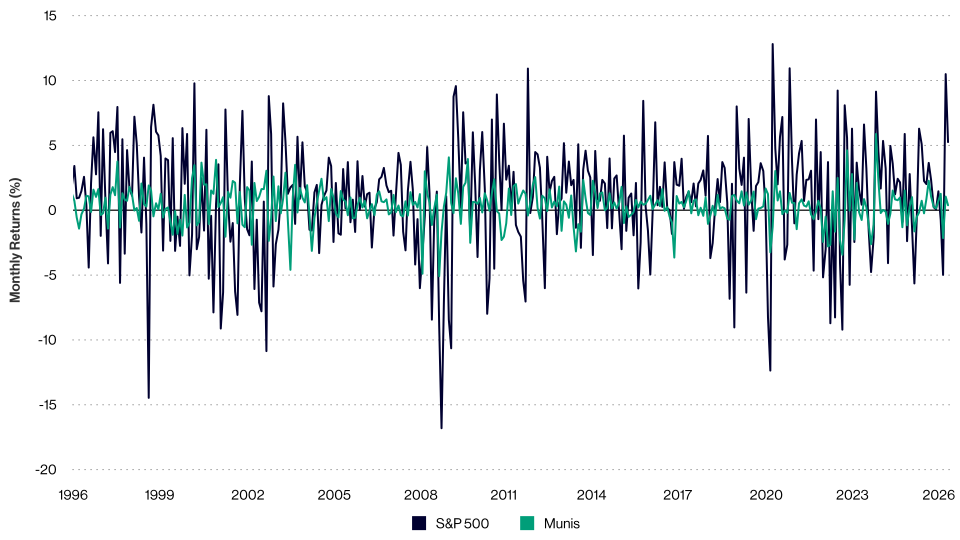
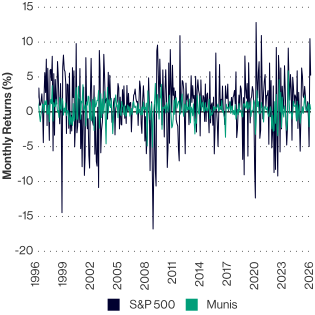
Year-to-date realized volatility for broad investment grade munis has run roughly 4–6% annualized. Major equity benchmarks ranged from about 13% for the Dow to 20%+ for the Nasdaq-100. Short-intermediate munis have been quieter still, around 2%.
Equities and municipal bonds are different asset classes with different risk and return characteristics; this comparison is for context and is not a recommendation to substitute one for the other.
Historically, that gap has reflected the nature of muni issuers rather than short-term market conditions. State and local governments, school districts, and public utilities are not subject to the earnings surprises and sentiment-driven re-ratings that move stock prices.
30 Years of Equity vs. Municipal Realized Volatility
Source: Morningstar. As of 5/31/26.
Past performance is no guarantee of future results. Volatility shown is historical and may not persist.
The Real Scorecard: Risk-Adjusted Returns
Judged on absolute return alone, munis look modest this year. But on a risk-adjusted basis the story changes: muni Sharpe ratios have held up well, precisely because volatility has stayed low and solid credit quality keeps it that way (Source: Morningstar, May 2026). Investors who maintained municipal exposure sidestepped the drawdowns that equity-heavy positioning delivered in late March.
The Yield Tells the Other Half of the Story
Low volatility is only part of the appeal. The other part is what munis pay. Yields on both investment grade and high yield municipal bonds remain comparatively attractive, and once you account for their federal tax exemption, the gap widens further. On a tax-equivalent basis, high grade munis are out-yielding Treasuries across much of the curve, as the chart below shows. For an investor in a high bracket, that after-tax income stream is hard to replicate in taxable fixed income.
As with all bonds, municipals are subject to interest-rate risk — prices generally fall when rates rise — and to credit risk, which is greater for high yield issuers.
Muni Tax-Equivalent Yields Compared to Treasuries
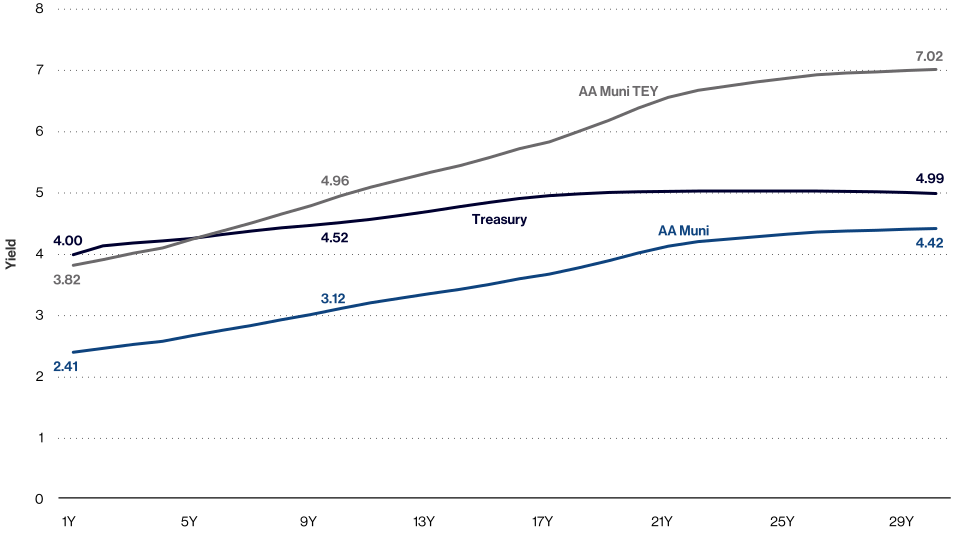
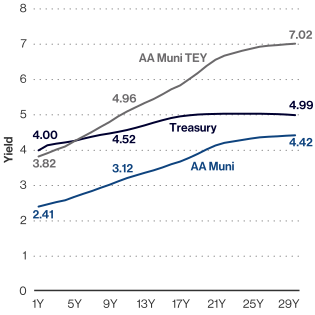
Source: ICE Indices. As of 6/9/26. TEY based on 37% tax rate.
Unlike Treasuries, which are backed by the full faith and credit of the U.S. government and whose income is exempt from state tax, municipal bonds carry credit and call risk and may be subject to state and local taxes.
Final Thoughts
The case is not complicated. As long as investors remain cautious about where new money goes, municipals may continue to attract flows, and the numbers this year explain why. Investors looking for exposure can access the municipal market through VanEck’s muni ETF suite, spanning high yield and investment grade across short, intermediate, and long durations.
Related Insights

Related Insights
26 August 2026
Treasury’s pivot toward long-bond buybacks gives duration buyers their first clear green light in months — and the November midterms may add a second leg.
11 August 2026
Redemptions are hitting a 24-month high just as summer winds down. Jim Colby on why municipal valuations and credit still make the case to stay invested.
09 July 2026
A simple question, what's the weather, has a deep apparatus behind it. It starts at the federal level and flows down to the states. Here is how that works.
02 July 2026
The discount of XMPT's underlying muni CEFs has been a historically reliable entry signal. Wide discounts have historically preceded strong returns. Tight readings may suggest waiting for the next shock.
26 May 2026
Puerto Rico and four U.S. territories can issue tax-exempt bonds under congressional authority. Here’s why that “triple exemption” matters for muni investors.