BBH ETF: Question & Answer
26 April 2022
Read Time 4 MIN
The fast growing biotech industry has seen significant advancement in recent years. In this Q&A, we address frequently asked questions about biotech companies and VanEck’s Biotech ETF (BBH).
From the COVID-19 pandemic to breakthroughs in cancer treatments, biotechnology companies are creating cutting-edge medicines, which are reshaping healthcare for people around the world. In the last decade, biotech companies have also reshaped how investors view the healthcare sector. This group of cutting-edge, innovative companies has provided explosive growth and a number of high profile IPOs over the last decade. This blog intends to answer frequently asked questions on the biotech sector, and more specifically, VanEck Biotech ETF (BBH).
- What is biotechnology and what are the different applications and use cases?
- What is the difference between biotech companies and pharmaceutical companies?
- What are some characteristics of the biotechnology industry?
- What role did biotech companies have in global healthcare during the COVID-19 crisis?
- What are the different segments comprising the MVIS®US Listed Biotech 25 Index?
- How to access the biotech industry?
- How can investors buy VanEck ETFs?
What is biotechnology and what are the different applications and use cases?
Biotechnology encompasses a wide range of procedures, research and applications related to the modification of living organisms according to human purposes. Biotechnology applications can be broken down into four broad categories, which include:
- Health care (medical).
- Crop production and agriculture.
- Non-food (industrials) use of crops (biofuels, biodegradable plastics).
- Environmental uses.
The majority of biotech-related focus on the publicly-traded equity opportunity set concerns health care, so that will be the primary focus of this Q&A.
What is the difference between biotech companies and pharmaceutical companies?
Biotechnology and pharmaceutical companies research, invent and produce medicines. However, the crucial difference is in how those medicines are derived. Biotech-based medicines are derived from living organisms, while pharmaceutical medicines are typically chemically-based.
From a top-down industry perspective, the pharmaceutical industry is a much older, more established business. The pharmaceutical industry also dwarfs the biotech industry in terms of market capitalization and revenues.
Annual Revenue and Market Capitalization as of December 2021
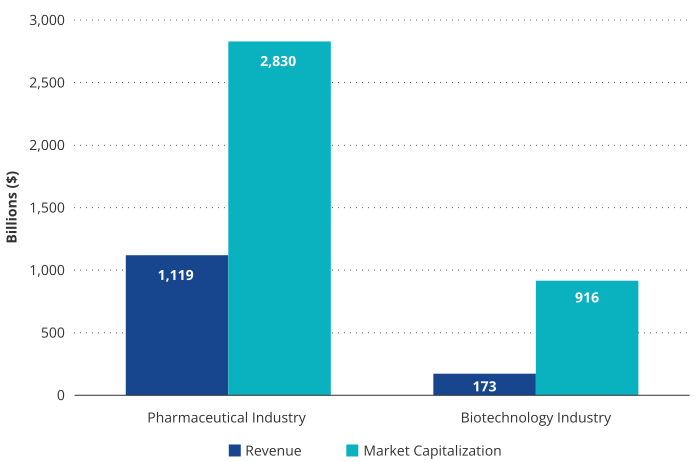
Source: VanEck as of 12/31/21. Pharmaceutical Industry is represented by the MVIS US Listed Pharmaceutical 25 Index and Biotechnology Industry is represented by the MVIS US Biotech 25 Index.
Biotechnology is a much younger industry, and is growing much faster than the pharmaceutical industry. Biotech’s annual industry revenue compounded annual growth rate (CAGR) has nearly tripled pharma’s over the last ten year (14% for biotech vs 5% for pharma).1 High growth rates naturally breed more competition for any industry, leading to a robust IPO schedule and pipeline for the biotech industry.
What are some characteristics of the biotechnology industry?
As mentioned previously in comparison with the pharma industry, biotech is a much younger industry, comprised of smaller companies that are dynamic and fast growing.
Biotech Revenue and Market Cap Growth
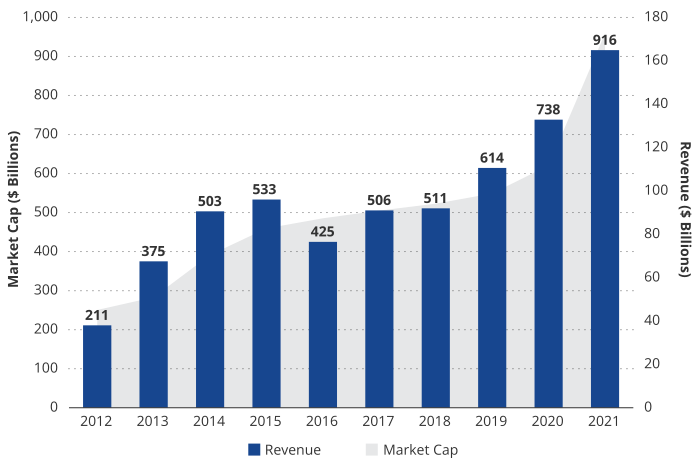
Source: VanEck as of 12/31/21. MVIS® US Listed Biotech 25 Index (MVBBHTR). Past performance is not a guarantee of future results.
Throughout the 2010’s, the biotech industry leaned into a receptive public equity market, leading to a large number of high-profile biotech IPOs and listings. IPOs are important to the industry because they allow young companies access to cash necessary to fund expensive research, and also facilitate re-investment by paying off prior investments to successful venture capitalists.
The approval process for new drugs in development is a crucial component for the success or failure for any single biotech company. In some cases, a young biotech company is focused solely on researching and developing a single drug, meaning that a positive or negative results trial can be the difference between success and failure for these types of companies.
What role did biotech companies have in global healthcare during the COVID-19 crisis?
Biotechnology companies reacted to the COVID-19 pandemic with immediate research, innovation and application. Specifically, a relatively new type of vaccine, which uses mRNA technology, helped to facilitate a global breakthrough in preventative treatment for the COVID-19 virus. Biotechnology companies like BioNTech and Moderna played a crucial role by creating a vaccine for a new, unique virus, in an unprecedented short timeframe.
In addition to the preventative vaccines, biotechnology companies have also provided other critical health infrastructure and applications related to the virus, including new antibody tests and anti-viral treatments.
What are the different segments comprising the MVIS® US Listed Biotech 25 Index?
The MVIS® US Listed Biotech 25 Index is comprised of 25 different biotech companies, which have a range of focuses and revenue streams.
| MVIS Biotech Companies | |
| RBICS Focus - Sub-Industry | Portfolio Weight (%) |
| Diversified Biopharmaceuticals | 22.0 |
| Viral Biopharmaceuticals | 20.5 |
| Bioanalytical Consumables | 12.2 |
| Other Oncology Biopharmaceuticals | 7.6 |
| Lower Respiratory Biopharmaceuticals | 6.8 |
| Clinical Limited Service CROs | 4.9 |
| Genetic Molecular Diagnostic Test Kits | 4.9 |
| Neurology Biopharmaceuticals | 4.4 |
| Other Endocrinology/Metabolism Biopharmaceuticals | 3.3 |
| Preclinical Limited Service CROs | 3.3 |
| Full Service CROs | 3.2 |
| Hematology Biopharmaceuticals | 2.8 |
| Intermediary Metabolism Biopharmaceuticals | 2.5 |
| Diversified Bioanalytical Instruments | 1.2 |
Source: Factset as of 3/31/22.
Using Factset’s proprietary RBICS methodology, we can breakout the different companies in the portfolio into the above framework. The key takeaway here is that BBH is providing access to a basket of companies which represent a variety of industries that encompass the broad biotech opportunity set. Instead of trying to pick which biotech company is going to be the big winner next year, BBH allows investors to access the opportunity in a single ETF.
How to access the biotech industry?
The VanEck Biotech ETF (BBH) seeks to replicate as closely as possible, before fees and expenses, the price and yield performance of the MVIS® US Listed Biotech 25 Index (MVBBHTR), which is intended to track the overall performance of companies involved in the development and production, marketing and sales of drugs based on genetic analysis and diagnostic equipment.
BBH requires components to be pure-play, meaning a company must generate over 50% of its revenues from biotechnology development or application.
Related Insights


Related Insights
09 April 2026


09 April 2026
Gen Z and younger millennials have reshaped finance, work, and entertainment. The GENZ ETF captures the companies built to serve the economy they created.
02 April 2026
VanEck’s TruSector ETFs are designed to deliver full market-cap sector exposure and help asset allocators track sector benchmarks with greater precision.
20 March 2026
U.S. equity markets shifted from a sector rotation driven by AI disruption fears to a broad sell-off fueled by geopolitical shocks in Iran and a surprisingly weak jobs report, raising stagflation concerns.