How Younger Generations Are Redefining Wealth Through Crypto and Collectibles
22 August 2025
Read Time 5 MIN
We’re watching a quiet shift unfold in the financial world. It’s not driven by policy changes or institutional mandates, but by how younger generations are rethinking the role of money, ownership, and value.
Millennials and Gen Z are entering an economy where many of the traditional paths to building wealth don’t feel as accessible as they once were. Real estate is out of reach for many. Public markets feel increasingly abstract or dominated by large institutions. And inflation, while rarely headline news anymore, continues to chip away at purchasing power in a way that’s hard to ignore.
That doesn’t mean this generation is disengaging from the markets. It just means they’re looking for alternative options. Among the more interesting trends are two areas that might seem unrelated at first: crypto and collectibles. They share something important. Both rely on scarcity, carry strong cultural meaning, and offer a level of ownership that feels more direct and personal.
Wealth on Their Own Terms
It’s not that younger investors are anti-finance. They’re just playing a different game based on the hand they’ve been dealt.
For many, wage growth hasn’t kept up with asset prices. Buying a home, especially in major cities, has become far more difficult. Private investment opportunities are still limited to accredited investors. And even with index funds or ETFs, the market often feels distant or detached from real life.
So the shift we’re seeing is practical. People are looking for assets that are easier to access, more transparent, and better aligned with how they live and operate day to day. That’s what makes crypto and collectibles so appealing. They offer flexibility, portability, and, in many cases, they live in the same digital environments that these generations already spend most of their time in.
Scarcity Continues to be a Signal of Value
Scarcity has always been part of the investing story. It’s what gives value to fine art, rare wine, or classic cars. What’s different now is how younger investors are applying that same thinking to a broader mix of assets.
A limited-edition trading card, a pair of collectible sneakers, or a fixed-supply token offers something you can’t easily replicate. It stands in contrast to a world that feels increasingly saturated — whether it’s liquidity, data, or content.
Scarce assets bring focus. They also create a sense of permanence in an environment where everything else can feel volatile or uncertain.
Blending Digital Scarcity and Physical Ownership
Blockchain technology made something possible that didn’t really exist before. For the first time, you could verify ownership of a digital item without needing a third party to vouch for it.
That simple shift opened the door to all kinds of possibilities. Suddenly, a digital item could be treated like a physical collectible, with transparent provenance, fixed supply, and access to global markets.
We’ve seen this play out in multiple ways:
- NFT IP Expansion: Pudgy Penguins, which began as a profile picture (PFP) NFT project, has grown into a full-fledged IP powerhouse — expanding into toys, licensing deals, and mainstream culture. It shows how digital-native communities can evolve into brands with staying power.
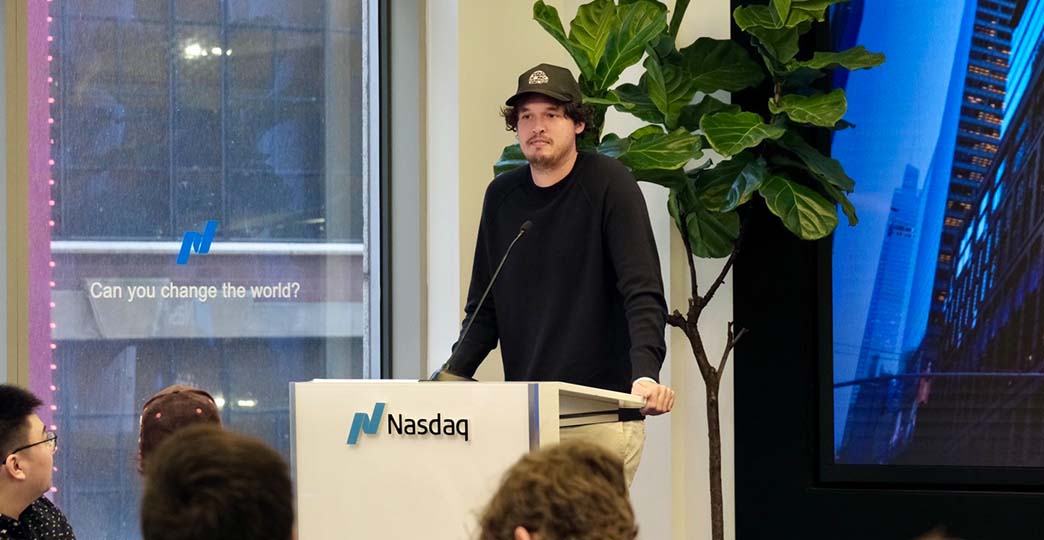
Luca Schnetzler, Pudgy Penguin CEO, speaking at VanEck’s Web3 Takeover event.
- “Phygital” Collectibles: Companies like Orange Cap Games have taken Pudgy IP as one example, a step further by creating a trading card game that bridges physical and digital. It’s not just a product; it’s a new kind of collectible experience, where ownership, gameplay, and blockchain verification all intersect.

VanEck Promo Card from Orange Cap Games.
- Tokenized Assets: Beyond IP, tokenized real-world assets now allow people to invest in trading cards, watches, or art without needing to physically custody them. NFTs tied to tangible goods provide built-in authenticity and ownership tracking.
Digital scarcity doesn’t replace physical ownership. It expands what’s possible, creating hybrid experiences that are both cultural and investable.
Assets Represent More Than Financial Value
What’s often overlooked in these conversations is that crypto and collectibles also carry cultural weight.
A rare card or a unique NFT can say something about who you are, what you value, or the communities you belong to. A wallet can function as both a portfolio and a social signal.
That might feel unusual from a traditional finance perspective, but it’s second nature to people who grew up online. Value isn’t only measured in return on capital. It’s also about meaning, relevance, and participation.
Acknowledging Risks, Yet Advancing Forward
Like any nascent market, there are risks. Volatility, fraud, and speculation are all part of the landscape. Not all platforms are equal, and not every project is built to last. But that doesn’t mean the space isn’t evolving. We’re seeing real progress in areas like custody, compliance, authentication, and regulation. Professional infrastructure is starting to support these markets in a more serious way.
It’s easy to focus on the noise, but beneath it is a clear signal. There is genuine demand for assets that blend scarcity, utility, and cultural relevance. That demand is unlikely to fade anytime soon.
Traditional Finance’s Role in a Changing Market
At VanEck, we see this trend as an opportunity, not a challenge. Potentially in the future, it could be interesting to help connect investors to the assets and strategies they care about, with the same level of trust and infrastructure they’ve come to expect from traditional financial markets.
There’s a generation coming up that wants access to scarce, verifiable, globally tradable assets. They want ownership models that reflect how they live, communicate, and build. They are not abandoning the financial system. They’re just choosing to engage with it on their terms.
That’s why we’ve begun experimenting in this space ourselves:
- SegMint: Originally launched as a collectibles marketplace, SegMint is now being developed into a backend infrastructure project designed to power the tokenization, authentication, and trading of real-world collectibles.
- Social Collectibles App (coming early 2026): On the consumer side, we’re building a social-first platform where collectors can scan, showcase, and trade their items more seamlessly — with digital binders, trade matching, and community features that make collecting more connected and rewarding.
By building bridges between established frameworks and new asset classes, we can support a broader, more inclusive definition of investing — one that reflects the full spectrum of value in a changing world.
This is a marketing communication.
This content is intended for educational purposes only. Please note that the availability of the services mentioned may vary by country.