VanEck Mid-March 2026 Bitcoin ChainCheck
19 March 2026
Read Time 10+ MIN
Please note that VanEck has exposure to bitcoin.
Key takeaways
- Bitcoin consolidates after sharp drawdown: The 30-day average bitcoin (BTC) price fell 19%, but spot prices stabilized as realized volatility dropped from 80 to 50 and futures funding rates declined from 4.1% to 2.7%.
- Options signal peak defensiveness: The put/call open interest ratio averaged 0.77, its highest since June 2021, while put premiums relative to spot volume hit an all-time high of 4 basis points.
- Onchain activity and miner selling remain subdued: Transfer volume fell 31%, daily fees dropped 27%, and long-term holder distribution slowed, while miners sold roughly all newly issued BTC.
Bitcoin ChainCheck Monthly Dashboard and Highlights
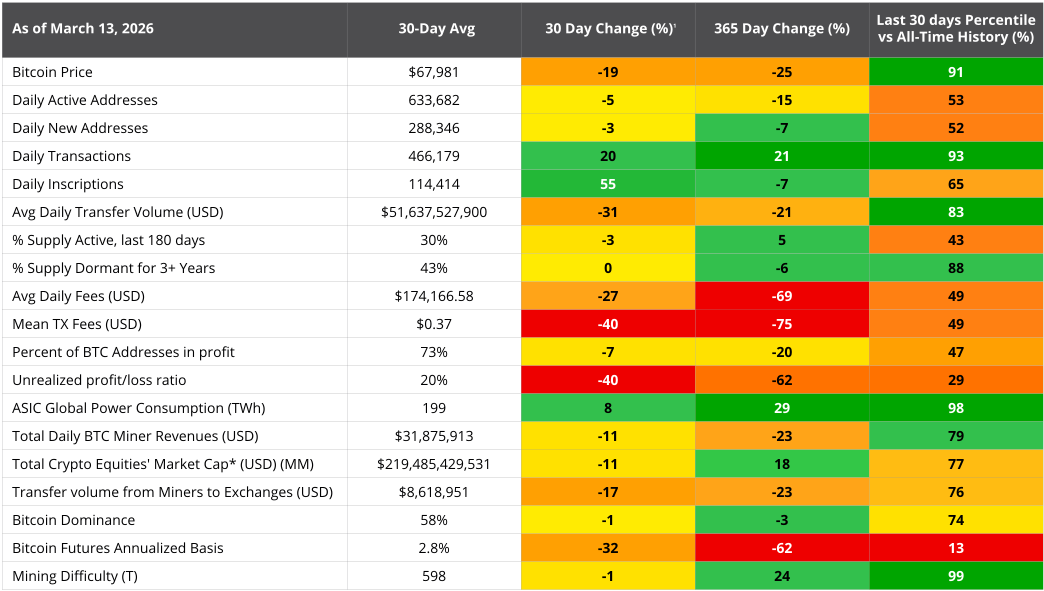
1 30 day change & 365 day change are relative to the 30-day avg, not absolute.
Source: Artemis XYZ, Glassnode as of 3/13/2026. Past performance is not a guarantee of future results. Not intended as a recommendation to buy or sell any securities named herein.
Price Action and Volatility
Bitcoin markets entered a period of consolidation over the past month as volatility declined and derivatives positioning remained subdued. While spot prices stabilized following the earlier drawdown, the 30-day average BTC price remained 19% below the prior period, reflecting weaker prices earlier in the month. Realized volatility fell sharply from roughly 80 to just above 50, suggesting speculative trading activity cooled significantly during the period. Realized volatility measures actual observed price swings over a given period, as opposed to implied volatility, which reflects the market’s forward-looking expectations.
Futures markets show a similar dynamic. Funding rates averaged 2.7%, down from 4.1% the prior month, while average BTC futures open interest declined 1% month-over-month, suggesting leverage remains subdued even as market conditions begin to stabilize.
The combination of falling volatility and declining leverage is consistent with a post-stress positioning reset, as traders de-risk and funding premiums normalize.
Options Positioning
Bitcoin options markets suggest investors remain defensive. Total options open interest rose to $33.4B (+3% m/m), indicating derivatives exposure remains elevated even as futures leverage has cooled.
The put/call open interest ratio, which compares the volume of bearish options bets to bullish ones, peaked at 0.84 and averaged 0.77, the highest level since June 2021, when China banned bitcoin mining. At current levels, the ratio sits in the 91st percentile of observations since mid-2019, highlighting unusually strong demand for downside hedging relative to bullish positioning.
The put/call open interest ratio averaged 0.77, its highest since June 2021, sitting in the 91st percentile of observations since mid-2019.
Demand for Downside Protection
Traders continue to pay significant premiums for downside protection. Total premiums paid to purchase puts declined 24% month-over-month, but at $685M over the past 30 days, they remain above 77% of monthly observations since the start of 2025.
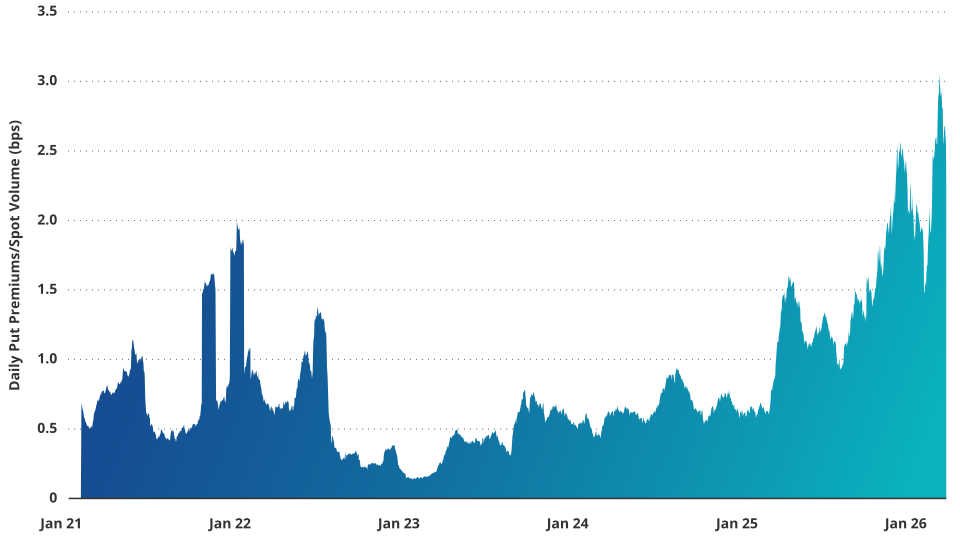
Relative to spot volume, put premiums reached an all-time high of roughly 4 basis points, roughly 3x the levels seen in mid-2022 following the Terra/Luna stablecoin collapse and the Ethereum staking liquidity crisis. Meanwhile, premiums paid to purchase calls fell 12% to approximately $562M, extending their recent weakness and highlighting a shift toward defensive positioning. Despite declining volatility, investors continue allocating significant capital toward hedging downside risk.
Put Premiums Relative to BTC Spot Volume Reached 2x Previous Cycle All-Time High
Source: Glassnode, VanEck Research as of 3/13/2026. Past performance is not a guarantee of future results. Not intended as a recommendation to buy or sell any securities named herein.
Options Skew and Volatility Premium
Not only is demand for protection elevated, the cost of that protection is rising. For the 30-day period ending March 3, 2026, the put/call premiums paid ratio reached 2.0, the highest level since summer 2022. Implied volatility on puts averaged ~66, approximately 16 points above realized volatility of ~50 and roughly 17 points above implied call volatility. This differential ranks in the 89th percentile since August 2019, indicating that puts are substantially more expensive than calls as investors aggressively hedge downside risk.
This level of implied volatility skew has historically been associated with positive forward BTC returns over both short and longer time horizons. Over the past 6 years, skew readings in this decile have corresponded to average BTC returns of +13% over the following 90 days and +133% over the subsequent 360 days, compared with average BTC returns of -4.6% and +102%, respectively.
The table below divides all historical options skew readings into 10 equal buckets (deciles), from D1 (puts cheapest relative to calls) to D10 (puts most expensive). The current reading falls in D9, the second-highest bucket. For each decile, the table shows the average bitcoin return over the following 90 and 360 days, along with how that return ranks against all other deciles. D9 has produced the strongest average 90-day return (+13.2%, ranked #1) and the 3rd-strongest 360-day return (+133.2%), suggesting that extreme put demand at current levels has historically preceded meaningful price recoveries.
Current Skew is in the D9 Decile
| Decile | 90d Mean (%) | 90d Rank | 360d Mean (%) | 360d Rank |
| D1 (Most Negative) | -30.50 | 10 | 176.30 | 2 |
| D2 | -11.00 | 7 | 221.90 | 1 |
| D3 | 9.30 | 2 | 41.90 | 10 |
| D4 | 6.50 | 3 | 60.00 | 7 |
| D5 | -4.00 | 6 | 45.90 | 9 |
| D6 | -21.80 | 9 | 87.80 | 6 |
| D7 | -12.00 | 8 | 105.00 | 4 |
| D8 | 5.20 | 4 | 90.90 | 5 |
| D9 | 13.20 | 1 | 133.20 | 3 |
| D10 (Most Positive) | -1.10 | 5 | 59.80 | 8 |
| Overall BTC Average | -4.6 | N/A | 102.2 | N/A |
Source: Glassnode as of 3/13/2026. Past performance is not a guarantee of future results. Not intended as a recommendation to buy or sell any securities named herein.
In plain terms: when options markets have been this fearful in the past, bitcoin has tended to recover. The current level of defensiveness, while warranted by recent price action, has historically marked periods closer to market bottoms than tops.
Onchain Network Activity
Onchain activity, which measures transactions settled directly on the bitcoin blockchain, declined broadly month-over-month across most major network indicators.
Over the past 30 days:
- Transfer volume declined 31%
- Total daily fees fell 27%
- Daily active addresses declined 5%
- Mean transaction fees dropped 40%
Total transaction count was the one bright spot, rising modestly during the period.
Muted network activity suggests limited speculative participation directly onchain, though this dynamic may also reflect the increasing role of offchain trading venues, derivatives markets, and ETPs. As Bitcoin becomes more financialized, a growing share of trading activity occurs without generating onchain settlement transactions.
Traditional network activity metrics may therefore capture a shrinking share of total market activity compared with earlier cycles.
Long-Term Holder Distribution
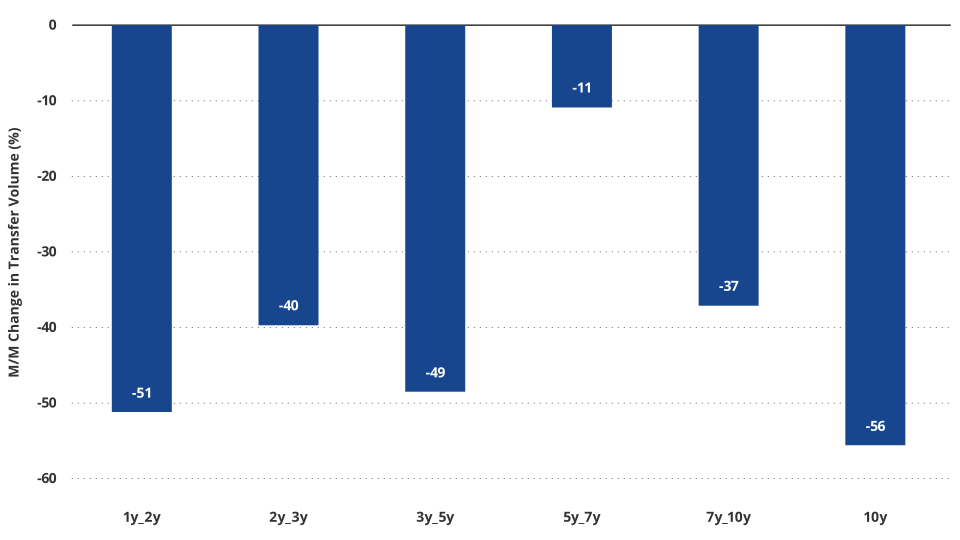
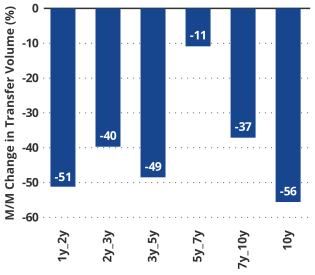
Long-term holder selling appears to be slowing, a potentially constructive signal. Transfer volume declined month-over-month across every age cohort, indicating that older coins (which tend to represent long-term investors and early holders) are being spent less frequently. Declining transfer activity among these cohorts typically signals reduced distribution pressure from experienced market participants.
This reduction in long-term holder spending coincided with a decline in active long-term Bitcoin supply from 31% to 30%, suggesting that a slightly smaller share of circulating BTC has transacted recently.
Transfer Volume Fell for Each Age Band
Source: Glassnode as of 3/13/2026. Past performance is not a guarantee of future results. Not intended as a recommendation to buy or sell any securities named herein.
Miner Economics
Economic pressure on bitcoin miners intensified during the past month. Total miner revenues declined 11%, while bitcoin mining equities fell roughly 7%, reflecting weaker profitability across the sector.
Despite this deterioration in economics, miners did not meaningfully increase selling pressure. Miner outflows to exchanges rose only 1% in BTC terms, suggesting most operators are attempting to preserve their remaining reserves rather than aggressively liquidating holdings.
Industry developments highlight growing strategic shifts within the mining sector. Bitdeer has sold its entire BTC treasury, while Core Scientific, MARA, and others have signaled plans to monetize holdings as they pivot toward AI infrastructure businesses. These moves underscore the increasing capital pressures facing miners as the economics of pure-play Bitcoin mining tighten.
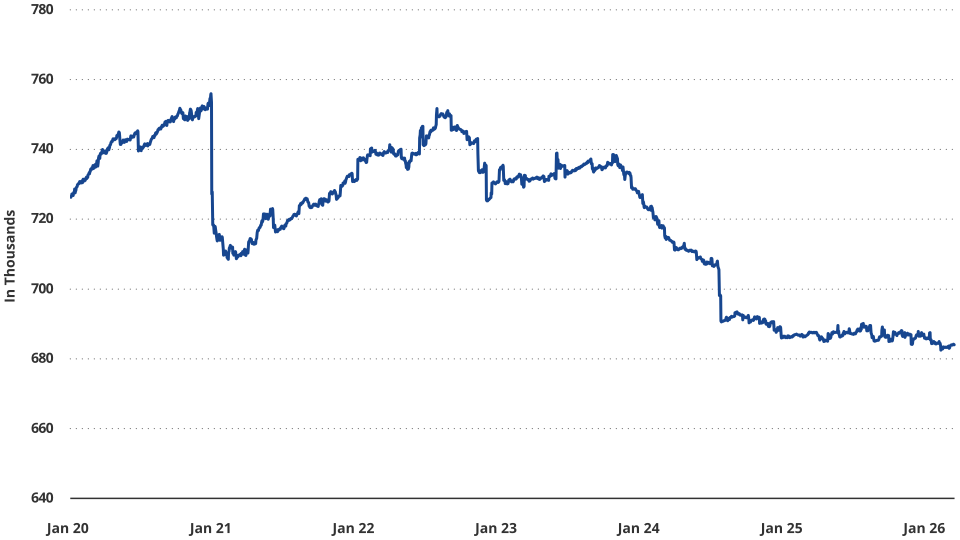
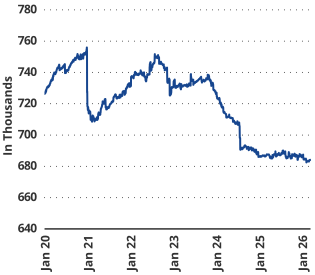
Total miner balances (excluding wallets attributed to Satoshi Nakamoto, bitcoin’s pseudonymous creator) currently sit at approximately 684,000 BTC, down only ~0.5% year-over-year. Over the same period, roughly 164,000 new BTC were mined, suggesting miners effectively sold the entire newly issued supply.
Aggregate miner balances have been gradually declining since late 2023, indicating that the industry has steadily distributed coins to fund operations and capital expenditures. Should Bitcoin prices remain depressed, miners may be forced to accelerate BTC sales to cover recurring dollar-denominated costs, potentially increasing supply pressure.
Total Miner BTC Holdings Have Been Falling Since Fall 2023
Source: Glassnode as of 3/13/2026. Past performance is not a guarantee of future results. Not intended as a recommendation to buy or sell any securities named herein.
Trader Profit and Loss
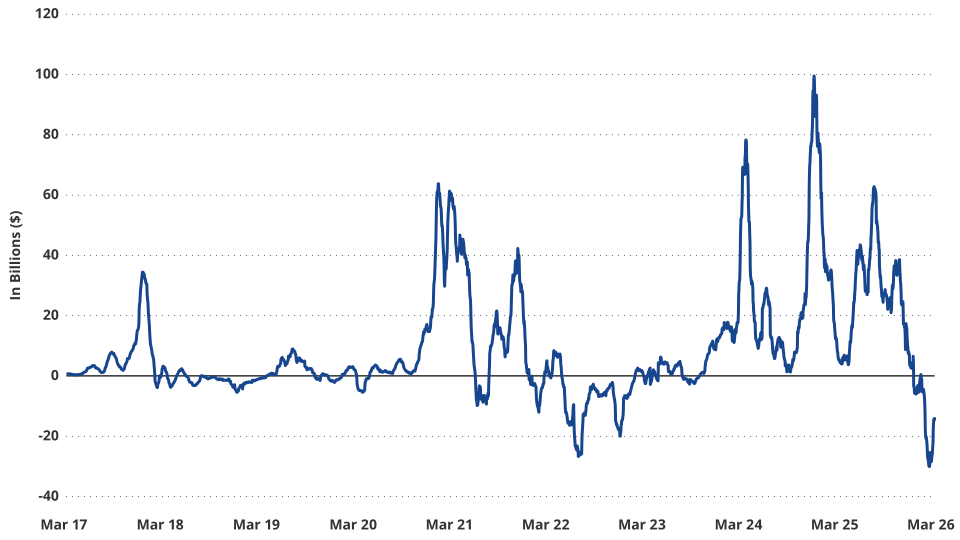
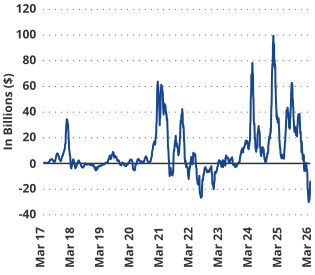
Trailing 30-day realized profit and loss, which tracks the net value of coins sold above or below their purchase price, offers an additional lens into investor sentiment. Elevated realized losses typically coincide with capitulation during late-stage drawdowns, while declining realized losses may signal seller exhaustion, a precondition for price stabilization. Monitoring this metric alongside the derivatives signals discussed above may help identify inflection points where selling pressure fades and a floor begins to form.
Trailing 30 Day Realized Profit and Loss
Source: Glassnode as of 3/13/2026. Past performance is not a guarantee of future results. Not intended as a recommendation to buy or sell any securities named herein.
Market Structure Conclusions
Taken together, current market dynamics suggest:
- Cooling speculative leverage in futures markets
- Elevated demand for downside hedging in options markets
- Subdued onchain activity as trading shifts toward ETPs and derivatives
- Declining distribution from long-term holders
- Moderate but manageable miner supply pressure
While bitcoin prices have stabilized in recent weeks, investor positioning across derivatives and onchain activity remains cautious, suggesting markets may still be consolidating following earlier volatility.
Frequently Asked Questions
What does the bitcoin put/call ratio indicate about market sentiment?
The put/call open interest ratio measures the relative demand for downside protection (puts) versus bullish bets (calls). At 0.77, the current ratio sits in the 91st percentile of all observations since mid-2019, indicating that investors are unusually defensive. Historically, extreme readings in this metric have preceded meaningful price recoveries, with average 90-day returns of +13% when the ratio reaches this decile.
Why is bitcoin onchain activity declining even as prices stabilize?
Onchain transaction volume and fees have declined because a growing share of bitcoin trading occurs through offchain venues, including derivatives markets, centralized exchanges, and ETPs. As Bitcoin becomes more financialized, traditional network metrics capture a shrinking portion of total market activity, making them less reliable as standalone sentiment indicators compared to earlier market cycles.
Are bitcoin miners selling their holdings?
Bitcoin miners have been gradually reducing their holdings since late 2023, with aggregate balances (excluding Satoshi) currently at approximately 684,000 BTC. While miners have effectively sold all newly issued supply over the past year (roughly 164,000 BTC), outflows to exchanges rose only 1% month-over-month, suggesting most operators are managing reserves conservatively rather than aggressively liquidating.
Links to third party websites are provided as a convenience and the inclusion of such links does not imply any endorsement, approval, investigation, verification or monitoring by us of any content or information contained within or accessible from the linked sites. By clicking on the link to a non-VanEck webpage, you acknowledge that you are entering a third-party website subject to its own terms and conditions. VanEck disclaims responsibility for content, legality of access or suitability of the third-party websites.
Definitions
Bitcoin (BTC) is a decentralized digital currency without a central bank or single administrator. It can be sent from user to user on the peer-to-peer Bitcoin network without intermediaries.
S&P 500 Index is a stock market index of 500 of the largest companies listed on stock exchanges in the United States.