The Semiconductor Industry: Three Ways to Invest with Semiconductor ETFs
21 July 2026
Read Time 5 MIN
Key Takeaways:
- Semiconductors power virtually every modern technology, spanning a global ecosystem of designers, equipment makers, and manufacturers, with demand accelerating via AI, EVs, and cloud computing.
- VanEck offers two US-listed semiconductor ETFs: SMH for broad value chain exposure and SMHX for a focused exposure to capital-efficient fabless chip designers.
- VanEck’s SMHC captures an overlooked opportunity: China’s government-backed push to build a self-sufficient domestic semiconductor industry, accelerated by US export controls.
China's semiconductor build-out is a compelling long-term theme, but it carries real risks: geopolitical and sanctions dynamics, shifting China policy and regulation, currency swings, and single-country, single-sector concentration. Government support doesn't guarantee commercial success or shareholder returns, and forward-looking views may not play out.
What is a Semiconductor Chip?
A semiconductor is a material, typically silicon, that can conduct electricity under certain conditions and block it under others. When fabricated into an integrated circuit, it becomes a semiconductor chip: the foundational building block of every electronic device, from smartphones to data centers to cars.
How Does the Semiconductor Industry Work and Why Does It Matter?
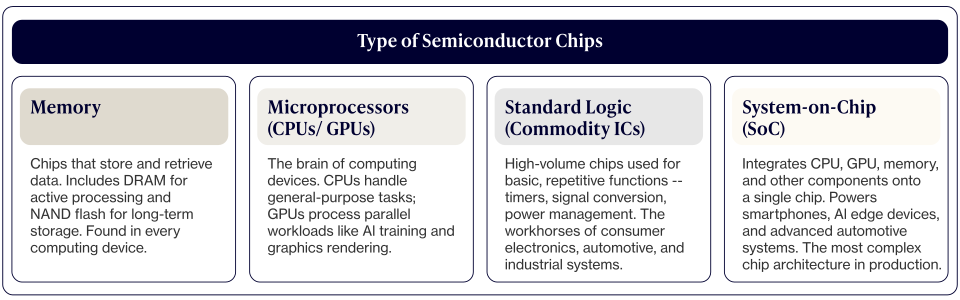
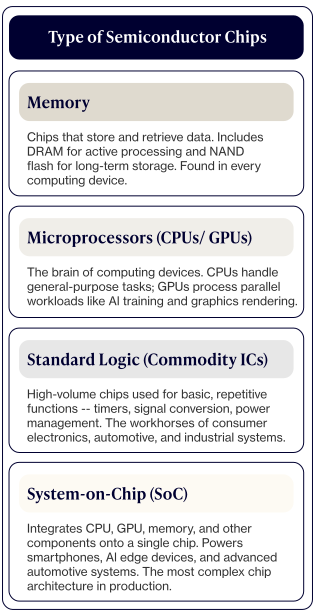
Semiconductor chips are not a single product. They are an entire ecosystem of highly specialized components, each serving a different function across a growing range of industries. Memory chips store and retrieve data. Microprocessors and GPUs handle computation and AI workloads. Standard logic chips manage power, timing, and signal conversion in everything from appliances to industrial equipment. Systems-on-chip integrate multiple functions onto a single piece of silicon and power smartphones, autonomous vehicles, and AI edge devices.
Demand for all of these is growing. AI infrastructure requires massive quantities of GPUs, high-bandwidth memory, and networking chips. Electric vehicles consume far more semiconductor content per unit than conventional cars. Cloud computing and data center expansion drive sustained capital investment in processors, storage, and power management chips. Annual semiconductor industry revenue has grown at roughly 7.7% per year over the last decade, and the growth drivers are becoming more diverse and more durable over time.
Strong Demand Growth For Semiconductors Across Applications
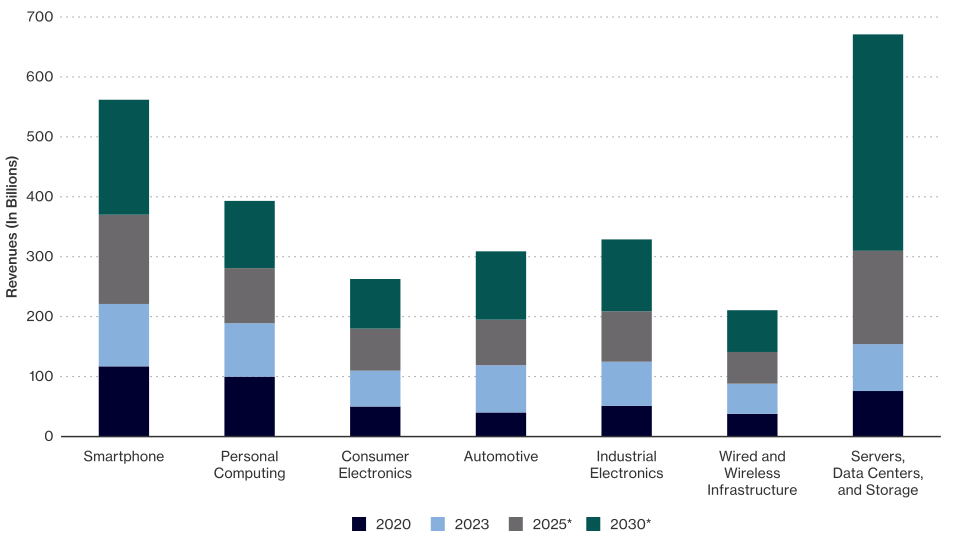

Source: ASML, Data as of 2025. *Projected
How is the Semiconductor Industry Structured?
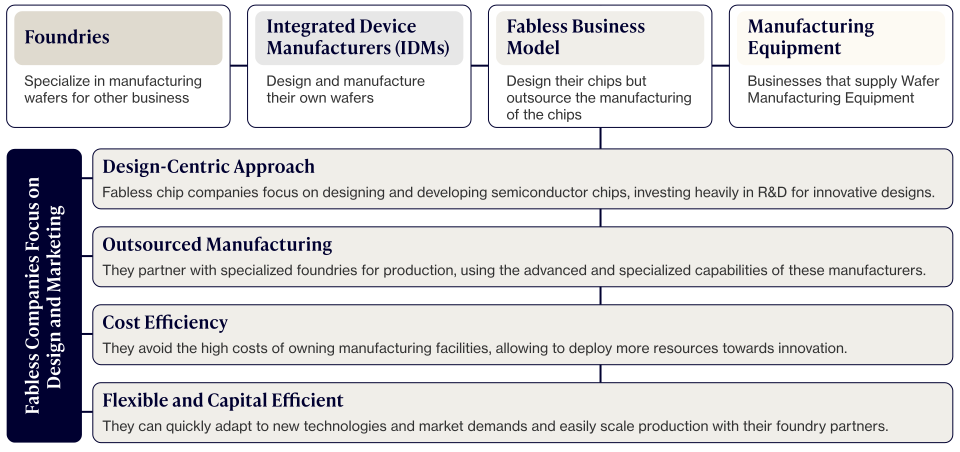
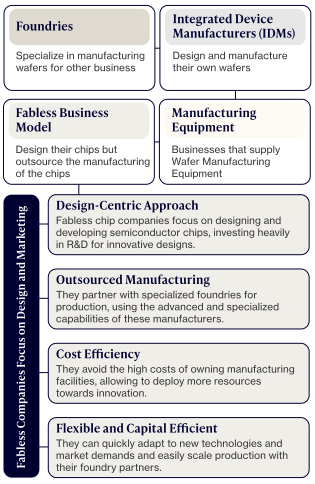
The semiconductor industry is built around four distinct business types, each playing a different role in getting a chip from design to production.
- Fabless companies, such as Nvidia, AMD, and Qualcomm, focus entirely on chip design and intellectual property. They invest heavily in R&D and outsource all manufacturing to foundries. This model is capital-efficient and allows for rapid iteration.
- Foundries, such as TSMC, specialize in manufacturing chips to client specifications. They own the physical fabs and the advanced process technology required to build leading-edge chips at scale.
- Integrated Device Manufacturers, or IDMs, such as Intel, handle both design and manufacturing in-house, giving them vertical integration but also significant capital intensity.
- Equipment manufacturers, such as ASML, Applied Materials, and Lam Research, supply the tools that foundries and IDMs use to build chips. Without lithography systems, etch tools, and deposition equipment, no chip gets made.
Investable Universe of Semiconductor Companies
Two Ways to Invest in US-listed Semiconductors: SMH vs. SMHX
For investors looking to access the semiconductor industry through US-listed companies, VanEck offers two distinct options depending on how much precision they want.
What Does the VanEck Semiconductor ETF (SMH) Cover?
The VanEck Semiconductor ETF (SMH) is the broad-based option. It tracks the 25 largest and most liquid US-listed semiconductor companies, spanning the full value chain from fabless designers to foundries to equipment manufacturers. Companies do not need to be headquartered in the US to qualify, only listed on a US exchange, which means the fund includes names like TSMC alongside US-domiciled companies. SMH is designed for investors who want comprehensive exposure to the US-listed semiconductor industry through a single, liquid vehicle.
With over $73 billion in total net assets* and a track record spanning nearly 15 years, SMH has become the default vehicle for investors seeking liquid, large-cap exposure across the semiconductor value chain.
What is the VanEck Fabless Semiconductor ETF (SMHX)?
The VanEck Fabless Semiconductor ETF (SMHX) is more focused. It targets US-listed companies that operate specifically under the fabless model, designing chips in-house and outsourcing all manufacturing. Fabless companies tend to be more R&D intensive, more capital efficient, and more directly exposed to the intellectual property layer of the semiconductor stack. For investors who believe chip design is where the most durable value accrues, SMHX provides a concentrated way to express that view.
A Third Semiconductor ETF Opportunity: China's Domestic Build-Out
Most semiconductor ETFs, including SMH and SMHX, are concentrated in US and Taiwanese companies. What they do not capture is the parallel ecosystem taking shape inside China, where a completely separate semiconductor industry is being built from the ground up.
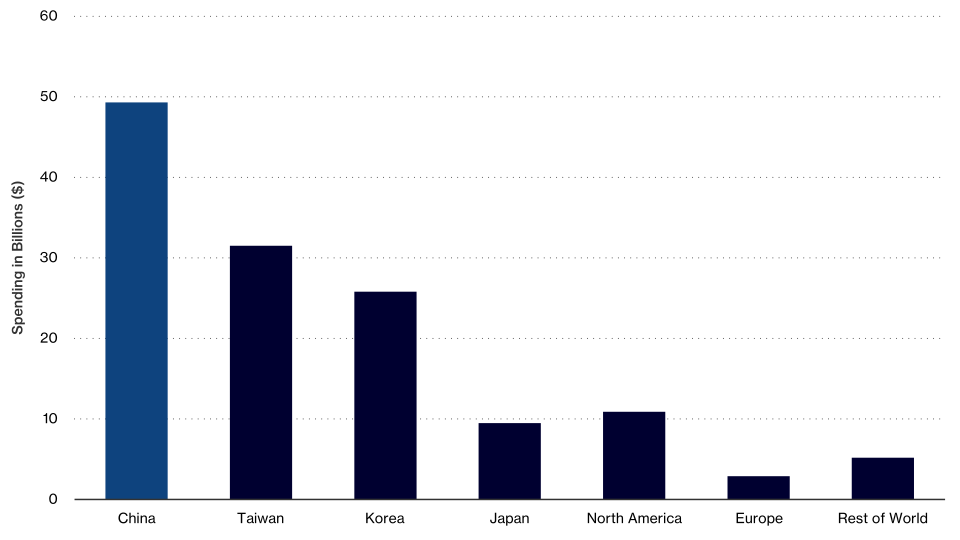
China is the world's largest chip consumption market, but its domestic production has historically fallen far short of that consumption. Closing that gap has become a national policy priority, backed by sustained sovereign capital and an explicit mandate to reduce reliance on foreign suppliers. In 2025, China was the world's single largest spender on semiconductor manufacturing equipment.

US export controls have accelerated rather than slowed this build-out. Each restriction on foreign suppliers creates a procurement mandate for domestic alternatives. Chinese fabs that cannot source ASML equipment must source from NAURA. Chinese data centers that cannot purchase Nvidia GPUs must source from Cambricon. Every foreign supplier locked out creates an opening for a domestic one.
How the VanEck China Semiconductor ETF (SMHC) Accesses This Opportunity
The companies capturing this opportunity do not appear in conventional semiconductor or China equity strategies. The VanEck China Semiconductor ETF (SMHC) is designed to access them directly, through a rules-based index of 25 liquid Chinese semiconductor companies spanning design, fabrication, equipment, and packaging.
For a deeper look at the SMHC investment case, read our full overview here.
SMH vs. SMHX vs. SMHC: Which Semiconductor ETF is Right for You?
| SMH | SMHX | SMHC | |
| Full name | VanEck Semiconductor ETF | VanEck Fabless Semiconductor ETF | VanEck China Semiconductor ETF |
| What it targets | Full semiconductor value chain | Fabless chip designers only | Chinese domestic semiconductor companies |
| Universe | US-listed companies (global domicile) | US-listed fabless companies (global domicile) | Hong Kong and mainland China-listed companies |
| Index | MVIS US Listed Semiconductor 25 Index | MVIS US Listed Fabless Semiconductor Index | MarketVector China Semiconductor 25 Index |
| Number of holdings | 25 | Varies | 25 |
| Revenue screen | 50% from semiconductors | 50% from semiconductors, fabless model required | 50% from semiconductors, China/HK domicile required |
| Total Expense Ratio | 0.35% | 0.35% | 0.65% |
| Key exposure | Global industry leaders, full stack | Design-focused, IP-driven companies | China's parallel domestic build-out |
| What it does not include | Chinese domestic companies | Chinese domestic companies, foundries, equipment | US and Taiwan-listed names |
*Total Net Assets for SMH as of July 10, 2026
Related Insights

Related Insights
17 September 2026
17 September 2026
Anthropic CEO published a letter calling for an AI slowdown. We explain how the industry reacted, and what this means for investors.
23 July 2026
After three strong years, many nuclear and uranium stocks have given back a chunk of their gains. We look at what drove the pullback, what’s gone right, and the opportunity ahead.
22 July 2026
TSMC posted record Q2 profit, raised its full-year revenue growth outlook to above 40%, and announced a $100 billion expansion in Arizona as AI demand continues to outpace supply. Here is what it means for SMH and SMHX.
04 May 2026
The AI investment opportunity is shifting from software to physical infrastructure. Semiconductors, data centers, energy, and automation are where durable value may be building.