Global Pressures – Pick a Direction
16 November 2022
Read Time 2 MIN
EMEA Political and Policy Risks
There was a global sigh of relief that yesterday’s missile incident in Poland did not result in the further escalation of the Russia/Ukraine war. Central European currencies used this occasion to celebrate, bouncing in the morning trade and topping the EMFX daily “league table”. Some global tension points might have eased lately – we are talking about China’s COVID restrictions and the housing sector support – but geopolitical risks in Europe remain elevated, dampening the growth outlook and slowing the process of disinflation. This is quite problematic, because domestic price pressures show few signs of abating. Today’s microscopic downside surprise in Poland’s core inflation is a case in point – the number might have been a touch lower than expected, but core inflation accelerated to 11% year-on-year in October (which explains why we are uneasy about the planned minimum wage increase and a high likelihood of higher pre-election spending). Against this backdrop, the central bank’s aversion to additional rate hikes makes local yields less attractive relative to peers.
Brazil Fiscal Outlook
A pre-election spending spree is a legitimate concern anywhere in the world, but in Brazil the market is fretting about the post-election’s fiscal largesse. President-elect Luiz Inácio Lula da Silva is lobbying for the removal of a major social program from the spending cap for a number of years, which might help to maintain decent fiscal “optics”, but it will still create extra stimulus in the economy. The central bank is watching the situation like a hawk, and the market thinks there is a chance of it delivering a “warning shot” in the form of a small rate hike in the next 3-4 months. Fiscal concerns are weighing on Brazil’s local bonds, which underperformed GBI-EM peers by a wide margin in the past week.
Global Supply Chains
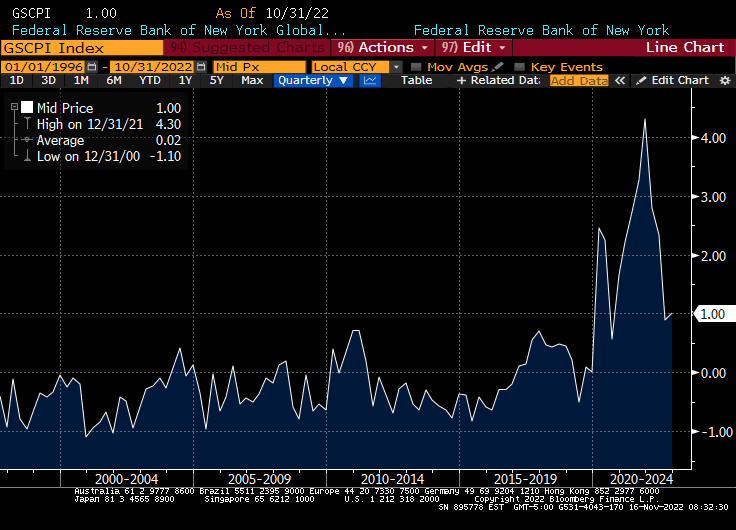
One question that we have is whether EM (and DM) policy “offenders” can be saved by the rapidly easing global supply chain disruptions (see chart below). The latest reports suggest that the improvements are broad-based, which might be a tailwind for the growth outlook (including rebuilding inventories). Easing supply bottlenecks can also lower input prices and reduce some headline inflation pressures going forward. Stay tuned!
Chart at a Glance: Global Supply Chain Pressures? What Pressures?*
Source: Bloomberg LP.
* GSCPI Index: Global Supply Chain Pressure Index seeks to measure supply chain conditions, created by the Federal Reserve. The index combines variables from several indices in transportation and manufacturing.
Related Insights

Related Insights
07 April 2025
06 March 2025
13 August 2026
See how Jan van Eck's Q3 outlook can be translated into actionable ETF ideas across semiconductors, private credit, gold and bitcoin.
10 February 2026
Debasement is back in focus. Here’s what’s driving it, what could reverse it and how we’re positioning portfolios for both scenarios.
07 April 2025
Trump’s tariffs spark trade war fears, fueling market volatility, inflation risk, and recession threats. With global retaliation likely, near-term growth is clearly at risk.
06 March 2025
Trump’s tariffs, AI’s next phase, and a potential U.S. gold revaluation could shake markets—investors who stay ahead of these transitions will be best positioned.
20 February 2025
China's AI breakthrough, persistent inflation, gold’s outperformance, and rising energy demand underscore a shifting investment landscape.