Hay que prestar atención al flujo de caja de las mineras de oro, no a las ganancias
14 agosto 2023
Read Time 4 MIN
Perspectivas mensuales sobre el mercado y la economía del oro por parte de Imaru Casanova, Gestora de Cartera, quien ofrece su punto de vista único sobre la minería y las ventajas del oro para la cartera.
El oro se estabiliza en medio de perspectivas económicas dispares
La publicación de datos económicos en julio alimentó las expectativas de que la Reserva Federal estadounidense se acerca al final de su ciclo de subidas, lo que apoyó los precios del oro, que subieron un 2,4% durante el mes, y presionó al dólar estadounidense (bajó un 1,03%, medido por el índice del dólar estadounidense (DXY1)). El oro volvió a subir por encima de los 1950 dólares la onza el 12 de julio, tras la publicación del índice de precios al consumidor de EE. UU. correspondiente a junio2, el cual registra un incremento interanual del 3 %, frente al 4 % de mayo. El oro siguió avanzando y alcanzó un máximo mensual de 1.978,72 dólares el 18 de julio, cuando las ventas minoristas estadounidenses de junio se situaron por debajo de las expectativas. El metal amarillo mantuvo la mayor parte de sus ganancias, mientras los mercados asimilaban una nueva subida de los tipos de interés por parte de la Reserva Federal el 26 de julio, y un aumento anual del 3% en el índice de precios de los gastos de consumo personal3 (el indicador de inflación preferido de la Reserva Federal). El oro cerró en $1965,09 el 31 de julio.
Los índices NYSE Arca Gold Miners Index (GDMNTR)4 y MVIS Global Juniors Gold Miners Index (MVGDXJTR)5 superaron al oro, con subidas respectivas del 4,54% y el 5,86% a lo largo de este mes. En el sector, los resultados financieros y operativos del segundo trimestre de 2023 han sido dispares. Muchos de los productores habían señalado una primera mitad del año más débil; la mayoría ha mantenido sus previsiones para todo el año 2023. Por lo tanto, esperamos una mejora en la segunda mitad de 2023. El mercado está muy centrado en las empresas que cumplen con las expectativas, por lo que es probable que cualquier error significativo menoscabe la rentabilidad de las acciones.
Por qué es difícil pronosticar ganancias para las empresas mineras auríferas
Si bien estamos de acuerdo en que las empresas deben cumplir con las metas que se plantean para ganarse la confianza del mercado en su capacidad de generar resultados consistentes, también comprendemos los desafíos únicos que enfrenta la industria minera. Como inversores a largo plazo que buscan la creación de valor, estamos menos obsesionados con las ganancias trimestrales y mucho más centrados en las perspectivas de las empresas para la generación de flujos de caja libre durante los próximos 10 a 20 años. Tras décadas de experiencia cubriendo este sector, incluso como analistas de valores que emiten estimaciones de ganancias por acción (EPS) cada trimestre para todas las empresas en su universo de cobertura, podemos decir con seguridad que es casi imposible pronosticar las ganancias de una empresa de metales preciosos en cualquier trimestre. Los desafío tienen múltiples causas, siendo las más relevantes las siguientes:
- El hecho de que estas empresas emitan pronósticos basados únicamente en estimaciones de las propiedades de los yacimientos de oro que están explotando. A todas luces, esperamos que estas estimaciones sean una buena representación del depósito de oro durante la vida útil de la mina. De un trimestre a otro también cabe esperar variaciones de esas estimaciones que ciertamente podrían afectar las ganancias, mientras que generalmente no tienen un impacto significativo en el valor neto de los activos de la mina o la empresa.
- Las empresas emiten una previsión para todo el año, la cual pretende dar cuenta de las fluctuaciones de un trimestre a otro, pero los analistas deben emitir una previsión trimestral que no puede prever estas variaciones. Son estas estimaciones trimestrales las que el mercado tiene en cuenta para evaluar a las empresas.
- Las ganancias se basan en normas complejas de contabilidad y presentación de informes, que incluyen partidas únicas y no monetarias, lo que hace que sea muy difícil conciliar las ganancias informadas con las estimaciones.
- Otros factores, incluidas las variaciones en el precio realizado del oro y otros metales producidos. Si bien los analistas pueden tener en cuenta las fluctuaciones de los precios en el mercado contado durante el trimestre, es casi imposible predecir el momento de las ventas y el impacto de las ventas con precios provisorios (que luego deben ajustarse).
Enfoque en el largo plazo
En nuestra opinión, centrarse en la generación de flujos de caja libre no solo durante el trimestre en curso sino a largo plazo es una forma mucho mejor de evaluar el valor y el atractivo de inversión de una empresa de minería aurífera. De hecho, nuestros modelos internos generan indicadores internos que creamos para capturar nuestro enfoque. Nos referimos a él como "flujo de caja libre por onza", y es el flujo de caja libre total, sin descontar, que la empresa genera durante su horizonte operativo, dividido por todas las onzas de oro (o su equivalente en oro) que estimamos que extraerá durante ese período. Es una medida simple pero transparente que nos permite evaluar las valoraciones relativas de las empresas en nuestro universo.
Valor empresarial/onza frente a flujo de caja libre/onza
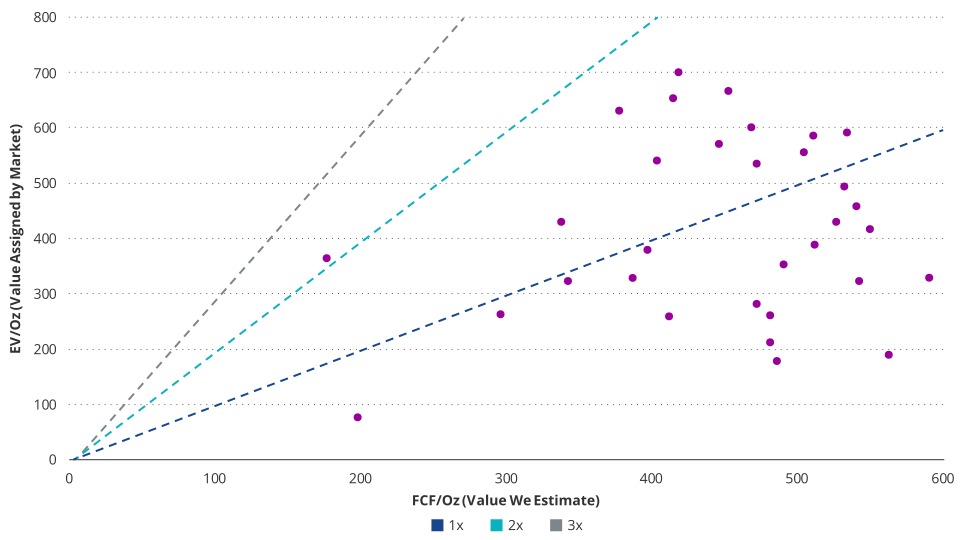
Fuente: VanEck. Solo con fines ilustrativos. El valor empresarial (EV) por onza (EV/oz) es la relación entre el valor empresarial de una empresa y la cantidad total de recursos minerales en el suelo. FCF = Flujo de caja libre.
Durante el período de presentación de ganancias, los titulares sobre las EPS inciden en los precios de las acciones. Hacemos un seguimiento y evaluamos de forma constante el historial de cumplimiento de las expectativas y directrices de una empresa. Además, modificamos nuestra cartera en función de este historial y de su posible repercusión en la evolución futura de la cotización de las acciones. Sin embargo, no nos apresuramos a comprar o vender una acción porque superó o no estuvo a la altura de las ganancias previstas hasta que evaluamos el impacto de estos resultados en nuestro pronóstico de flujos de efectivo libre de la empresa a largo plazo. Creemos que los inversores en acciones de oro deben exigir que las empresas cumplan con sus objetivos operativos, mientras se enfocan menos en las ganancias trimestrales y más en las perspectivas de efectivo gratis durante la próxima década o dos. También es útil recordar que todo oro que no se extraiga (o venda) este trimestre no se perderá, seguirá estando allí el próximo trimestre o año, disponible para satisfacer la necesidad histórica mundial del metal brillante, potencialmente a precios aún más altos.
1El U.S. Dollar Index (DXY) mide el valor del dólar estadounidense en relación con una cesta de monedas extranjeras, a menudo denominada cesta de monedas de socios comerciales de EE. UU. 2El Índice de Precios al Consumidor (CPI) es una medida del cambio promedio a lo largo del tiempo en los precios que pagan los consumidores urbanos por una cesta básica de bienes y servicios de consumo. 3El índice de precios de gastos de consumo personal (PCE) de EE. UU. es una medida de los precios que las personas que viven en los Estados Unidos, o quienes compran en su nombre, pagan por bienes y servicios. 4NYSE Arca Gold Miners Index (GDMNTR) es un índice ponderado por capitalización de mercado modificado compuesto por empresas que cotizan en bolsa involucradas principalmente en la extracción de oro. 5MVIS Global Junior Gold Miners Index (MVGDXJTR) es un índice basado en reglas, ponderado por capitalización de mercado modificado y ajustado por flotación compuesto por un universo global de empresas de pequeña y mediana capitalización que cotizan en bolsa y generan al menos el 50 % de sus ingresos a partir de minería de oro y/o plata, poseer bienes inmuebles que tengan el potencial de producir al menos el 50 % de los ingresos de la empresa a partir de la minería de oro o plata cuando se desarrolle, o invertir principalmente en oro o plata.
Related Insights

Related Insights
10 febrero 2026
18 diciembre 2025
07 noviembre 2025
10 febrero 2026
Las oscilaciones del precio del oro en enero evidenciaron volatilidad, no debilidad. La fuerte demanda, las compras de los bancos centrales y la mejora de los fundamentos del sector minero siguen respaldando un mercado alcista sólido y duradero a largo plazo de cara a 2026.
18 diciembre 2025
Prepare su portafolio para 2026 con información detallada del equipo de inversiones de VanEck sobre los factores que determinarán el riesgo y los rendimientos en sus respectivas clases de activos.
18 noviembre 2025
El repunte del oro por encima de los USD 4,000/oz refleja fortaleza en un contexto de oferta limitada y demanda constante. Las mineras continúan subvaloradas, lo que abre oportunidades potenciales si persisten las tendencias actuales del mercado.
07 noviembre 2025
El oro alcanzó máximos históricos en 2025, impulsado por la demanda de los bancos centrales, la desdolarización y la rentabilidad de los inversores.
10 octubre 2025
El oro subió a máximos históricos, cerca de $3859/onza en septiembre, dado el aumento de la demanda tras los recortes de tasas de la Reserva Federal y las compras de los bancos centrales. Los mineros repuntaron gracias al fuerte flujo de caja, la disciplina y el renovado interés de los inversores.