Disinflation, Pivots – Easy Does It?
12 December 2022
Read Time 2 MIN
FED Pivot Prospects
This week, all eyes are on the U.S. inflation print and the Federal Reserve’s (Fed) rate-setting meeting. The consensus view is that further disinflation will allow the Fed to slow the pace of rate hikes to 50bps, with this cycle’s terminal rate peaking at 5%. Fed Funds Futures continue to price in 40-50bps of rate cuts in the second half of 2023, which many consider a stretch, given that U.S. inflation might still be above 3% by the end of the next year (if the current consensus forecast were to materialize).
EM Disinflation, Rates
Meanwhile, emerging markets (EM) inflation releases continue to send dovish signals, starting with a sizable downside surprise in India, where headline inflation actually moved back to the target range in November (5.88% year-on-year). The Indian central bank had just delivered a 35bps rate hike, and today’s print raises a possibility of a pause at the next meeting in February. Headline inflation in the Czech Republic exceeded expectations, accelerating to 16.2% year-on-year, but it was well below the peak, and core price pressures are moderating. Against this backdrop, there is no reason for the central bank to get alarmed. The market expectations that the policy pause will be extended into Q1-2023 look reasonable, albeit the pace of subsequent easing will depend on the growth trajectory and the disinflation progress.
China Stimulus
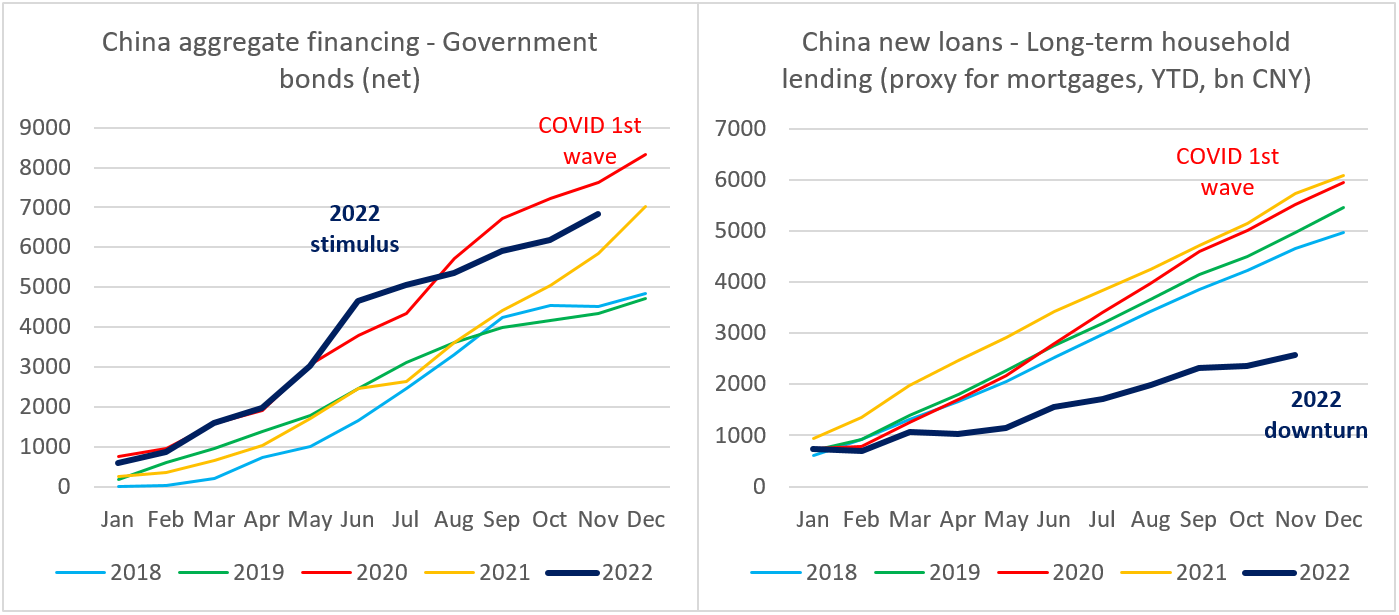
China’s inflation continued to moderate in November, but this should be expected to change if reopening gains pace. November’s credit aggregates also showed that the latest policy shift gave a small sequential boost to corporate and household lending (including mortgages). However, the improvement is very gradual – both new loans and aggregate financing surprised to the downside – and it remains to be seen whether (or when) authorities can stop relying on government bond issuance to prop up growth (see chart below), raising a bunch of concerns about leverage (again). Stay tuned!
Chart at a Glance: China Credit Growth – Different Dynamics
Source: Bloomberg LP
Related Insights

IMPORTANT DEFINITIONS & DISCLOSURES
This material may only be used outside of the United States.
This is not an offer to buy or sell, or a recommendation of any offer to buy or sell any of the securities mentioned herein. Fund holdings will vary. For a complete list of holdings in VanEck Mutual Funds and VanEck ETFs, please visit our website at www.vaneck.com.
The information presented does not involve the rendering of personalized investment, financial, legal, or tax advice. Certain statements contained herein may constitute projections, forecasts and other forward looking statements, which do not reflect actual results. Information provided by third-party sources are believed to be reliable and have not been independently verified for accuracy or completeness and cannot be guaranteed. Any opinions, projections, forecasts, and forward-looking statements presented herein are valid as of the date of this communication and are subject to change without notice. The information herein represents the opinion of the author(s), but not necessarily those of VanEck.
The views contained herein are not to be taken as advice or a recommendation to buy or sell any investment in any jurisdiction, nor is it a commitment from Van Eck Associates Corporation or its subsidiaries to participate in any transactions in any companies mentioned herein. This content is published in the United States. Investors are subject to securities and tax regulations within their applicable jurisdictions that are not addressed herein.
All investing is subject to risk, including the possible loss of the money you invest. As with any investment strategy, there is no guarantee that investment objectives will be met and investors may lose money. Diversification does not ensure a profit or protect against a loss in a declining market. Past performance is no guarantee of future results.