Catch Me If You Can: EM Bonds Outrun DM Peers
18 May 2023
Read Time 3 MIN
Since March, investors have been reminded that financial sector stress is unique in its ability to impact broader markets, due to the risk of contagion, impact on the economy through credit availability, and potentially, the costs of a bailout. Such costs often historically have fallen on the public, and the impact to sovereign fiscal positions can be material. The failures of certain regional banks in the U.S., although they appear idiosyncratic and contained so far, have spooked domestic markets, but emerging markets (EM) have appeared insulated.
From a returns perspective, emerging markets local currency bonds have shrugged off these ongoing concerns, indicating that investors do not appear concerned about the banking systems in these countries. Returns have been driven by both local interest rates and currency appreciation, and have been broad based with 17 of the 20 countries in the J.P. Morgan GBI-EM Global Core Index posting positive gains through May 11, 2023.
EM Local Currency Returns Outpace DM Peers Year to Date
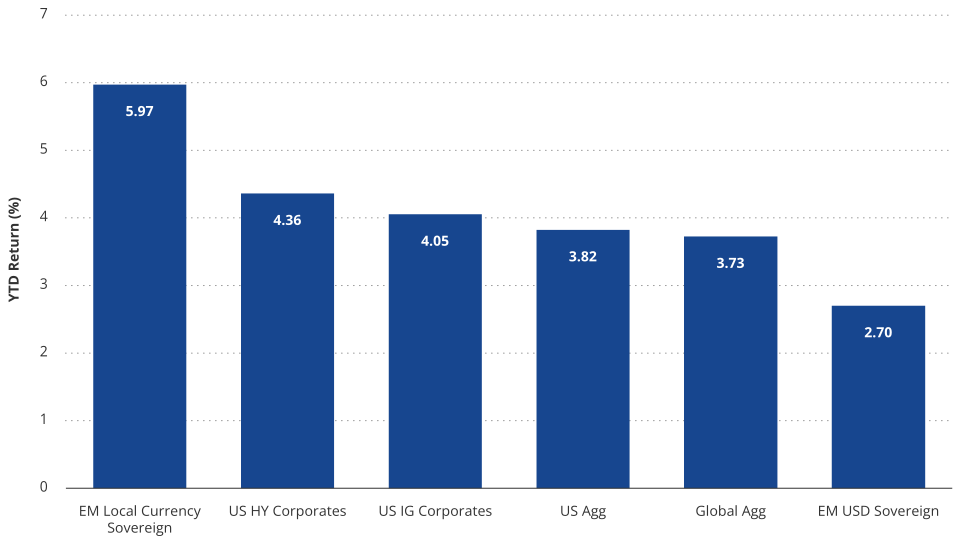
Source: Morningstar Direct as of 5/11/2023. EM Local Currency Sovereign represented by J.P. Morgan GBI-EM Global Core Index; US HY Corporates represented by ICE BofA US High Yield Index; US IG Corporates represented by ICE BofA US Corporate Index; Global Agg represented by ICE BofA Global Broad Market Index; US Agg represented by ICE BofA US Broad Market Index; EM USD Sovereign represented by J.P. Morgan EMBI Global Diversified Index.
Spreads among EM banks also do not appear to indicate stress, and the sector has returned 3.7% within the ICE BofA Diversified High Yield US Emerging Markets Corporate Plus Index this year through April 30, 2023. Over the same period, banks within the ICE BofA US High Yield Index returned 1.6%. According to J.P. Morgan research, fundamentals among EM banks appear resilient, reflecting stable funding profiles and conservative balance sheet management. It helps that the EM banks who have issued in US dollars tend to be the larger, better capitalized ‘local favorites’ with diversified deposit bases, according to Bank of America’s research team. Although the bank sector weighting in EM corporate indices tends to be higher than in US indices, there is very little exposure to non-bank financial companies in EM, and these types of institutions tend to be much more sensitive to turns in the credit cycle.
J.P. Morgan also highlights the performance of additional tier one (“AT1”) bonds. AT1 bonds are issued by banks and are convertible into ordinary shares, or can be written down on either a permanent or temporary basis to fill holes in a bank’s balance sheet in a stressed situation, making them a good indicator of the market’s perception of banks’ ability to maintain capital adequacy. As shown below, EM banks have significantly outperformed their European counterparts (U.S. banks do not issue AT1 bonds).
EM Bank Bonds Have Outpaced European Bank Bonds
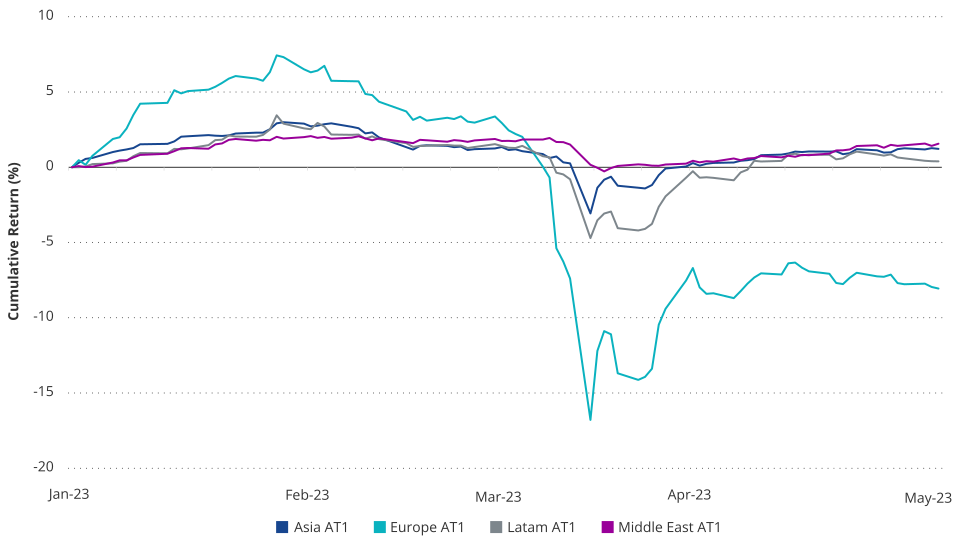
Source: J.P. Morgan as of 5/11/2023.
There are certainly potential risks if the mini-banking crisis continues or spreads. We believe the most likely impact to emerging markets would be from slower growth due to tightening of credit in the U.S. as regional lenders pull back, which is happening in the context of the Fed’s ongoing battle against inflation. In addition, general risk aversion and volatility has historically impacted “risk-on” asset classes such as emerging markets, even though this has not been the case this year.
Related Insights

Related Insights

11 February 2026
05 December 2025
28 April 2026
The Emerging Markets Debt team just returned from Spring 2026 IMF meetings in Washington, meeting with finance, banking, and political authorities from around the world.
18 December 2025
Get your portfolio ready for 2026 with detailed insights from VanEck’s investment team about the factors driving risk and returns in their respective asset classes.
05 December 2025
EM local-currency bonds offer high real yields, strong 2025 returns, and resilience to shocks, driven by credible policy and solid fundamentals.
04 December 2025
EM high yield has extended its 2025 momentum, delivering strong carry and compelling yields. With higher credit quality and lower defaults, the segment offers a more attractive risk profile than US high yield.
28 October 2025
The EM Debt team just returned from the Fall IMF Annual Meeting, here are their takeaways.