EM High Yield Bonds Withstand Rising Rates
01 June 2021
Read Time 2 MIN
Emerging markets high yield corporate bonds have been the brightest spot within emerging markets debt in the past year, despite the increase in U.S. interest rates that began last summer and accelerated at the beginning of 2021.1 This segment of the market may also be relatively more insulated from higher local interest rates and fluctuations in the U.S. dollar, while the global exposure of many of the issuers allows the category to benefit from the spike in expected global growth rates this year. At the same time, emerging markets high yield corporates are one of the few areas where investors can still find yields that are still well above 5%.
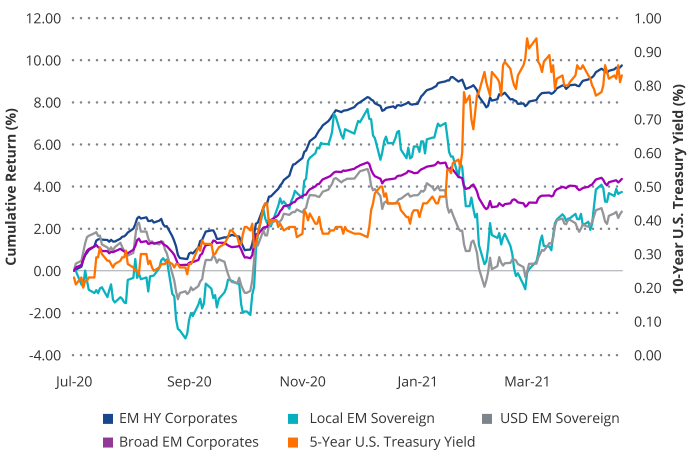
Emerging Markets High Yield Corporates Have Outperformed Amid Rising Rates
| Index | Wtd. Average Yield | Effective Duration | |
| EM HY Corporates | ICE BofA Diversified High Yield US Emerging Markets Corporate Plus Index | 5.41 | 3.6 |
| Local EM Sovereign | JPM GBI-EM Global Diversified Index | 4.81 | 5.2 |
| USD EM Sovereign | JPM EMBI Global Diversified Index | 4.44 | 7.9 |
| Broad EM Corporates | ICE BofA US Emerging Markets Liquid Corporate Plus Index | 3.46 | 5.3 |
Source: ICE Data Indices, J.P. Morgan and Morningstar, as of 5/21/2021. Timeframe for data reflects rise of interest rates.
The lower interest rate sensitivity of emerging markets high yield corporates, compared to other U.S. dollar denominated emerging markets debt sectors, has been a key driver of outperformance versus broad emerging markets corporate debt over the past year as interest rates rose (see index definitions in table above). Emerging markets high yield corporates have a duration of 3.6, compared to 5.3 of broad emerging markets corporates and nearly 8 of USD emerging markets sovereigns. Further, the segment’s duration has remained close to where it was five years ago. The duration of USD emerging markets sovereigns, on the other hand, has extended significantly from about 6.7 five years ago, while the duration of broad emerging markets corporates was about 4.6 five years ago.2
In addition to the shorter duration, emerging markets high yield corporates benefit from a high average spread, which provides a potential cushion against rising rates. Year-to-date through 5/21/21, the average spread has tightened by 41 basis points, nearly offsetting the 47 basis point increase in the 5-Year U.S. Treasury Yield. The upshot, of course, is that spreads are now at historically tight levels. However, emerging markets high yield corporates continue to provide a spread pickup of 135 basis points versus U.S. high yield corporate bonds3. Further, with what we view as expected strong global growth, continued accommodation by central banks and very benign credit conditions, it is difficult to identify a likely catalyst for widening out, particularly if the recent calmer tone in U.S. interest rates continues. In addition, we believe with the current high exposure to Energy (15%) and Basic Industry (16%), emerging markets yield corporates may continue to benefit from the upswing in global commodity prices.
Related Insights

Related Insights
28 abril 2026

11 febrero 2026
18 diciembre 2025
05 diciembre 2025
28 abril 2026
El equipo de Deuda de Mercados Emergentes acaba de regresar de las reuniones de primavera de 2026 del FMI en Washington, donde se reunió con autoridades financieras, bancarias y políticas de todo el mundo.
18 diciembre 2025
Prepare su portafolio para 2026 con información detallada del equipo de inversiones de VanEck sobre los factores que determinarán el riesgo y los rendimientos en sus respectivas clases de activos.
05 diciembre 2025
Los bonos de mercados emergentes en moneda local ofrecen rendimientos reales elevados, sólidos rendimientos en 2025 y resiliencia ante shocks, impulsados por políticas creíbles y fundamentos sólidos.
04 diciembre 2025
La deuda de alto rendimiento de mercados emergentes ha extendido su dinamismo en 2025, ofreciendo un carry sólido y rendimientos atractivos. Gracias a una mayor calidad crediticia y a menores tasas de incumplimiento, este segmento presenta un perfil de riesgo más favorable que la deuda estadounidense de alto rendimiento.
28 octubre 2025
El equipo de deuda de mercados emergentes acaba de regresar de las reuniones anuales de otoño del FMI; estas son sus conclusiones.