Political Risks and EM Assets
09 January 2023
Read Time 2 MIN
Brazil Politics
It was supposed to be a slow morning, with musings about emerging markets (EM) disinflation and the end of the global tightening cycle. However, politics intervened once again. Brazil’s riots on Sunday shocked both in scope and violence, raising multiple questions about political polarization and its impact on governability, growth and reforms – and about the kind of exposure (if any) investors should have in Brazil going forward. This is not the first time Brazil’s institutions have been tested, but up until now they maintained their credibility – and there is a good chance the same will happen after Sunday’s riots too. The congress stood united in condemning violence and disregard for the rule of law. However, what is good for democracy might not necessarily be good for Brazilian bonds. If President Luiz Inácio Lula da Silva (Lula) emerges politically stronger after the riots, he might be further emboldened to push forward his populist agenda. And this policy uncertainty could be a big negative for local assets, even if political tensions subside.
EM Local Bonds Performance
Brazil is not the only LATAM economy, where politics moves bond/asset prices – albeit Brazil is watched very closely because of the market’s size and local bonds’ outperformance last year (despite developed markets (DM) policy tightening). Colombia was on the opposite end of the performance spectrum – unable to recover after the presidential elections and now the only regional economy where inflation is yet to peak, while the current account deficit widened to 6.7% of GDP in Q3. The central bank is under pressure to hike by 75-100bps more at its next meeting, and the market is watching the government’s fiscal performance as a hawk (this includes the smaller fiscal deficit target for 2023).
EM Disinflation
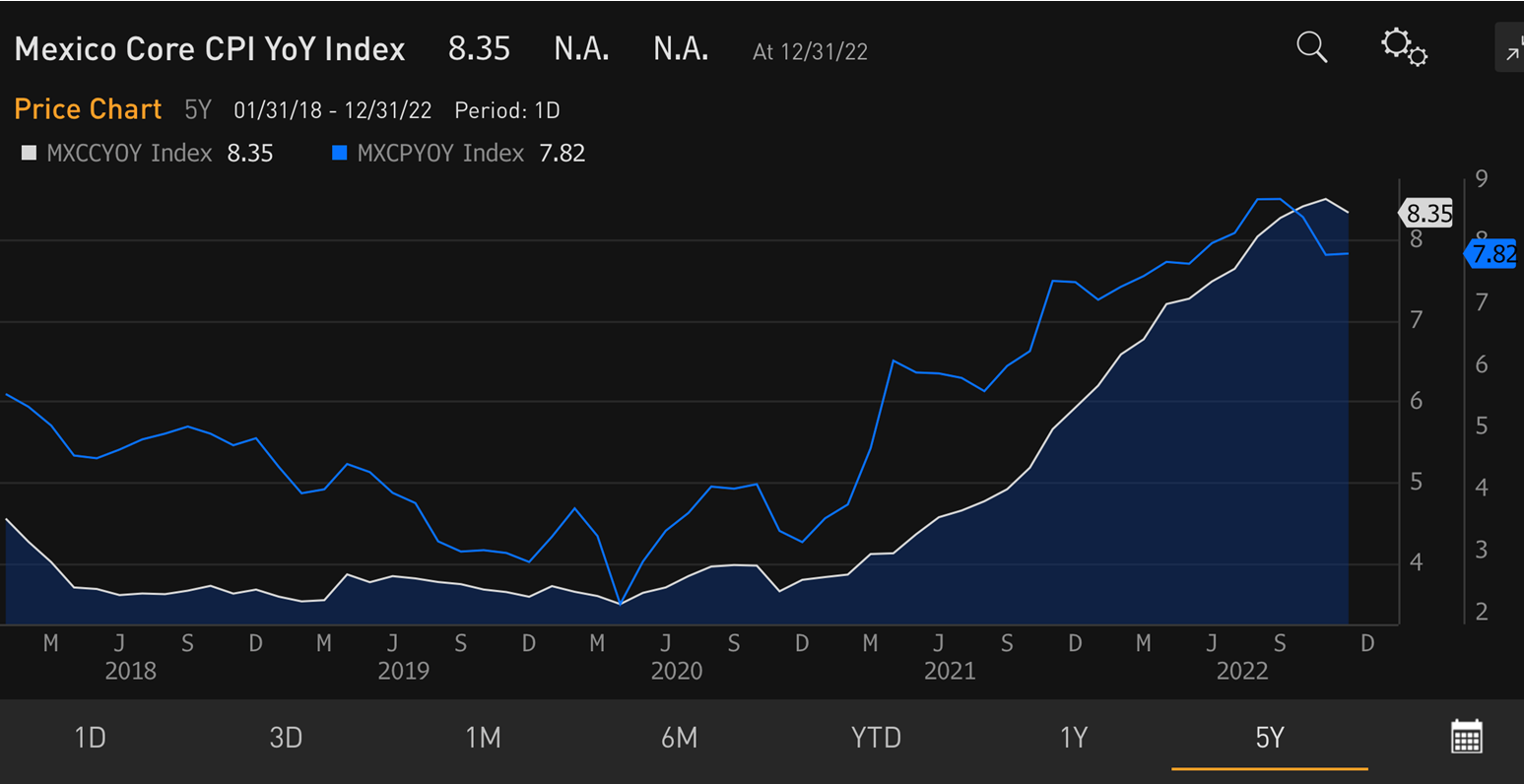
Brazil’s political noise might distract from the country’s (stellar) disinflation track record – the consensus expects headline inflation to moderate to 5.6% year-on-year tomorrow. However, Mexico’s inflation prints definitely got noticed this morning. The disinflation progress is still wobbly, but both core and headline price pressures appear to have peaked. Mexico’s policy rate is 10.5% and positive in real terms when adjusted both by trailing and expected inflation. The central bank’s minutes sounded cautious, but it can definitely slow the pace of hikes to 25bps if the disinflation trend continues. Stay tuned!
Chart at a Glance: Mexico - Another Inflation Peak in EM
Source: Bloomberg LP.
Related Insights

Related Insights
07 April 2025
06 March 2025
20 February 2025
16 January 2025
07 April 2025
Trump’s tariffs spark trade war fears, fueling market volatility, inflation risk, and recession threats. With global retaliation likely, near-term growth is clearly at risk.
06 March 2025
Trump’s tariffs, AI’s next phase, and a potential U.S. gold revaluation could shake markets—investors who stay ahead of these transitions will be best positioned.
20 February 2025
China's AI breakthrough, persistent inflation, gold’s outperformance, and rising energy demand underscore a shifting investment landscape.
16 January 2025
In 2025, navigating turbulence means balancing tech innovation, inflation hedges, energy shifts, and risks from spending cuts and inflation.
05 December 2024
"Trump Trade 2.0" fueled U.S. equity and digital asset rallies, while real assets faltered under a strong dollar, with global markets reacting unevenly to pro-growth policies.