Why Long Munis Look Compelling Right Now
02 April 2026
Read Time 4 MIN
Key Takeaways:
- 30-year AAA munis are offering ~6.9–7.0% taxable equivalent yield, roughly 120–140 bps above long corporates
- The muni curve spread between 10- and 30-year maturities sits at ~220 bps on a TEY basis, historically steep
- This is a rate-driven setup, not a credit story, which makes the risk/reward unusually clean
Index performance is not illustrative of fund performance. It is not possible to invest directly in an index. Yield alone should not be the basis for an investment decision. Past performance is no guarantee of future results. The views expressed are solely those of the author, are for illustrative purposes only, and are not investment advice. Taxable equivalent yield assumes a 35% federal tax rate and does not account for state or local taxes.
The Setup Advisors Should Be Paying Attention To
We don't often get a moment where the rate environment, the yield curve, and credit quality all line up at the same time. Right now, with long municipal bonds, that's exactly what's happening.
While the rate path remains uncertain with a new Fed leadership transition underway, the broader direction of the cycle and market expectations for eventual easing continue to favor long-duration fixed income. Additionally, muni supply is running hot. Cities and states issued a record near $600 billion in bonds last year, and 2026 is on pace to top that, driven by aging infrastructure needs and a surge in power sector demand tied to AI buildout. More supply means upward pressure on muni yields, even as the broader rate environment shifts. That combination is rare, and it's creating real value in the long end of the curve.
Muni Issuance Hits Record High in 2025
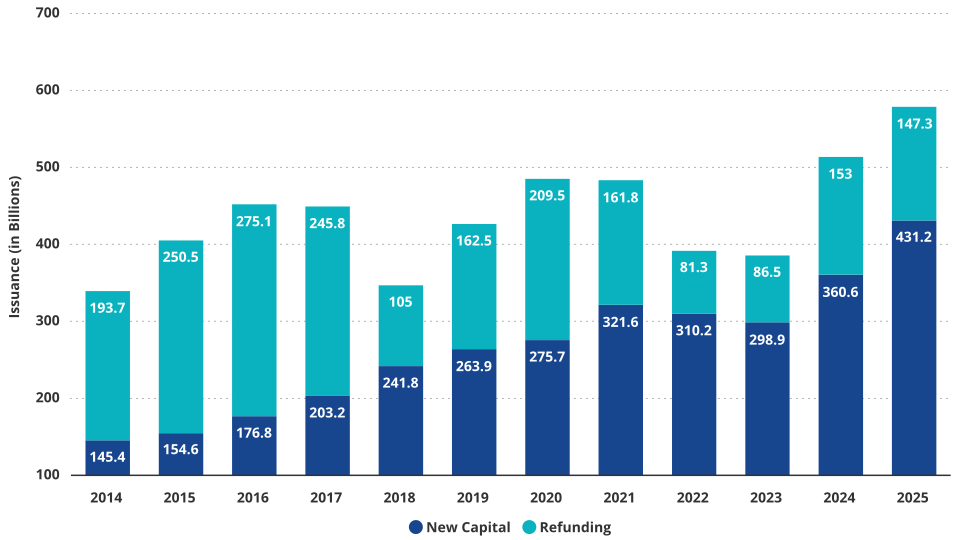
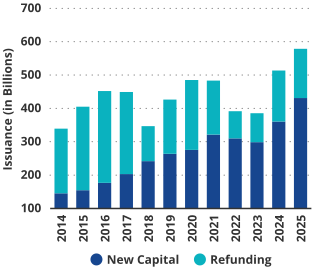
Source: SIFMA, March 19, 2026.
The Numbers Are Hard to Ignore
At roughly 4.5% nominal, 30-year AAA munis are translating to approximately 6.9–7.0% taxable equivalent yield for investors in the 35% bracket. That puts them about 140–150 basis points above comparable long corporates, and nearly 200 basis points over Treasuries. That kind of spread is the type of excess income you typically only see during periods of market stress. The difference here is that this isn't a credit dislocation story. It's being driven by rates, which may present a more favorable risk/reward profile relative to historical conditions.
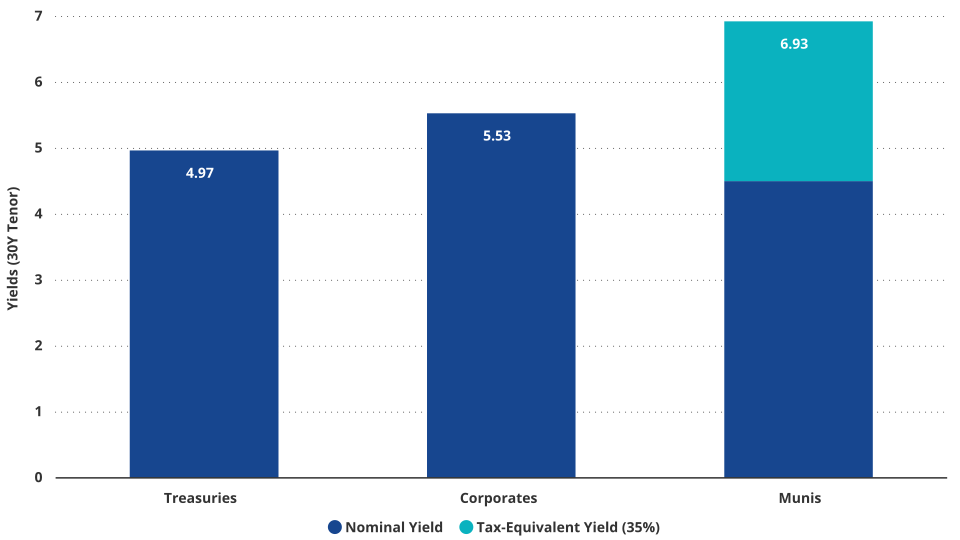
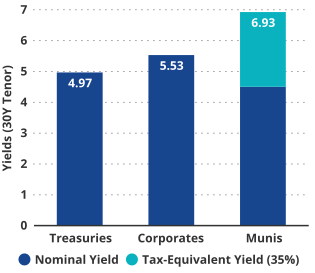
Source: ICE Indices, March 30, 2026.
The Muni Curve Is Doing Something Worth Watching
The slope of the muni curve is equally compelling. The spread between 10- and 30-year AAA munis sits at roughly +140 basis points nominal, or around 220 basis points on a taxable-equivalent basis. That's a notably steep configuration by historical standards, and it means investors are genuinely getting paid to extend duration: not just in carry, but in convexity and roll-down benefits as well.
AAA Yield Curvea s of 03/30/26
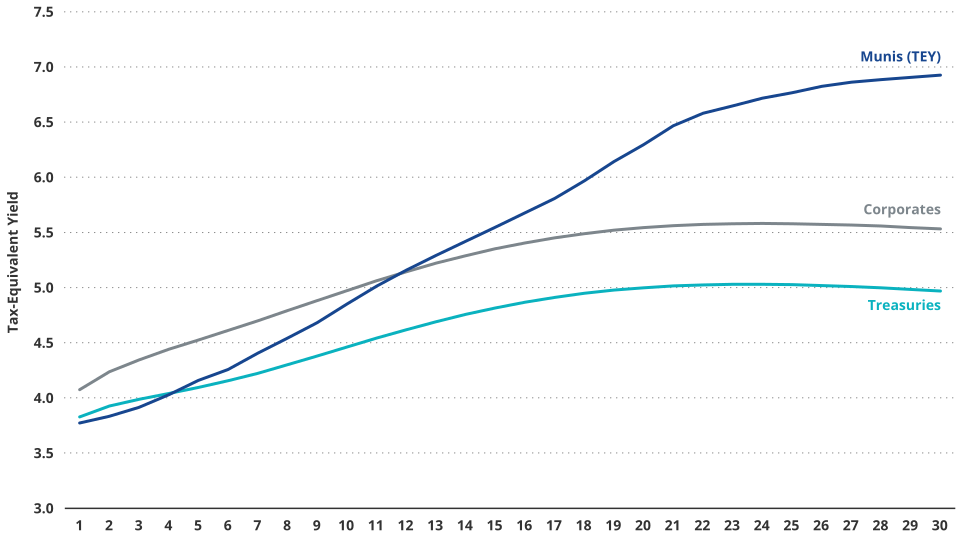
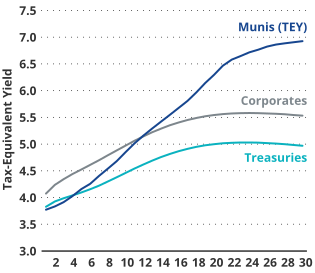
Source: ICE Indices, March 30, 2026. Index performance is not illustrative of fund performance. It is not possible to invest directly in an index. Yield alone should not be the basis for an investment decision.
For clients in the 37% bracket, the tax-exempt nature of muni income continues to be one of the most efficient tools available. With taxable yields under pressure, the after-tax comparison versus corporates or Treasuries is as favorable as it's been in a while.
Why This Isn't a Reach-for-Yield Trade
One thing worth clarifying for advisors: this is not a credit story dressed up as a value opportunity. Long high-grade municipals are competing directly with corporate credit on income while carrying higher credit quality. The valuation case is built on rate dynamics, not on moving down the credit ladder to find yield.
That distinction matters. It means the forward-looking risk/reward isn't dependent on credit conditions holding up. It's dependent on a rate environment that, directionally, is moving the right way.
Why MLN, and Why Now
Part of what makes this moment interesting is that long munis have had less institutional attention over the past decade. Banks and insurance companies have largely moved away from 30-year commitments, and SMA structures have shifted toward intermediate bonds in response to curve steepness and lower volatility. That rotation has left the long end of the muni market relatively under-owned, which only adds to the opportunity.
Historically, moving earlier in a rate easing cycle has allowed investors to participate more fully in potential price appreciation in long-duration fixed income (although outcomes can vary and are not guaranteed).. Waiting for the move to be obvious usually means the repricing has already happened.
How to Access Long-Duration Munis
Advisors looking to position clients for this setup can access it through the VanEck Long Munis ETF (MLN), which provides targeted exposure to long-dated investment-grade municipal bonds and is built to reflect the opportunity set that exists at the long end of the muni market today.
Related Insights


Related Insights
31 March 2026
Returns in floating rate notes are driven by two main components: short-term interest rates and credit spreads.
23 March 2026
Understanding how BDCs lend, manage credit risk, and navigate interest rate environments can help investors better evaluate their role in a diversified income portfolio.
23 March 2026
BDCs lend to middle-market companies via floating-rate loans, generating high yields. Evaluate credit quality, dividend coverage and leverage before investing. BIZD offers diversified BDC exposure.
04 March 2026
BDC valuations reflect NII, dividend coverage, credit quality and rate expectations. With P/B below average, markets may already price in cuts, creating potential income opportunities.
24 February 2026
With attractive yields, improving credit fundamentals, and a growing role as a liquid access point to private credit markets, BDCs offer a compelling alternative to traditional fixed income.