El cuello de botella de la energía: la electricidad como el nuevo activo estratégico
20 mayo 2026
Read Time 8 MIN
Conclusiones clave:
- La demanda de electricidad en EE. UU. se está reacelerando. Los centros de datos de IA, la relocalización de la producción y la electrificación están poniendo fin a dos décadas de crecimiento plano del consumo eléctrico.
- La confiabilidad importa más que la capacidad. Las cargas continuas requieren energía firme y despachable, por lo que el sector nuclear ha vuelto a la conversación.
- La oportunidad va más allá de la generación. Los equipos de red, transformadores, sistemas de enfriamiento y sistemas de resiliencia se benefician del aumento en la demanda de electricidad.
El choque de la demanda eléctrica ya no es teórico
Después de cerca de dos décadas de una demanda de electricidad en EE. UU. esencialmente plana, varias fuerzas convergentes parecen estar impulsando una reaceleración significativa en el crecimiento de la carga. Los centros de datos de IA, la expansión de la infraestructura digital, la relocalización de la producción industrial y una electrificación más amplia en transporte y edificios están contribuyendo, cada uno, a un panorama de demanda muy distinto al del ciclo previo.
En años recientes, los pronósticos de las principales empresas de servicios públicos, operadores regionales de red y agencias federales en general se han revisado al alza, en algunos casos de forma significativa. Si bien el momento y la magnitud del crecimiento de la demanda probablemente variarán según la región y el sector, muchos observadores de la industria han señalado que los inversionistas y los planificadores de red podrían estar subestimando la rapidez con la que están llegando nuevas cargas de gran escala a ciertas partes del país. El cambio direccional para alejarse de un entorno de carga plana parece ser razonablemente amplio, aunque la trayectoria precisa sigue siendo incierta.
Crecimiento de la demanda eléctrica en EE. UU.: una reaceleración después de una década plana
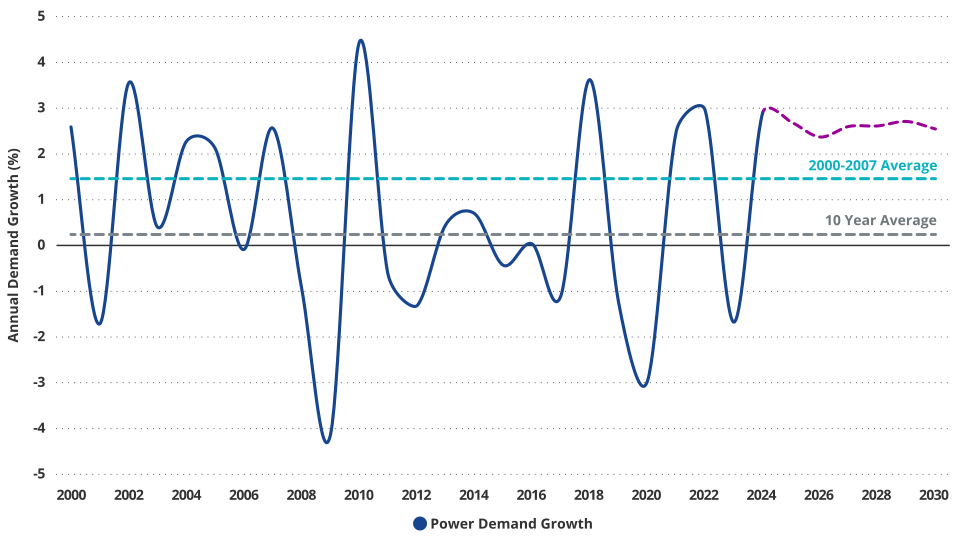
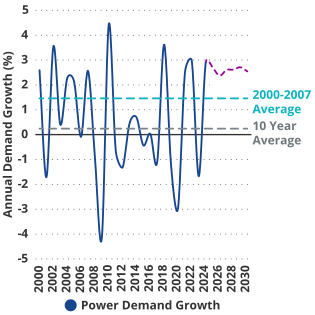
Fuente: Goldman Sachs. Crecimiento anual de la demanda eléctrica en EE. UU. (histórico y pronosticado). Los pronósticos (a partir de 2025) son estimaciones y están sujetos a cambios. Los pronósticos se presentan únicamente con fines ilustrativos y no constituyen una garantía de resultados futuros. El desempeño pasado no es indicativo de resultados futuros.
La IA convierte a la electricidad en una restricción
La inteligencia artificial es cada vez más una historia de electricidad, no solo de software. Las cargas de trabajo de entrenamiento e inferencia tienden a requerir energía confiable y concentrada, suministrada en ubicaciones específicas, lo que puede generar presión localizada sobre la red antes de que las cifras nacionales promedio de demanda reflejen cualquier cambio significativo.
Los centros de datos de hiperescala pueden requerir cargas eléctricas continuas muy grandes en un solo sitio, en algunos casos comparables con las necesidades de electricidad de una ciudad de tamaño mediano. Los grupos de investigación de la industria en general han proyectado que los centros de datos podrían pasar de representar hoy una participación de un solo dígito bajo del consumo eléctrico en EE. UU. a una participación significativamente mayor hacia el final de la década.1 Cuando la transmisión, la generación o la capacidad de interconexión están restringidas, las nuevas cargas grandes podrían enfrentar tiempos de espera de varios años, lo que a su vez podría influir en las decisiones sobre dónde terminará construyéndose la infraestructura de IA. En ese sentido, la electricidad está pasando de ser un insumo de fondo a un posible factor limitante para el despliegue de la IA.
La relocalización de la producción y la reindustrialización agregan una segunda capa
Más allá de los centros de datos, un renovado impulso hacia la manufactura nacional en semiconductores, vehículos eléctricos, baterías y otras industrias estratégicamente importantes está contribuyendo al crecimiento de la demanda eléctrica en EE. UU. Esta segunda capa puede ampliar el panorama de la demanda a más geografías y sectores, en lugar de concentrarlo únicamente en los centros de datos.
Las nuevas instalaciones industriales tienden a ser intensivas en consumo eléctrico, y en años recientes las iniciativas de política federal han proporcionado incentivos que podrían fomentar una mayor inversión en manufactura nacional. Muchos de los proyectos anunciados bajo esos programas implican grandes cargas eléctricas continuas que antes no existían en la huella industrial de EE. UU. El efecto acumulado, junto con el crecimiento de los centros de datos, podría traducirse en una historia de demanda más duradera que la de cualquier impulsor individual por separado.
La confiabilidad podría importar más que la capacidad bruta
Para cargas estratégicas como centros de datos e instalaciones industriales, la calidad del suministro eléctrico, incluida la confiabilidad, la capacidad de despacho y la estabilidad de la red, podría importar tanto como la cantidad absoluta de nueva generación agregada. Las cifras totales de megavatios por sí solas no capturan cómo se suministra la energía ni si está disponible cuando y donde se necesita.
Muchas cargas digitales e industriales operan de manera continua y pueden ser sensibles a apagones, variabilidad de voltaje o incluso interrupciones breves. Las distintas fuentes de generación tienen perfiles diferentes de confiabilidad y capacidad de despacho, y equilibrar recursos variables con carga base firme, almacenamiento, transmisión y flexibilidad por el lado de la demanda se ha convertido en una cuestión central de planificación para los operadores de red. Como resultado, la conversación sobre infraestructura eléctrica ha cambiado, en muchos casos, de centrarse principalmente en cuántos megavatios pueden agregarse a centrarse en qué tan confiablemente pueden suministrarse esos megavatios a cargas específicas.
Por qué la energía nuclear vuelve a entrar en la conversación estratégica
La energía nuclear ofrece una combinación de atributos, entre ellos factores de capacidad altos, bajas emisiones operativas de carbono y generación de carga base de larga duración, que se alinean razonablemente bien con las necesidades de cargas industriales y digitales grandes y persistentes. Como resultado, el sector nuclear ha vuelto a entrar en la conversación estratégica entre responsables de política pública, empresas de servicios públicos y grandes compradores de energía, de una manera que era menos común en décadas previas.
El factor de capacidad mide la producción real de electricidad como proporción de la producción máxima potencial. Bajo esta métrica, la energía nuclear en EE. UU. históricamente ha superado por un amplio margen a otras fuentes principales de generación, con un factor de capacidad de aproximadamente 93.1%, frente a cerca de 33.5% para la energía eólica y 23.3% para la energía solar.2 Esa diferencia refleja la capacidad de la energía nuclear para operar de forma continua independientemente del clima o la hora del día, lo que explica en parte por qué se ha vuelto atractiva para grandes compradores de energía con demanda continua.
En años recientes, varias grandes empresas de tecnología han anunciado contratos de compraventa de energía (PPA) que involucran fuentes nucleares. Microsoft, por ejemplo, acordó apoyar el reinicio de un reactor previamente retirado en Three Mile Island para ayudar a abastecer sus operaciones de centros de datos, y Amazon celebró un acuerdo multianual para abastecerse de energía nuclear para su infraestructura de nube. Se ha considerado reiniciar o extender la vida útil de ciertas plantas previamente retiradas o limitadas, y ha crecido el interés en diseños de reactores de nueva generación, incluidos los reactores modulares pequeños (SMR), entre empresas de servicios públicos y programas gubernamentales.
La energía nuclear no está exenta de consideraciones. Históricamente, los grandes proyectos nucleares han enfrentado sobrecostos, plazos extensos de permisos y construcción, complejidad del ciclo del combustible y percepciones públicas diversas. La administración actual ha reconocido estos desafíos en los plazos y ha anunciado órdenes ejecutivas y apoyo de política pública destinados a simplificar el proceso de aprobación y acelerar el desarrollo de nueva capacidad nuclear, lo que podría ayudar a atender algunos de los cuellos de botella históricos. Aun así, los resultados probablemente seguirán dependiendo de la implementación de la política, las estructuras de financiamiento y la capacidad de la industria para entregar proyectos a tiempo y dentro del presupuesto, y los inversionistas deben ponderar estas consideraciones junto con los factores favorables del lado de la demanda al evaluar la exposición al tema nuclear.
¿Hasta dónde se extiende la oportunidad de inversión en infraestructura eléctrica más allá de la generación?
La oportunidad de inversión vinculada al aumento de la demanda de electricidad podría extenderse mucho más allá de la propia generación eléctrica. Puede incluir la infraestructura más amplia necesaria para suministrar, gestionar y proteger el suministro eléctrico, incluidos los equipos de transmisión y distribución, los transformadores y otros componentes de la red, los sistemas de enfriamiento y gestión de energía, y las tecnologías de resiliencia o respaldo.
| Segmento | Qué hacen | Consideración de inversión |
| Equipos de red y transmisión | Transportan la electricidad desde la generación hasta el uso final | Alta intensidad de capital, respaldo de políticas públicas |
| Transformadores y componentes eléctricos | Permiten la modernización y expansión de la red | Oferta limitada, demanda en aumento |
| Operadores nucleares | Proporcionan energía de carga base confiable | Contratos de largo plazo, demanda en crecimiento |
| Gestión de energía y enfriamiento | Optimizan y protegen la infraestructura crítica | Crecimiento de la demanda impulsado por la IA |
| Sistemas de respaldo y resiliencia | Aseguran la continuidad operativa de cargas críticas | Esenciales para centros de datos y fábricas |
Cada uno de estos segmentos tiene sus propias dinámicas competitivas, consideraciones de cadena de suministro y exposiciones a políticas públicas, y es probable que el momento y la duración de la demanda varíen entre categorías. Los inversionistas que evalúan el tema más amplio de la energía eléctrica podrían considerar qué partes de la cadena de valor están más directamente expuestas a los impulsores de demanda que consideran más convincentes.
La electricidad como clase de activos estratégica
La disponibilidad y la confiabilidad de la electricidad parecen estar pasando del trasfondo al primer plano del análisis de inversión, de forma algo similar a como los semiconductores y la logística han sido reconocidos cada vez más como consideraciones estratégicas en toda la economía. Bajo este enfoque, la electricidad no es simplemente un costo de insumo. También puede ser una restricción que ayuda a definir dónde se asigna el capital y qué industrias pueden escalar.
Las decisiones de asignación de capital en inteligencia artificial, computación en la nube, manufactura avanzada, la base industrial de defensa y la electrificación en sentido amplio podrían depender cada vez más del acceso a energía confiable y asequible. Para los inversionistas con horizontes de largo plazo, esta dinámica podría sugerir tratar la infraestructura eléctrica como una exposición temática, en lugar de considerarla únicamente una asignación defensiva a empresas de servicios públicos, aunque reconociendo los riesgos cíclicos y regulatorios que históricamente han afectado al sector.
¿Cómo pueden los inversionistas acceder a exposición al sector nuclear y a la infraestructura eléctrica?
Para los inversionistas que buscan expresar una visión sobre la energía nuclear y el ecosistema más amplio del uranio y la energía nuclear, los fondos cotizados en bolsa (ETF) ofrecen un vehículo accesible. El VanEck Uranium and Nuclear ETF (NLR) está diseñado para ofrecer exposición diversificada a empresas involucradas en la minería de uranio y la generación de energía nuclear, incluidas empresas de servicios públicos, operadores de plantas y otros participantes relacionados de la industria en múltiples geografías.
NLR busca replicar lo más fielmente posible, antes de comisiones y gastos, el precio y el desempeño de rendimiento del MarketVector Global Uranium and Nuclear Energy Index, que tiene como objetivo seguir el desempeño general de las empresas involucradas en la industria del uranio y la energía nuclear. El fondo ofrece exposición a múltiples segmentos de la cadena de valor nuclear en un solo vehículo listado en bolsa y con liquidez diaria.
A medida que aumenta la demanda de energía confiable y despachable junto con la expansión de la infraestructura de IA, la relocalización de la producción y la electrificación en sentido amplio, el sector nuclear se posiciona cada vez más en el centro de la conversación estratégica sobre carga base. NLR ofrece a los inversionistas exposición integral al ecosistema nuclear en una sola operación, proporcionando una forma de participar en el tema de largo plazo de la electricidad como un activo estratégico.
Fuentes
1 Las proyecciones de la industria sobre el consumo de electricidad de los centros de datos varían según la metodología y la fuente. Véase Electric Power Research Institute (EPRI), "Powering Intelligence: Analyzing Artificial Intelligence and Data Center Energy Consumption," 2024, e International Energy Agency (IEA), "Electricity 2024," enero de 2024.
2 U.S. Department of Energy, Office of Nuclear Energy, "5 Fast Facts About Nuclear Energy," con base en datos del factor de capacidad de la U.S. Energy Information Administration, 2024.
Related Insights


Related Insights
23 julio 2026
14 julio 2026
06 julio 2026
25 junio 2026
23 julio 2026
Después de tres años de sólido desempeño, muchas acciones del sector nuclear y del uranio han devuelto parte de sus ganancias. Analizamos qué impulsó el retroceso, qué ha salido bien y la oportunidad que se presenta hacia adelante.
14 julio 2026
Los shocks geopolíticos del segundo trimestre de 2026 hicieron que las materias primas subieran y bajaran con fuerza. La selección activa de valores resultó fundamental, ya que el petróleo retrocedió, el oro registró una caída y el acero subió a máximos de varios años.
06 julio 2026
La energía nuclear está cobrando impulso como una solución limpia y confiable, impulsada por la innovación en la minería, la tecnología y las empresas de servicios públicos.
25 junio 2026
Las tendencias de inversión en energía, no solo los precios del petróleo, podrían definir el próximo ciclo. Las empresas de servicios para yacimientos petroleros y las refinadoras podrían beneficiarse a medida que crecen las necesidades de capacidad a nivel global en producción, transporte y refinación.
03 junio 2026
Explore por qué las tierras raras y el cobre son fundamentales para la IA, la defensa y la electrificación, cómo las vulnerabilidades de suministro están reconfigurando los mercados de materias primas y qué deben observar los inversionistas en las acciones de recursos.