Stronger Than Ever: Steel Rebounds to Start the Year
17 March 2023
Read Time 3 MIN
The steel industry started the year with a bang. Prices for the commodity have rebounded from the low at the end of last year, with various producers announcing price hikes from December into February. While rebar and plate prices are still off from the extreme levels seen about a year ago, they are up modestly to start the year and may be poised to move higher. Spreads on rebar and plate steel have compressed some with the rise in input prices; however, they are still above historical averages and expected to remain there. With a seasonally stronger period on the horizon and other factors, including the U.S. Infrastructure Act, a recovery in automobile production and demand from overseas, the steel industry is well-positioned for a continued rebound.
Steel Prices Rebound
FIBER US Commodity Steel Spot Price | 9/1/22 - 3/12/23
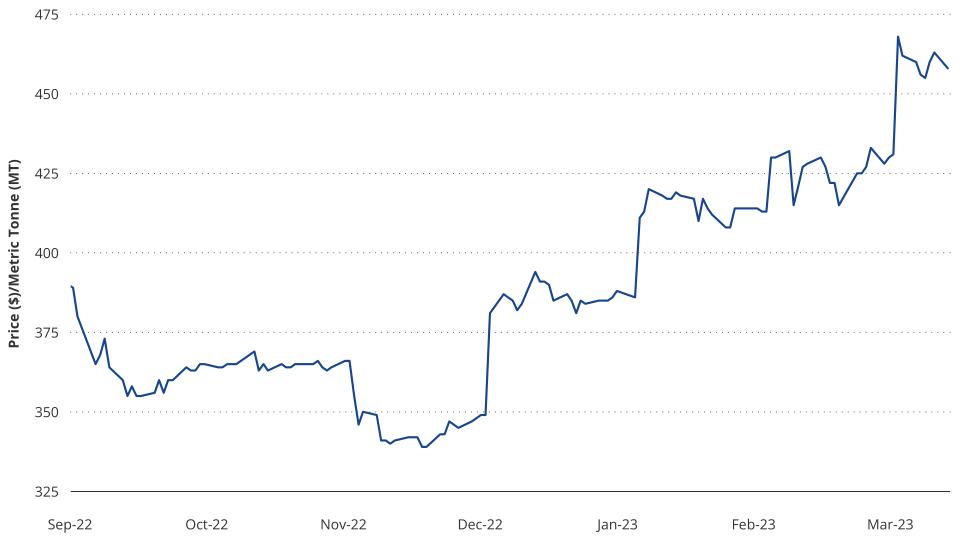
Source: Bloomberg. FIBER (Foundation for International Business and Economic Research) US Commodity Steel Spot Price Index represents the average steel prices for No.1 heavy melt steel from Chicago, Philadelphia and Pittsburgh. Past performance is no guarantee of future results.
Increased Infrastructure Spending Provides Boost
An expected rise in spending on U.S. infrastructure is set to boost the steel industry's outlook in the coming years. The Infrastructure and Jobs Act signed into law last November provides $550 billion in new funding over the next several years. This spending is expected to increase domestic steel consumption by roughly 17%.1 The boost in U.S. infrastructure spending could help mitigate any moderating economic growth and support demand for steel. Spending on renewable-energy projects, like wind turbines, is also expected to provide additional demand for steel.
Expected Demand Overseas
Strong demand from overseas is expected to support the steel industry's positive outlook. Domestic plate prices should be supported by a healthy export market, given Ukraine supplied an estimated 30% of Europe's plate - a void that will need to be filled.1 It is also expected that the reconstruction plans in Turkey, following the recent earthquakes that decimated the country, will keep prices elevated for the rest of the year. The Turkish government has said it will require over millions of tons of rebar and is expected to begin reconstruction plans in the coming months. Additionally, China's easing of strict Covid-19 measures and its plan for rapid economic recovery is expected to support iron ore prices and steel demand.
Automotive Recovery to Aid Steel Outlook
Lastly, the automotive industry, one of the key end-markets for steel with each vehicle using almost a ton, is expected to support demand for the steel industry. The chip shortage over the past year hampered automotive production and related steel demand. However, now the chip shortage is beginning to alleviate, and increased automobile production is expected to boost demand for steel, aiding the steel industry's outlook.
In conclusion, the steel industry is set for a continued rebound, with increased infrastructure spending, expected demand overseas and a recovery in automotive production all contributing to the positive outlook. Investors should keep an eye on the global steel industry as an interesting area of the market.
Accessing the Steel Industry
The VanEck Steel ETF (SLX) seeks to replicate as closely as possible, before fees and expenses the price and yield performance of the NYSE Arca Steel Index (STEEL), which is intended to track the overall performance of companies involved in the steel sector. SLX is the only ETF covering steel specifically, investing in companies primarily involved in activities related to steel production, including mill operation, steel fabrication, and the extraction and reduction of iron ore.
1 Source: Bloomberg; North America Steel 2023 Outlook; March 6th, 2023.
Source for all data unless otherwise noted: Bloomberg.
Related Insights

Related Insights
23 July 2026
After three strong years, many nuclear and uranium stocks have given back a chunk of their gains. We look at what drove the pullback, what’s gone right, and the opportunity ahead.
22 July 2026
Permian gas was literally worth less than nothing, for years. New pipeline infrastructure is changing that. Find out why this structural shift has us more convicted than ever on Permian E&P companies.
14 July 2026
Q2 2026 geopolitical shocks sent commodities surging and tumbling. Active security selection proved critical as oil retreated, gold sold off, and steel surged to multi-year highs.
06 July 2026
Nuclear energy is gaining momentum as a clean, reliable solution powered by innovation across mining, technology, and utilities.
25 June 2026
Energy investment trends, not just oil prices, may define the next cycle. Oilfield services and refiners could benefit as global capacity needs grow across production, transport, and refining.