Ready, Set, Gold! Bull Run May Have Just Begun
26 September 2024
Read Time 3 MIN
Gold is one of the best performing asset classes year-to-date, outperforming U.S. and international equities and bonds, commodities and other real assets (broadly speaking). Continued global central bank buying and heightened geopolitical tensions were among the key drivers of gold’s strong returns earlier in the year. More recently, the U.S. Federal Reserve’s (Fed’s) pivot on interest rates and nascent signs of returning investment demand have been more prevalent drivers and could, in our view, lead to even higher prices in the near-term.
Gold Has Delivered Impressive Year-to-Date Performance
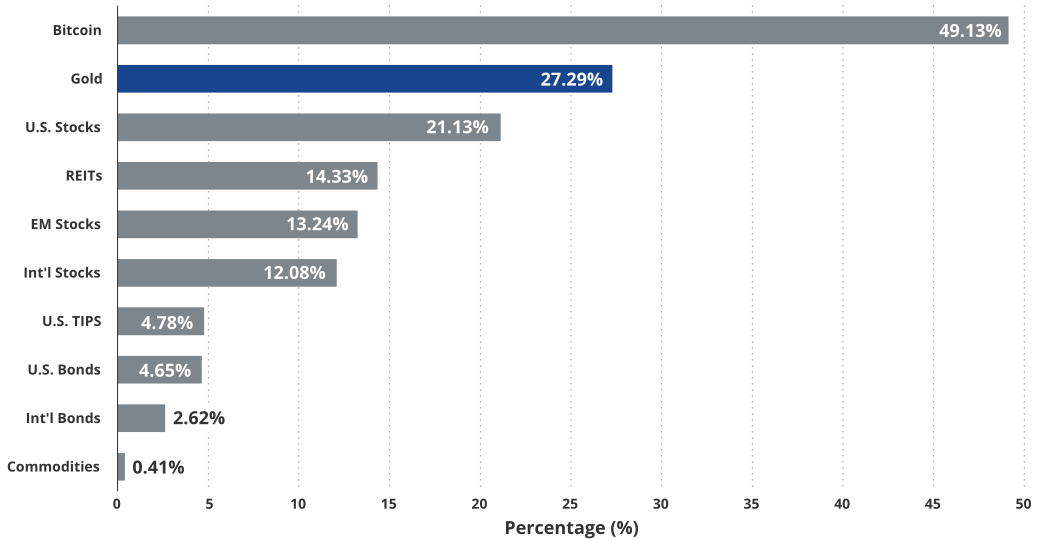
Source: FactSet. Data as of September 23, 2024. “U.S. Stocks” represented by the S&P 500 Index. “REITs” represented by FTSE NAREIT All REITs Index. “EM Stocks” represented by MSCI Emerging Markets Index. “International Stocks” represented by MSCI AC World ex USA Index. “U.S. TIPS” represented by Bloomberg U.S. TIPS (1-3 Year) Index. “U.S. Bonds” represented by Bloomberg U.S. Aggregate Bond Index. “International Bonds” represented by Bloomberg Global Aggregate ex US Index. “Commodities” represented by Bloomberg Commodity Index. Past performance is not indicative of future results.
Purchases from global central banks, particularly those in China and other emerging markets, has been a developing trend since the Global Financial Crisis (GFC). For the last several years, including the first half of 2024, this has contributed to strong gold demand. This trend, in our view, may suggest a broader desire by these countries to "de-dollarize," or reduce their dependence on the U.S. dollar. Not only have global central banks increased their gold reserves, many have communicated that they plan to continue purchasing more gold in the future.
Gold Reserves of China and Other Emerging Markets Are Growing
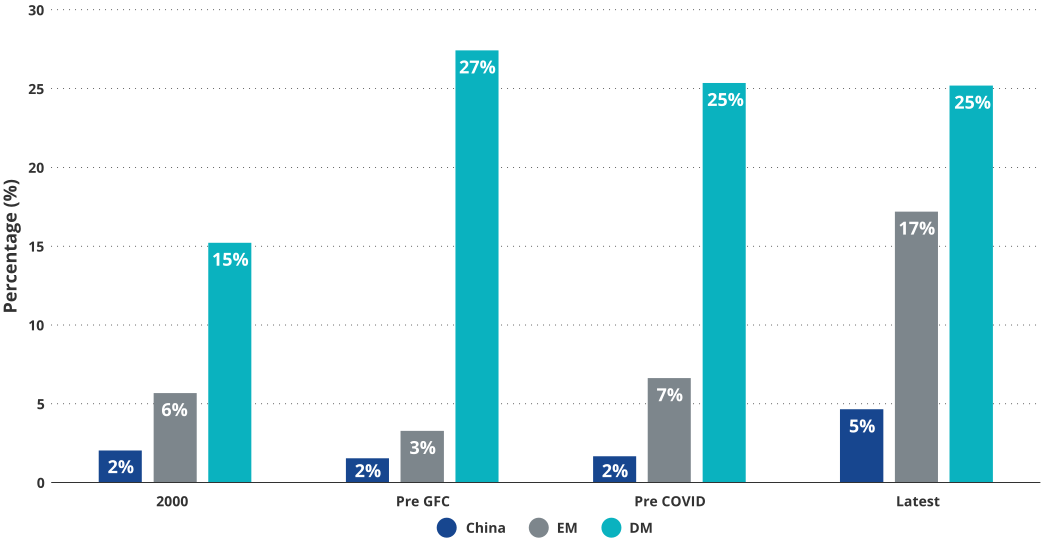
Source: Goldman Sachs, World Gold Council, VanEck. Data as of June 2024.
More recently, the primary catalyst for higher gold prices has been the Fed’s interest rate policy. The U.S. has focused on addressing high-interest rates in an attempt to achieve a "soft landing" for the economy following a period of record-high inflation. The Fed's recent 50 basis point reduction in its key interest rate was generally welcomed by gold markets. Historically, gold has performed well during such rate-cutting cycles, with an average cumulative return of around 25% over 500 trading days following the Fed's first cut. Rate cuts tend to weaken the U.S. dollar, further boosting gold’s appeal to global investors, and as uncertainty about the broader economy grows, gold benefits from its status as a safe-haven asset.
Gold Historically Performs Well Following First Fed Rate Cuts
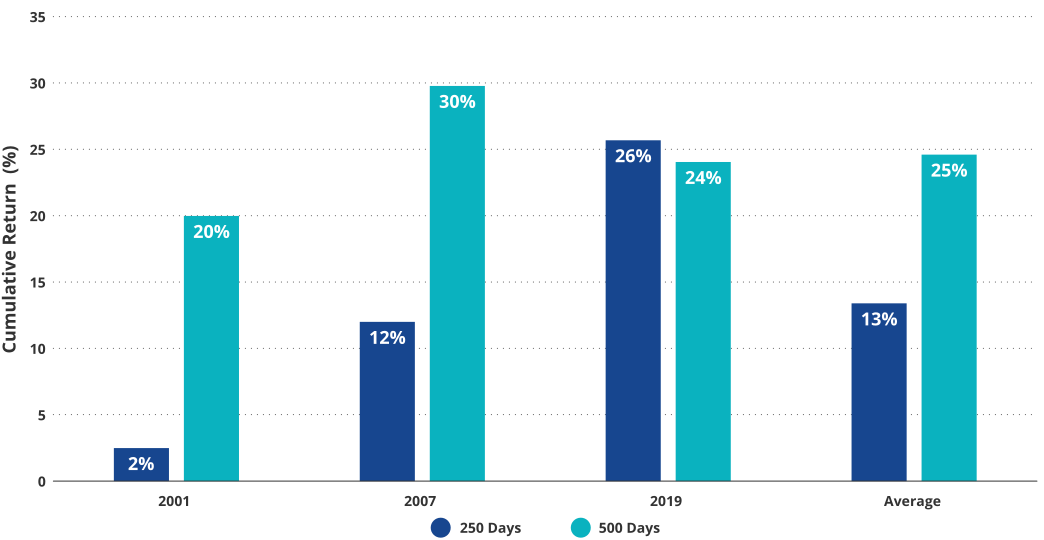
Source: JPMorgan, VanEck. Data as of June 2024. Past performance is not indicative of future results.
Absent from gold’s recent rally has been Western investment demand, tracked via gold-backed exchange-traded funds (ETFs), but flows into gold-backed ETFs have started to pick up. Historically, gold ETF flows have been a catalyst for higher gold prices. The question remains whether the disconnect between flows and prices will close and, if so, what implications it will have for an even higher gold price.
Until Recently, Gold Prices and ETF Gold Holdings Were Closely Connected
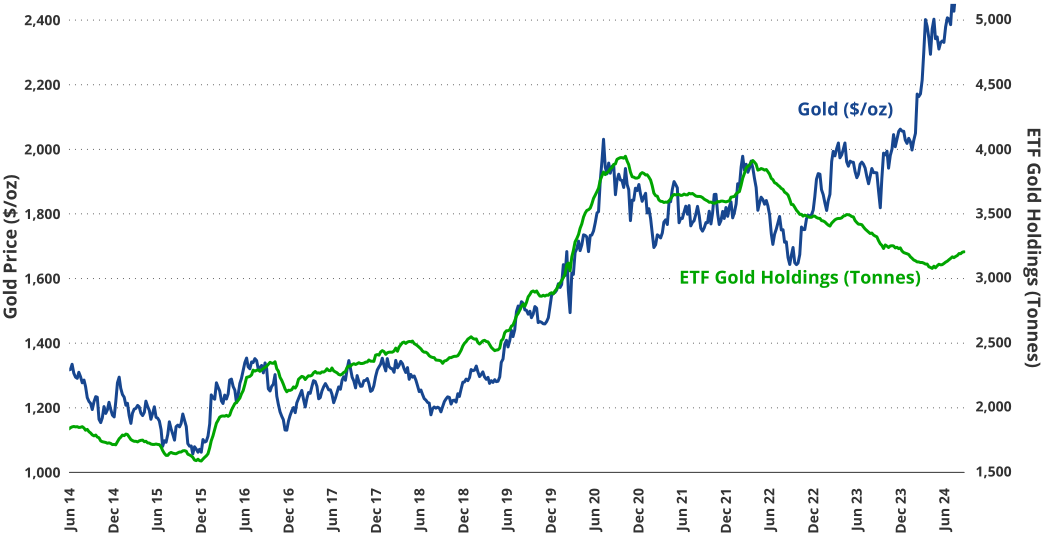
Source: World Gold Council. Data as of September 20, 2024. Past performance is not indicative of future results.
Looking forward, we believe gold is well positioned to continue its rally, especially if Western investors return to the market. The anticipation of further rate cuts by the Fed, along with continued inflationary pressures and geopolitical risks, are likely to further bolster gold's appeal as an attractive alternative to a weaker dollar and a hedge against market volatility. With this backdrop, we believe that gold prices could reach their inflation-adjusted highs of $2,800 per ounce in the near term.
Related Insights

Related Insights
10 March 2026
Gold miners are generating record margins and free cash flow as prices remain elevated. With disciplined capital allocation and costs below $2,000 per ounce, the sector appears well positioned for 2026.
10 February 2026
Gold price swings in January highlighted volatility, not weakness. Strong demand, central bank buying and improving miner fundamentals continue to support a durable long-term bull market in 2026.
14 January 2026
Gold hit record highs in 2025 as central banks and investors boosted demand. Mining stocks outpaced bullion, and despite sharp gains, attractive valuations and strong margins point to more upside in 2026.
18 December 2025
Get your portfolio ready for 2026 with detailed insights from VanEck’s investment team about the factors driving risk and returns in their respective asset classes.
09 December 2025
Gold rallied above $4,200 as markets shifted rate expectations. Record prices are driving disciplined mining-sector M&A, with the strongest opportunities in targeted regional consolidation.