Disinflation – Causes, Surprises, Prospects
10 November 2022
Read Time 2 MIN
Downside Inflation Surprises
Wow, what a morning! A sizable downside inflation surprise in the U.S. (including core prices), a sharp disinflation move in the Czech Republic, a nervous breakdown in Brazil’s currency and rates (despite on-going disinflation) and “stingy” credit aggregates in China – and we still have the whole day in front of us. Today’s releases confirmed that disinflation is getting more entrenched in parts of both emerging and developed markets (EM and DM) – a fact definitely appreciated by the market. The speed of disinflation, however, will matter more and more going forward. A larger than expected drop in Czech headline inflation (from 18% to 15.1% year-on-year) suggests that prices might indeed return to the target range sooner than in the rest of the region (see chart below), reassuring the market and the central bank that it is safe to remain on hold. Brazil’s prices continued to moderate (to 6%-handle1), but not as fast as expected, and this upside surprise might have been the “last drop” for the market, which is getting wary of the “chimerical” post-election transition team and President-elect spending plans.
China Growth, Stimulus
China’s domestic inflation pressures remain very low – and today’s surprisingly weak credit aggregates explain why: there is a lack of stimulus and a lack of demand. In all fairness, the October moderation was partly seasonal, and authorities did approve numerous measures to prop up growth (especially on the supply side), but the impact will remain muted while the COVID restrictions stay in place (there is a lot of buzz about potential changes, but nothing concrete yet). Mortgage lending suffered a major setback in October – a sizable sequential decline, and a reminder of near-term growth headwinds (real estate and construction account for a significant chunk of gross domestic product).
Global Policy Rate Outlook
Now, what do all these surprises mean for the policy outlook(s)? The dovish pivot narrative got a boost in the U.S., with the Fed Funds Futures now showing a zero probability of a 75bps hike in the December. The Czech swap curve now prices in about 50bps of cuts in the next 12 months, and today’s inflation surprise can encourage Central European neighbors – specifically Poland - to hold on for a bit longer before disinflation (hopefully) kicks in. Mexico and Peru will announce their policy rate decisions in the afternoon – nascent disinflation leaves room for slower rate hikes. And how about EM’s disinflation trailblazer, Brazil? It looks like concerns about the policy direction started to “contaminate” market expectations. The local swap curve now sees only 85-90bps of cuts in the next year – down form 185-200bps just days ago, and compared to ~500bps of cuts priced in for Chile. Stay tuned!
Chart at a Glance: EM Inflation Targets – Progressing At Different Speeds
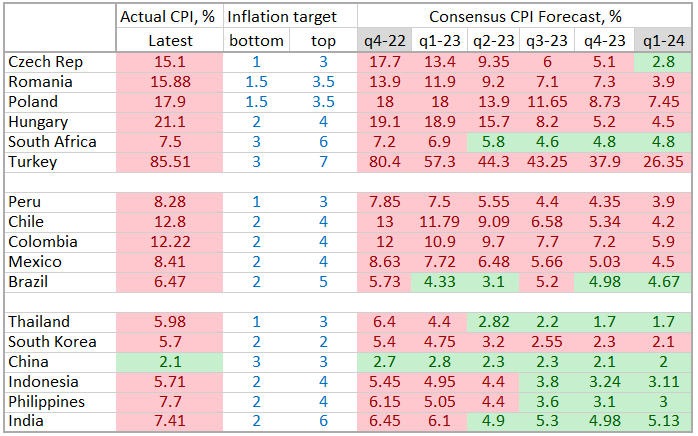
Source: Bloomberg LP.
Related Insights

Related Insights
10 febrero 2026
06 marzo 2025
20 febrero 2025
10 febrero 2026
La erosión del valor de la moneda vuelve a estar en el centro de atención. A continuación, analizamos qué lo está impulsando, qué podría revertirlo y cómo estamos posicionando las carteras en ambos escenarios.
07 abril 2025
Los aranceles de Trump avivan los temores de una guerra comercial, impulsando la volatilidad del mercado, el riesgo inflacionario y la amenaza de una recesión. Ante posibles represalias globales, el crecimiento a corto plazo corre un riesgo evidente.
06 marzo 2025
Los aranceles de Trump, la próxima fase de la IA y una posible revalorización del oro estadounidense podrían sacudir los mercados; los inversores que se adelanten a estas transiciones estarán mejor posicionados.
20 febrero 2025
El avance de la IA en China, la persistente inflación, el rendimiento superior del oro y el aumento de la demanda energética ponen de relieve un panorama de inversión cambiante.
16 enero 2025
En 2025, superar los problemas significa equilibrar la innovación tecnológica, las coberturas contra la inflación, los cambios energéticos y los riesgos derivados de los recortes del gasto y la inflación.