Welcome to VanEck
Select Investor Type
05 September 2023
Whether your clients are looking to invest, transact, or simply learn, it's crucial they have a grasp of the basics—brought to you here using language and concepts they will quickly understand.
Please note that VanEck has exposure to Bitcoin.
From the gold standard to paper money and now to digital assets, the means by which we transact and invest is constantly changing. Among the latest additions to the financial landscape are cryptocurrencies. While they may have seemed like a futuristic idea just a few years ago, cryptocurrencies are quickly becoming a mainstay in the world of investing. For many, they represent a fresh and potentially lucrative opportunity. However, with new opportunities come new questions and challenges. Where does one start? What are the basics? As a financial advisor, this is your guide to help your clients answer these questions and navigate uncharted waters, providing them with the necessary knowledge and resources.
Imagine a book. Every page of this book records a list of transactions, like a ledger. Now, imagine that thousands of people have this exact book and are always updating it simultaneously. Whenever someone wants to add a new page (or block of transactions), everyone with a copy of the book has to agree that the new page is correct. Once they agree, this new page is added to the book, and everyone updates their copies. This entire book is called a .
The power of blockchain lies in its transparency and security. Because so many people have copies and they always verify new pages together, it's incredibly difficult for someone to cheat or make false entries.
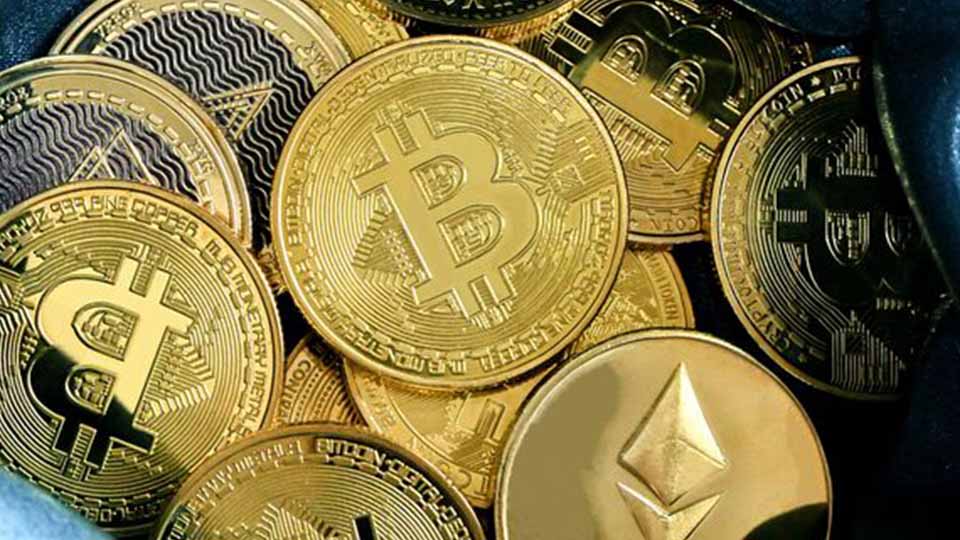
are like digital gold coins. However, instead of being made of metal, they exist on the blockchain. Blockchain ensures the integrity and transparency of cryptocurrency transactions. Every time someone sends or receives a cryptocurrency, that transaction is recorded on a block. Once enough transactions are recorded on a block, it's added to a chain of previous blocks—hence the term "blockchain." The decentralization of this ledger—meaning it's simultaneously maintained by numerous participants globally—ensures its security. If someone tries to alter transaction data on one block, it would conflict with the information held by others, causing the alteration to be rejected. This feature is what allows cryptocurrencies to operate without a central authority and makes them resistant to fraud.
, the first and most well-known cryptocurrency, operates on its own blockchain. People can send or receive Bitcoins (much like money) to make purchases or as an investment.
Bitcoin, introduced in 2009, was the first cryptocurrency and remains the most widely recognized. Think of it as the "gold standard" of crypto. Many investors view it as a store of value, like gold or silver, but in a digital form. Its decentralized nature – meaning it's not controlled by any government or central bank – has made it especially attractive to a broad audience.
While Bitcoin introduced the world to blockchain and cryptocurrencies, .
Let’s think of a traditional contract, like an agreement to buy a car. Usually, you'd involve third parties like banks or lawyers to ensure everyone keeps their promises. Now, imagine a digital contract that automatically does what it's supposed to when certain conditions are met, without needing a middleman. That's a smart contract!
Ethereum is a platform that allows these smart contracts to operate. It has its own cryptocurrency called Ether, which powers these contracts and ensures they run smoothly.
The world of cryptocurrencies can seem complex, but at its core, it’s about using technology to enhance trust and simplify transactions. With these expanded use cases, the potential and versatility of blockchain and cryptocurrencies become more evident. They're not just tech buzzwords; they're tools with the potential to revolutionize industries and daily life.
The concept of blockchain as a shared digital ledger has opened up a plethora of opportunities:
The advantage of blockchain is its decentralized nature. When information is stored across multiple nodes, it becomes tamper-resistant. Any malicious activity or inconsistency can be quickly detected and corrected. Ethereum expands the scope of blockchain through its smart contracts:
Bitcoin's decentralized nature has made it attractive for several use cases:
For investors keen on joining the Bitcoin wave, several pathways exist. Investors can directly purchase Bitcoin through cryptocurrency exchanges using fiat money, keeping their digital assets in . Those wary of direct ownership might opt for Bitcoin futures, trading on traditional futures exchanges, to gain exposure to the cryptocurrency's price movements.
As Bitcoin adoption has grown, so has investor demand for access via a more traditional wrapper, such as an ETF. While a spot Bitcoin ETF is not available in the U.S., investors can access Bitcoin futures through ETFs like the .
Investors interested in Bitcoin can also consider investing in digital asset companies that support the cryptocurrency ecosystem. Digital asset companies are distinctly different than digital assets themselves. The publicly-traded opportunity set of companies operating within the digital asset segment has grown considerably in recent years, boosted by widespread adoption of digital assets across an array of use cases. The offers exposure to the largest and most liquid companies in the digital assets segment.
VanEck is continuing to play a role in educating investors about Bitcoin and how to participate in the Bitcoin investment story. For more resources, visit our and catch up on the latest from our investment team.
To receive more Digital Assets insights, subscribe for our Crypto Newsletter
Important Information
This is not financial research but the opinion of the author of the article. We publish this information to inform and educate about recent market developments and technological updates, not to give any recommendation for certain products or projects. The selection of articles should therefore not be understood as financial advice or recommendation for any specific product and/or digital asset. We may occasionally include analysis of past market, network performance expectations and/or on-chain performance. Historical performance is not indicative for future returns.
For informational and advertising purposes only.
This information originates from VanEck (Europe) GmbH, Kreuznacher Straße 30, 60486 Frankfurt am Main. It is intended only to provide general and preliminary information to investors and shall not be construed as investment, legal or tax advice. VanEck (Europe) GmbH and its associated and affiliated companies (together “VanEck”) assume no liability with regards to any investment, divestment or retention decision taken by the investor on the basis of this information. Views and opinions expressed are current as of the date of this information and are subject to change with market conditions. Certain statements contained herein may constitute projections, forecasts and other forward looking statements, which do not reflect actual results. VanEck makes no representation or warranty, express or implied regarding the advisability of investing in securities or digital assets generally or in the product mentioned in this information (the “Product”) or the ability of the underlying Index to track the performance of the relevant digital assets market.
The underlying Index is the exclusive property of MarketVector Indexes GmbH, which has contracted with CryptoCompare Data Limited to maintain and calculate the Index. CryptoCompare Data Limited uses its best efforts to ensure that the Index is calculated correctly. Irrespective of its obligations towards the MarketVector Indexes GmbH, CryptoCompare Data Limited has no obligation to point out errors in the Index to third parties.
Investing is subject to risk, including the possible loss of principal up to the entire invested amount and the extreme volatility that ETNs experience. You must read the prospectus and KID before investing, in order to fully understand the potential risks and rewards associated with the decision to invest in the Product. The approved Prospectus is available at www.vaneck.com . Please note that the approval of the prospectus should not be understood as an endorsement of the Products offered or admitted to trading on a regulated market.
Performance quoted represents past performance, which is no guarantee of future results and which may be lower or higher than current performance.
Current performance may be lower or higher than average annual returns shown. Performance shows 12 month performance to the most recent Quarter end for each of the last 5yrs where available. E.g. '1st year' shows the most recent of these 12-month periods and '2nd year' shows the previous 12 month period and so on. Performance data is displayed in Base Currency terms, with net income reinvested, net of fees. Brokerage or transaction fees will apply. Investment return and the principal value of an investment will fluctuate. Notes may be worth more or less than their original cost when redeemed.
Index returns are not ETN returns and do not reflect any management fees or brokerage expenses. An index’s performance is not illustrative of the ETN’s performance. Investors cannot invest directly in the Index. Indices are not securities in which investments can be made.
No part of this material may be reproduced in any form, or referred to in any other publication, without express written permission of VanEck.
© VanEck (Europe) GmbH
This is a marketing communication. Please refer to the prospectus of the UCITS and to the KID before making any final investment decisions.
This information originates from VanEck (Europe) GmbH, which has been appointed as distributor of VanEck products in Europe by the Management Company VanEck Asset Management B.V., incorporated under Dutch law and registered with the Dutch Authority for the Financial Markets (AFM). VanEck (Europe) GmbH with registered address at Kreuznacher Str. 30, 60486 Frankfurt, Germany, is a financial services provider regulated by the Federal Financial Supervisory Authority in Germany (BaFin).
The information is intended only to provide general and preliminary information to investors and shall not be construed as investment, legal or tax advice VanEck (Europe) GmbH, VanEck Switzerland AG, VanEck Securities UK Limited and their associated and affiliated companies (together “VanEck”) assume no liability with regards to any investment, divestment or retention decision taken by the investor on the basis of this information. The views and opinions expressed are those of the author(s) but not necessarily those of VanEck. Opinions are current as of the publication date and are subject to change with market conditions. Certain statements contained herein may constitute projections, forecasts and other forward-looking statements, which do not reflect actual results. Information provided by third party sources is believed to be reliable and have not been independently verified for accuracy or completeness and cannot be guaranteed. Brokerage or transaction fees may apply.
All performance information is based on historical data and does not predict future returns. Investing is subject to risk, including the possible loss of principal.
No part of this material may be reproduced in any form, or referred to in any other publication, without express written permission of VanEck.
© VanEck (Europe) GmbH / VanEck Asset Management B.V.

09 March 2026
09 March 2026