China – At the Cusp of Reopening?
11 November 2022
Read Time 2 MIN
China Zero-COVID Policy
The overnight news about China’s easing some COVID restrictions – which came on the heels of a downside inflation surprise in the U.S. – were well received by the market. We saw very nice equity indices gains across the board, and some exceptional FX performance, such as a 427bps gain in the Korean won. China’s measures to “further optimize pandemic control” (a total of 20) are cautious, with the main focus on quarantine times, the frequency of testing and risk area delineations. However, the move sends an encouraging signal regarding China’s near-term growth outlook, especially as regards demand side (services, consumption) and the efficacy of the already approved policy stimulus. The just-announced measures to help struggling property developers came in handy as well.
EM Disinflation
China is the only independent global growth driver in emerging markets (EM), and the positive growth news is flowing at a time when more and more EMs are leaving peak inflation behind. Today’s downside inflation surprise in Romania is just another example. Disinflation should free up some policy space to deal with softer growth in the rest of EM, but it does not necessarily mean that (all) EMs will stop tightening, as inflation is still too far from the targets in most places and inflation expectations are elevated as well. This was the message sent by central banks in Mexico and Peru yesterday. The market sees at least 125bps more rate hikes in Mexico in the next six months, before there is any room for policy easing.
EM Rates and Fiscal Policy
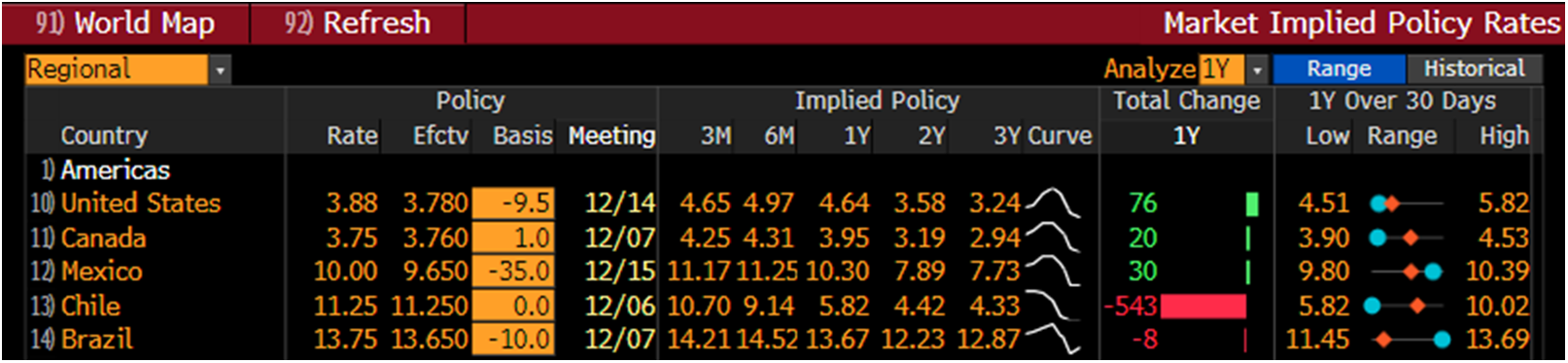
The pace of easing in EM could also be determined by the policy agenda – especially on the fiscal front. This is what drives the market expectations for the policy rate in Brazil right now (and probably makes the central bank very nervous, as well). Brazil’s swap curve was pricing some sizable rate cuts (~186-200bps) on a 1-year horizon going into the presidential elections runoff. The 1-year expectations have been adjusted to a mere -8bps in the past week (see chart below), with the market adding nearly 50bps of rate hikes between now and March. These abrupt changes reflect investors’ concerns about President-elect Luiz Inácio Lula da Silva’s spending plans, as well as the composition of his transition economic team. Stay tuned!
Chart at a Glance: Brazil’s Rapidly Shrinking Space for Rate Cuts
Source: Bloomberg LP
Related Insights

Related Insights
10 febrero 2026
06 marzo 2025
20 febrero 2025
10 febrero 2026
La erosión del valor de la moneda vuelve a estar en el centro de atención. A continuación, analizamos qué lo está impulsando, qué podría revertirlo y cómo estamos posicionando las carteras en ambos escenarios.
07 abril 2025
Los aranceles de Trump avivan los temores de una guerra comercial, impulsando la volatilidad del mercado, el riesgo inflacionario y la amenaza de una recesión. Ante posibles represalias globales, el crecimiento a corto plazo corre un riesgo evidente.
06 marzo 2025
Los aranceles de Trump, la próxima fase de la IA y una posible revalorización del oro estadounidense podrían sacudir los mercados; los inversores que se adelanten a estas transiciones estarán mejor posicionados.
20 febrero 2025
El avance de la IA en China, la persistente inflación, el rendimiento superior del oro y el aumento de la demanda energética ponen de relieve un panorama de inversión cambiante.
16 enero 2025
En 2025, superar los problemas significa equilibrar la innovación tecnológica, las coberturas contra la inflación, los cambios energéticos y los riesgos derivados de los recortes del gasto y la inflación.