Los precios de las materias primas aumentan por interrupciones en el suministro energético
08 abril 2026
Read Time 3 MIN
Conclusiones clave
- Las interrupciones energéticas impulsaron ganancias generalizadas en materias primas
- CMCITR registró sólidos rendimientos, pero quedó por detrás de BCOM
- Las limitaciones de la oferta contribuyeron a las ganancias en todos los sectores
Resumen del mercado de materias primas en el primer trimestre de 2026
Los mercados de materias primas subieron en el primer trimestre de 2026, respaldados por interrupciones en el suministro vinculadas al conflicto con Irán y la reducción del tránsito por el Estrecho de Ormuz. Estos sucesos limitaron los flujos globales de petróleo crudo y gas natural licuado (GNL), contribuyendo al aumento de los precios de la energía.
El impacto de la menor disponibilidad de GNL también se extendió a otros sectores. La reducción en la producción de fertilizantes contribuyó a condiciones de oferta agrícola más ajustadas y a precios más altos de los cultivos. En los metales industriales, las interrupciones regionales afectaron la producción de aluminio y la actividad de transporte marítimo. Al mismo tiempo, la continua incertidumbre geopolítica respaldó la demanda de metales preciosos.
Todos los principales sectores de materias primas registraron rendimientos positivos durante el trimestre.
CMCITR frente a BCOM: Resumen del desempeño
El UBS CM Commodity Index (CMCITR) obtuvo un rendimiento de 16,68 % en el primer trimestre de 2026, mientras que el Bloomberg Commodity Index (BCOM) registró un 24,41 %.
CMCITR tuvo un desempeño inferior al de BCOM, debido principalmente a una menor exposición a los metales preciosos, en particular al oro. El oro contribuyó de manera más significativa al desempeño del BCOM debido a su mayor ponderación. Las diferencias en las exposiciones agrícolas, incluido el aceite de soja, también contribuyeron modestamente, mientras que una mayor asignación a los metales industriales proporcionó una compensación parcial.
Los mercados energéticos pasaron a una marcada backwardation (o retrocesión) durante el trimestre, con los precios del mes cercano aumentando más bruscamente que los contratos a más largo plazo. La posición en contratos cercanos del BCOM captó una mayor parte de este movimiento, mientras que la exposición del CMCITR más adelante en la curva resultó en una participación relativamente menor en la subida. Además, el reequilibrio realizado por BCOM a principios de enero aumentó la exposición a varias materias primas que posteriormente obtuvieron buenos resultados, lo que contribuyó a una diferencia de rentabilidad mayor que la sugerida por el análisis de atribución de ponderación estática.
Desempeño por sector de materias primas: Principales contribuyentes al CMCITR en el primer trimestre de 2026
Un análisis más detallado del desempeño del sector de materias primas resalta los principales impulsores de los rendimientos del CMCITR en el primer trimestre de 2026, siendo el sector energético el principal contribuyente al rendimiento.
El siguiente gráfico muestra las contribuciones por sector al desempeño del CMCITR en el primer trimestre de 2026, destacando el impacto predominante de la energía junto con las ganancias en otros sectores de materias primas.
Pesos sectoriales del índice comparativo
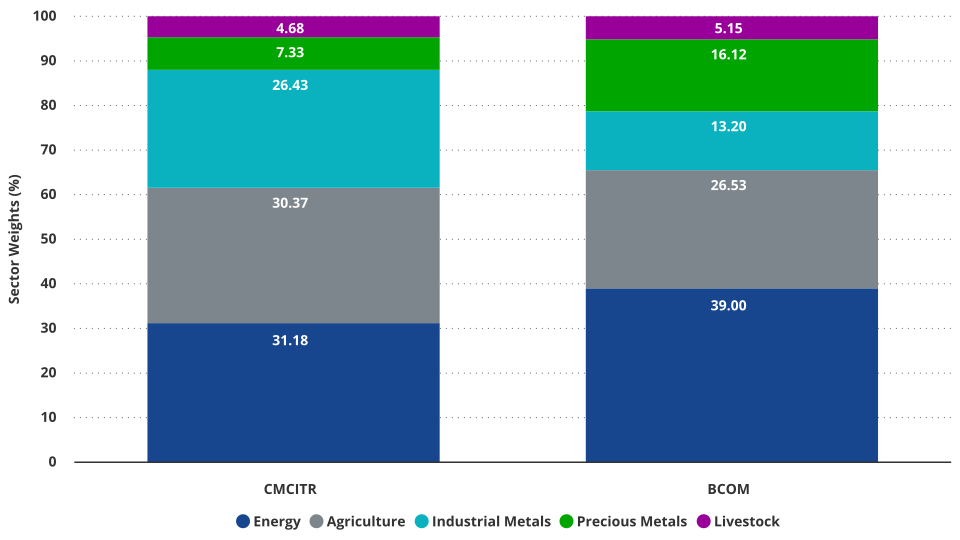
Fuente: VanEck, Bloomberg. Información a marzo de 2026.
- La energía fue el principal motor de los rendimientos. Las restricciones de suministro en el petróleo crudo y los productos refinados respaldaron aumentos generalizados de precios, con los destilados mostrando un desempeño particularmente sólido.
- El sector agrícola se benefició de condiciones de oferta más ajustadas. Las limitaciones en los fertilizantes contribuyeron a mayores precios de los cultivos, siendo el aceite de soja uno de los de mejor desempeño.
- Los metales industriales registraron ganancias moderadas. Los precios del aluminio se vieron respaldados por las interrupciones de la producción y el transporte en Oriente Medio.
- Los metales preciosos subieron, apoyados en parte por la continua incertidumbre geopolítica.
- Ganado mostró incrementos de precios, lo que refleja mayores costos de insumos y tendencias más amplias del mercado.
Perspectivas para el mercado de materias primas ¿Qué podría impulsar los precios en 2026?
Los mercados de materias primas pueden seguir viéndose influidos por las condiciones de la oferta y los acontecimientos geopolíticos. Las actuales limitaciones que afectan al transporte de energía podrían seguir sosteniendo los precios a corto plazo.
Los mercados agrícolas pueden seguir siendo sensibles a los costos de los insumos, incluida la disponibilidad de fertilizantes. Los metales preciosos podrían seguir recibiendo apoyo si la incertidumbre persiste.
Desde la perspectiva de un índice, la exposición diversificada de CMCITR a los futuros puede dar lugar a resultados diferentes en función de la forma de las curvas de las materias primas. En períodos de backwardation, la exposición a contratos del mes cercano puede beneficiarse de manera más directa, mientras que una exposición más equilibrada a lo largo de la curva puede ofrecer diferentes características de rendimiento a lo largo del tiempo.
Obtenga más información sobre el VanEck CM Commodity Index Fund y el VanEck CMCI Commodity Strategy ETF (CMCI), que buscan replicar, antes de comisiones y gastos, al CMCITR.
Related Insights


Related Insights
23 julio 2026
14 julio 2026
06 julio 2026
20 mayo 2026
23 julio 2026
Después de tres años de sólido desempeño, muchas acciones del sector nuclear y del uranio han devuelto parte de sus ganancias. Analizamos qué impulsó el retroceso, qué ha salido bien y la oportunidad que se presenta hacia adelante.
14 julio 2026
Los shocks geopolíticos del segundo trimestre de 2026 hicieron que las materias primas subieran y bajaran con fuerza. La selección activa de valores resultó fundamental, ya que el petróleo retrocedió, el oro registró una caída y el acero subió a máximos de varios años.
06 julio 2026
La energía nuclear está cobrando impulso como una solución limpia y confiable, impulsada por la innovación en la minería, la tecnología y las empresas de servicios públicos.
20 mayo 2026
La IA, la relocalización de operaciones y la electrificación están impulsando el primer aumento real en la demanda de electricidad en Estados Unidos en décadas. La electricidad confiable se está convirtiendo en un activo estratégico, y el sector nuclear está en el centro de esta tendencia.
19 mayo 2026
Un conjunto poco visible de materiales de subproducto impulsa la vida moderna, y su suministro depende por completo de las decisiones que se toman para otras industrias. Conozca las materias primas acompañantes y por qué son relevantes ahora.