Welcome to VanEck
Select Investor Type



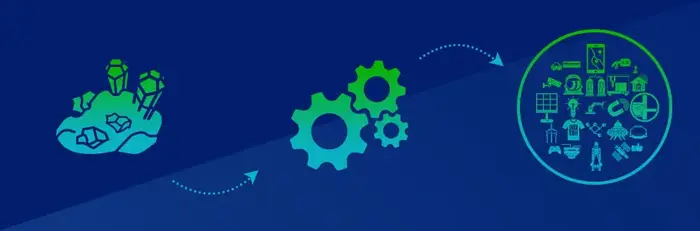
Invest in the specialist mining companies that hold the key to future of technological and environmental innovation thanks to the forward-looking Rare Earth ETF by VanEck.
| Metal | Use Case |
| Rare Earths | Various parts of electric and hybrid vehicles; air conditioners; wind power generators; fluorescent lights; plasma screens; portable computers; handheld electronic devices |
| Lithium | Electric and hybrid vehicle batteries |
| Molybdenum | Missile and aircraft parts; petroleum refining; filament material; ultra-high strength steels |
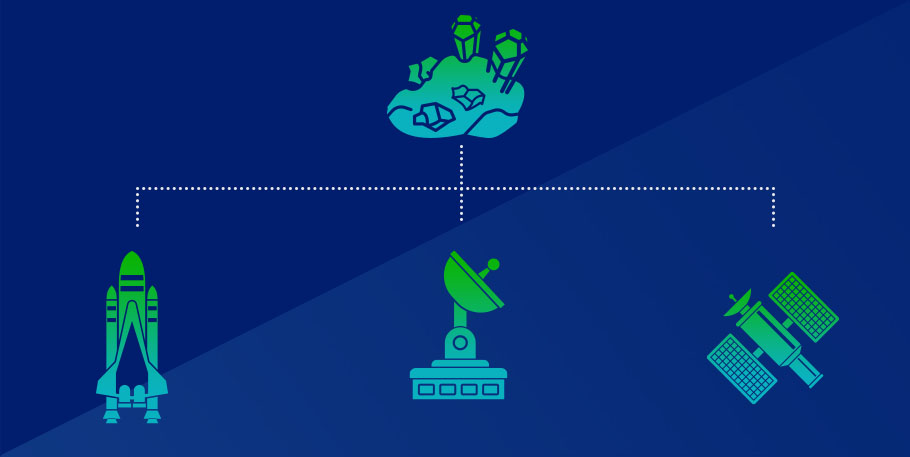
| Titanium | Aerospace jet engines, missiles, and space crafts; chemical industrial process; medical prosthetics; dental instruments and implants; mobile phones |
| Cobalt | Surgical instruments; cutting tools and drills used in metal-working and mining; medical prosthetics; batteries |
| Tungsten | Lightbulb filaments; television tubes; X-ray tubes; super alloys; cutting tools and drills |
| Manganese | Disposable dry cells and batteries; stainless steels; aluminum alloys |
| Gallium | Semiconductors |
| Chromium | Jet engines and gas turbines; cookware and cutlery; magnetic tape used in audio recording; blast furnaces and cement kilns |
| Tantalum | Electronic components; metalworking equipment; jet engine components; chemical process equipment, nuclear reactors; missile parts |
| Germanium | Semiconductor material; fiber optic systems and infrared optics; solar electric applications |
| Indium | LCD television displays; LED lights; solar cells |
Source: VanEck.

Investments in natural resources and natural resources companies, which include companies engaged in alternatives (e.g., water and alternative energy), base and industrial metals, energy and precious metals, are very dependent on the demand for, and supply and price of, natural resources and can be significantly affected by events relating to these industries, including international political and economic developments, embargoes, tariffs, inflation, weather and natural disasters, limits on exploration, often changes in the supply and demand for natural resources and other factors.
Investments in emerging market countries are subject to specific risks and securities are generally less liquid and less efficient and securities markets may be less well regulated. Specific risks may be heightened by currency fluctuations and exchange control; imposition of restrictions on the repatriation of funds or other assets; governmental interference; higher inflation; social, economic and political uncertainties.
The securities of smaller companies may be more volatile and less liquid than the securities of large companies. Smaller companies, when compared with larger companies, may have a shorter history of operations, fewer financial resources, less competitive strength, may have a less diversified product line, may be more susceptible to market pressure and may have a smaller market for their securities.