Reshoring with Robotics & Bridging the Labor Gap
April 27, 2026
Read Time 4 MIN
Key Takeaways:
- Declining robot costs plus rising labor expenses create a widening margin advantage for early adopters.
- Reshoring domestic manufacturing is increasingly viable as robots grow more affordable and flexible.
- Aging populations and shrinking workforces are making robotics more like a structural necessity, not a luxury.
The affordability and capabilities of robots have led to their widespread adoption in many different industries, making them an essential part of our daily lives. Robotics technology will continue to revolutionize the way we work by automating mundane and dangerous tasks that previously required humans to perform. As businesses strive to stay competitive and meet the demands of their customers, the need for robotics continues to grow. From manufacturing and healthcare to logistics and agriculture, robots are now an integral part of many industries.
With a growing number of applications, the industrial robotics industry presents a compelling investment opportunity. This industry involves tasks like designing, developing, manufacturing, and selling robots or robotics systems for a wide range of applications. The cost-effectiveness of robots, along with advancements in technology and demographic shifts, have created a favorable environment for investors to consider this rapidly growing sector.
Robotics Affordability: From Upfront Cost to Long-Term Advantage
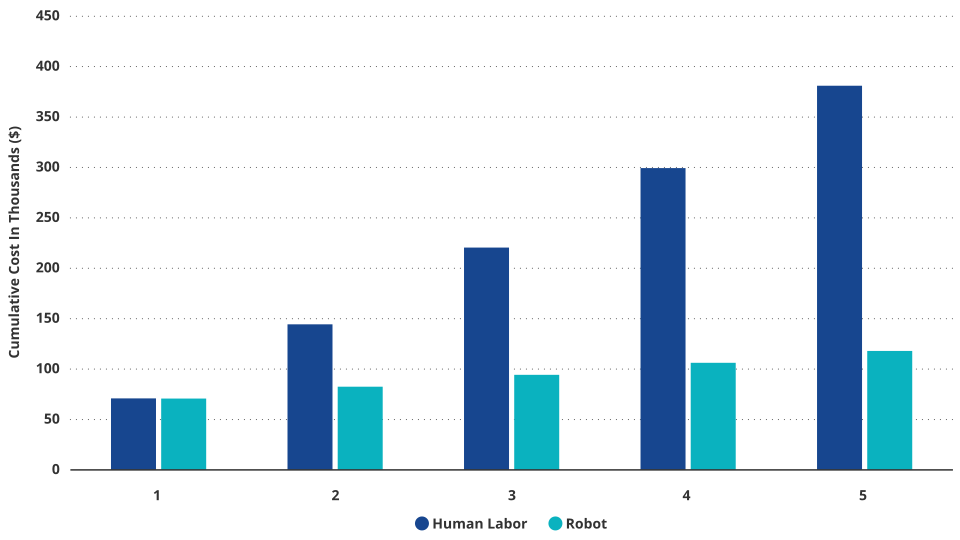
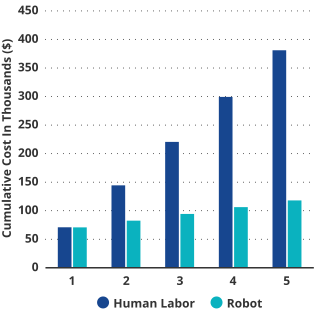
While industrial robots often require a higher upfront investment, the economics shift quickly over time. As shown in the chart, cumulative costs for automation rise slowly after deployment, while human labor expenses compound each year through wages, benefits, and turnover. Robots typically reach cost parity within the first one to two years, after which they become significantly more cost-effective, with the gap widening over time as labor costs continue to grow and robot operating costs remain relatively low.
This shift is driven by technological advancements that have improved robot productivity, reliability, and utilization, allowing them to operate longer hours and perform tasks with greater consistency. The result is not just more affordable automation, but a structural decline in cost per unit of output. For companies, this makes robotics an increasingly powerful lever for reducing cost of goods sold, expanding margins, and scaling production more efficiently over time.
Average Cost of Industrial Robots
Source: Statista. As of 2026.
How Robotics Is Driving the Reshoring of U.S. Manufacturing
Companies can now consider reshoring their manufacturing operations with robots' increased affordability and capability. This trend of bringing production back home from overseas is being fueled by the ability of customized robots to be quickly programmed and integrated into operations, providing greater flexibility and scalability. Despite companies not previously considering reshoring due to high costs and limited robot capabilities, advancements in technology and increased efficiency have made robot installation more feasible. As a result, reshoring has become a viable option for companies, paving the way for a potential shift in manufacturing from offshore to domestic locations.
Advances in Robotics Technology Are Expanding Industrial Applications
Rapidly growing technology has strengthened the demand for robotics. Advancements in user-friendly interfaces, programming languages, and sensor technologies have made robots become more intuitive and easier to operate. Keyence Corp’s (TYO: 6861) vision-guided robots exemplify this cutting-edge technology through streamlining tasks, boosting productivity, and minimizing changeover delays. These advancements have enhanced production efficiency and broadened the scope of robot implementation across various sectors, including healthcare, logistics, and agriculture.
How Industrial Robotics Addresses Labor Shortages and an Aging Workforce
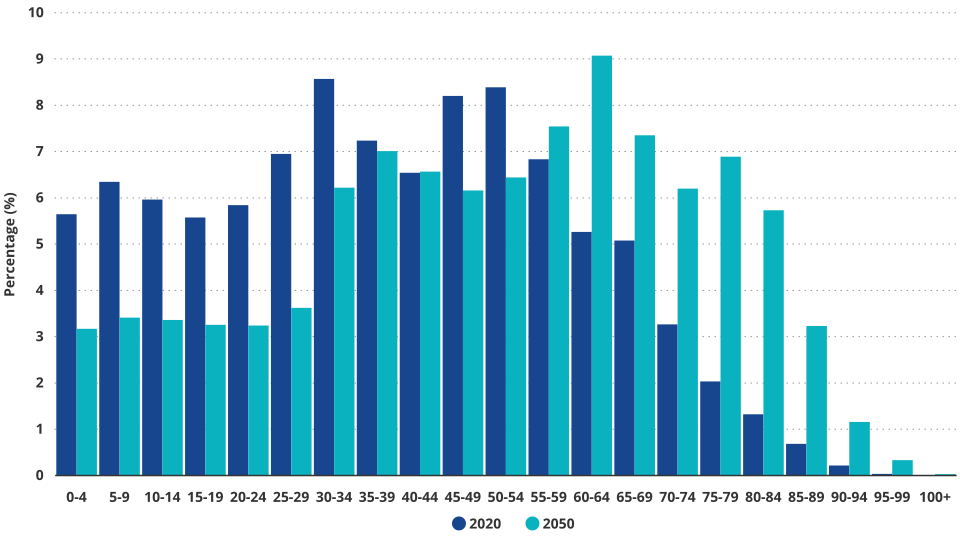
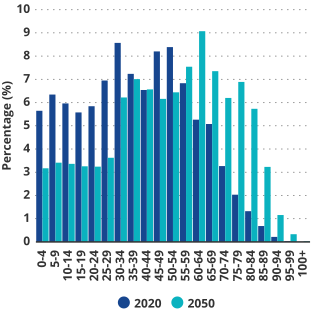
Demographic factors are playing a growing role in the adoption of industrial robotics. As birth rates decline and populations age, many countries are facing a shrinking working-age population and persistent labor shortages. This trend is especially pronounced in East Asia, where countries like South Korea, Japan, and China are all experiencing rapid aging and declining workforce participation. South Korea already has the highest robot density in the world, reflecting how severe demographic pressures can accelerate automation adoption.
China, while not as advanced in aging as Korea or Japan, is experiencing this shift at a much larger scale. Its working-age population is beginning to decline, creating upward pressure on wages and increasing the need for automation to sustain manufacturing output. Research shows that population aging is a meaningful driver of robot adoption, as firms substitute capital for labor to maintain productivity.
As these demographic pressures intensify across major manufacturing economies, robotics is becoming less of a discretionary investment and more of a structural necessity to maintain industrial capacity and economic growth.
China’s Population is Growing Older by 2050
Source: United Nations. As oF 2024.
How To Invest in Robotics
VanEck Robotics ETF (IBOT) offers concentrated exposure to the promising investment opportunity in the robotics industry, fueled by the widespread adoption of robots in various industries and sectors. The fund seeks to track a diversified index emphasizing the many subthemes in robotics. Enhanced affordability and advanced capabilities of robots have played a pivotal role in fueling this adoption, making them an attractive option for those seeking long-term growth in the field.
IBOT | VanEck Robotics ETF
To receive more Thematic Investing insights, sign up in our subscription center.

Important Disclosures
Keyence Corp is 4.85% of IBOT net assets as of 4/21/26.
ABB Ltd is 5.63% of IBOT net assets as of 4/21/26.
This is not an offer to buy or sell or a recommendation to buy or sell any of the securities/financial instruments mentioned herein. The information presented does not involve the rendering of personalized investment, financial, legal, or tax advice. Certain statements contained herein may constitute projections, forecasts and other forward-looking statements, which do not reflect actual results, are valid as of the date of this communication and subject to change without notice. Information provided by third party sources are believed to be reliable and have not been independently verified for accuracy or completeness and cannot be guaranteed. VanEck does not guarantee the accuracy of third-party data. The information herein represents the opinion of the author(s), but not necessarily those of VanEck or its employees.
An investment in the Fund may be subject to risks which include, among others, investing in the robotics industry, information technology sector, industrials sector, equity securities, medium-capitalization companies, Japanese issuers, foreign securities, semiconductor industry, depositary receipts, market, operational, index tracking, authorized participant concentration, new fund, no guarantee of active trading market, trading issues, passive management, fund shares trading, premium/discount and liquidity of fund shares, non-diversified and concentration risk, all of which may adversely affect the Fund. Medium-capitalization companies may be subject to elevated risks.
BlueStar®Robotics Index is the exclusive property of MarketVector Indexes GmbH (a wholly owned subsidiary of VanEck), which has contracted with a third party calculation agent to maintain and calculate the Index. The agent uses its best efforts to ensure that the Index is calculated correctly. Irrespective of its obligations towards MarketVector Indexes GmbH, the agent has no obligation to point out errors in the Index to third parties. The VanEck Robotics ETF is not sponsored, endorsed, sold or promoted by MarketVector Indexes GmbH and MarketVector Indexes GmbH makes no representation regarding the advisability of investing in the Fund.
An investor cannot invest directly in an index. Returns reflect past performance and do not guarantee future results. Results reflect the reinvestment of dividends and capital gains, if any. Certain indices may take into account withholding taxes. Index returns do not represent Fund returns. The Index does not charge management fees or brokerage expenses, nor does the Index lend securities, and no revenues from securities lending were added to the performance shown.
Investing involves substantial risk and high volatility, including possible loss of principal. An investor should consider the investment objective, risks, charges and expenses of a Fund carefully before investing. To obtain a prospectus and summary prospectus, which contain this and other information, call 800.826.2333 or visit vaneck.com. Please read the prospectus and summary prospectus carefully before investing.
© Van Eck Securities Corporation, Distributor, a wholly owned subsidiary of Van Eck Associates Corporation.
Related Funds
Important Disclosures
Keyence Corp is 4.85% of IBOT net assets as of 4/21/26.
ABB Ltd is 5.63% of IBOT net assets as of 4/21/26.
This is not an offer to buy or sell or a recommendation to buy or sell any of the securities/financial instruments mentioned herein. The information presented does not involve the rendering of personalized investment, financial, legal, or tax advice. Certain statements contained herein may constitute projections, forecasts and other forward-looking statements, which do not reflect actual results, are valid as of the date of this communication and subject to change without notice. Information provided by third party sources are believed to be reliable and have not been independently verified for accuracy or completeness and cannot be guaranteed. VanEck does not guarantee the accuracy of third-party data. The information herein represents the opinion of the author(s), but not necessarily those of VanEck or its employees.
An investment in the Fund may be subject to risks which include, among others, investing in the robotics industry, information technology sector, industrials sector, equity securities, medium-capitalization companies, Japanese issuers, foreign securities, semiconductor industry, depositary receipts, market, operational, index tracking, authorized participant concentration, new fund, no guarantee of active trading market, trading issues, passive management, fund shares trading, premium/discount and liquidity of fund shares, non-diversified and concentration risk, all of which may adversely affect the Fund. Medium-capitalization companies may be subject to elevated risks.
BlueStar®Robotics Index is the exclusive property of MarketVector Indexes GmbH (a wholly owned subsidiary of VanEck), which has contracted with a third party calculation agent to maintain and calculate the Index. The agent uses its best efforts to ensure that the Index is calculated correctly. Irrespective of its obligations towards MarketVector Indexes GmbH, the agent has no obligation to point out errors in the Index to third parties. The VanEck Robotics ETF is not sponsored, endorsed, sold or promoted by MarketVector Indexes GmbH and MarketVector Indexes GmbH makes no representation regarding the advisability of investing in the Fund.
An investor cannot invest directly in an index. Returns reflect past performance and do not guarantee future results. Results reflect the reinvestment of dividends and capital gains, if any. Certain indices may take into account withholding taxes. Index returns do not represent Fund returns. The Index does not charge management fees or brokerage expenses, nor does the Index lend securities, and no revenues from securities lending were added to the performance shown.
Investing involves substantial risk and high volatility, including possible loss of principal. An investor should consider the investment objective, risks, charges and expenses of a Fund carefully before investing. To obtain a prospectus and summary prospectus, which contain this and other information, call 800.826.2333 or visit vaneck.com. Please read the prospectus and summary prospectus carefully before investing.
© Van Eck Securities Corporation, Distributor, a wholly owned subsidiary of Van Eck Associates Corporation.