China’s Rebound Confirmed – But Will It Last?
June 30, 2022
Read Time 2 MIN
China Growth Rebound
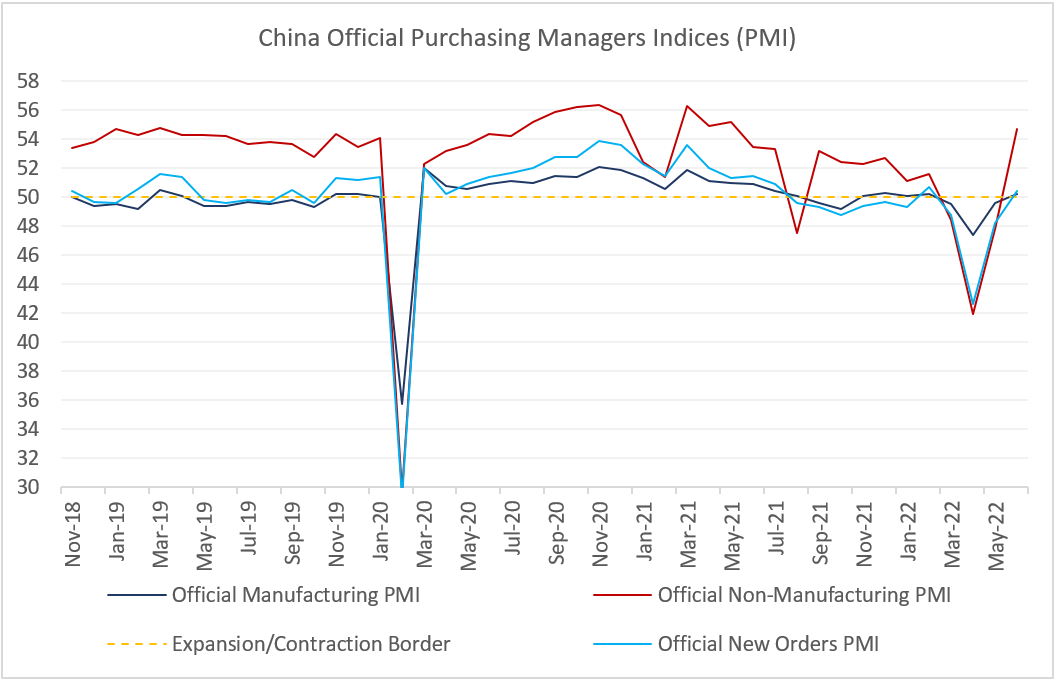
China’s domestic activity gauges continued to rebound from April’s low, lifting China’s equities on a risk-off day. Both the manufacturing and services PMIs (official Purchasing Managers Indices) moved to expansion territory in June (see chart below), with a big jump in the non-manufacturing survey (from 47.8 to 54.7 – well above the consensus) looking particularly impressive. The improvement was broad-based, but details show that closing the gap between the growth forecast (cut to 4.1%) and this year’s official target of about 5.5% will not be easy and might require additional policy support. And the zero-COVID policy will continue to pose a risk to the growth outlook for months to come – the recent easing of some restrictions notwithstanding.
China Infrastructure-Led Growth
The coast is not clear. The PMI for small companies remained in contraction zone in June, lagging behind state-owned enterprises and medium enterprises. The labor market is still under pressure (employment PMIs are also deep in contraction zone). And even in manufacturing, demand-side indices were not doing particularly well (new orders PMI barely above 50.0, new export orders PMI still in contraction zone). China’s latest stimulus package is mostly supply-side oriented, which suggests that near-term growth will be led by investments/infrastructure. This is not bad, per se – the market would be happy to see the improving activity dataflow – but moving away from the consumption-led growth model could be regressive from the structural point of view, and this can create a new set of problems in the future.
China Growth and Global Recession
The final concern is that China’s rebound should be considered against the backdrop of a growing global recession risk. China’s past experience showed that it can buck the negative global growth trend, but this once again brings us back to demand-side policy support, because China’s exports might be hit by weaker growth in main trading partners. We hope to get more color on these issues from the next batch of China’s credit aggregates (out in the next week or so). Stay tuned!
Chart at a Glance: China Activity Gauges Back in Expansion Zone
Source: Bloomberg LP
