Catching a Falling Calf: A Contrarian Case for America's Beef Packers
June 26, 2026
Read Time 4 MIN
Key Takeaways:
- A years-long drought decimated breeding stock, leaving the domestic cattle supply at generational lows with no quick path to recovery.
- Unlike ranchers who benefit from premium beef prices, packers absorb the cost of scarce livestock without controlling what consumers pay at the counter.
- Counterintuitively, today's dire conditions may signal opportunity — as capacity exits, margins normalize, and financially resilient processors trade near what may prove to be a cyclical bottom.
In a market where nearly every natural-resource sector is enjoying fat margins, U.S. beef packers stand out for the hopelessness of their operating environment. To us on the Global Resources Team at VanEck, that is precisely what makes them worth a hard look.
For U.S. beef packers, conditions look bleak. At the beginning of the year, the USDA counted about 86.2M head of cattle, which is the seventh consecutive annual decline and the smallest figure since 1951. Many are dairy cows and are not even reared for beef. The number of beef-cows is 27.6M, the lowest since 1961.
Then there is New World screwworm, a flesh-eating parasite that was eradicated from the U.S. in 1966 which resurfaced again this month, with cases clustering around South Texas and New Mexico. It is the reason the southern border has been shut to Mexican cattle imports, which normally supply 1.2M to 1.5M head a year. In 2025, only 0.2M crossed over. We think screwworm is ultimately controllable; the sterile-fly eradication playbook worked once and can work again, though ramping fly production could take several months.
U.S. Cattle Inventory on the Decline
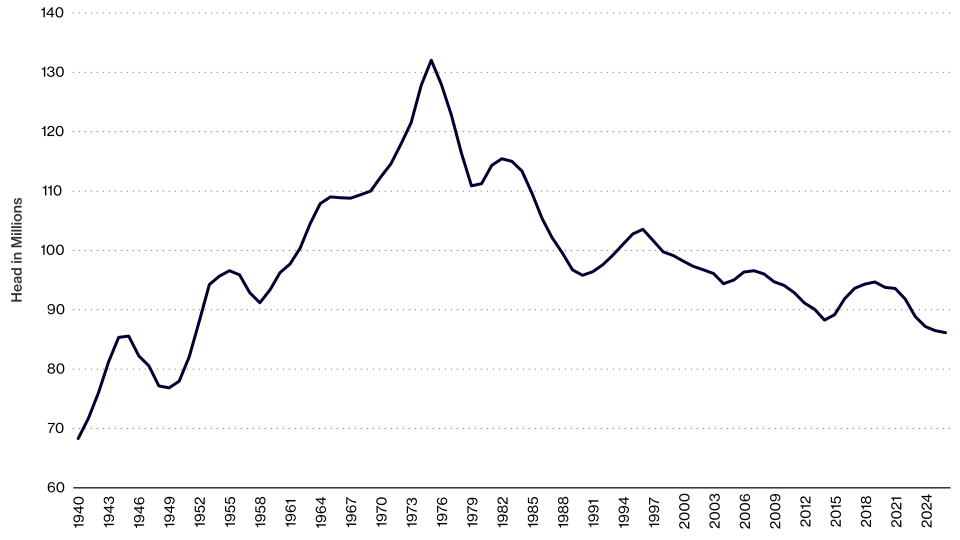
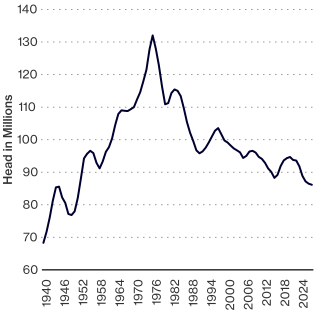
Source: USDA. Data as of June 2026. For illustrative purposes only.
No Grass for Grass-Fed Cattle
How we got here is mostly a story about drought. Successive dry years across the Southern Plains scorched pasture and forced ranchers to cull the breeding cows they would otherwise have kept, accelerating a liquidation that pushed the herd well past a normal cyclical low.
Unlike, say, a chicken that takes about seven weeks to reach slaughter weight, a calf takes roughly 18 to 24 months. And when cattle are scarce and cattle prices are high, ranchers do the rational thing and hold animals back a little longer to add weight before selling, which perversely tightens near-term supply even further. We saw this in the data with cattle live weights setting records throughout 2025 and into 2026.
Spotlight on the Southern Plains:
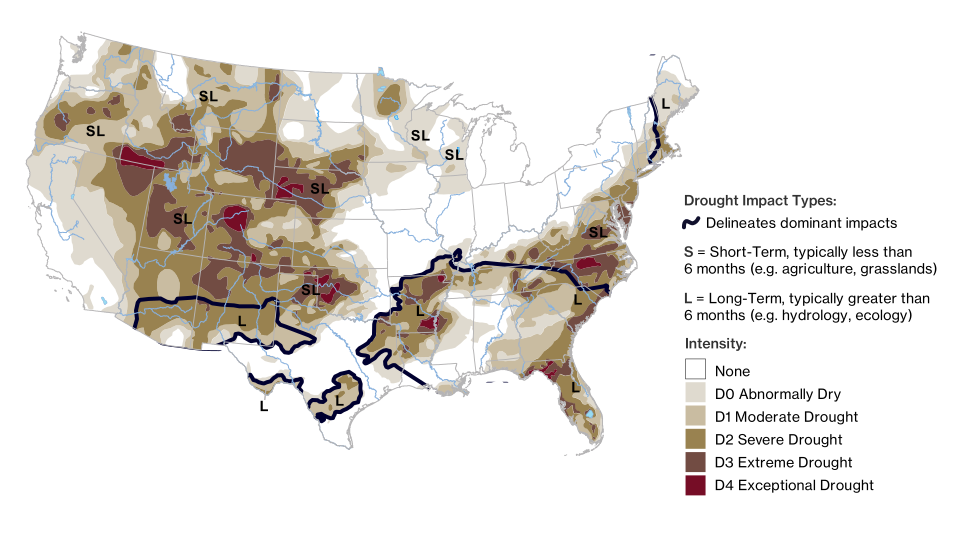
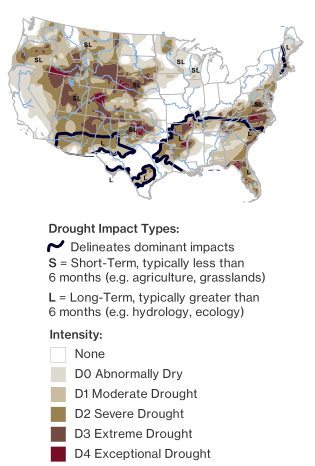
Source: DroughtMonitor. As of June 2026. For illustrative purposes only.
Record-setting U.S. Cattle Weight
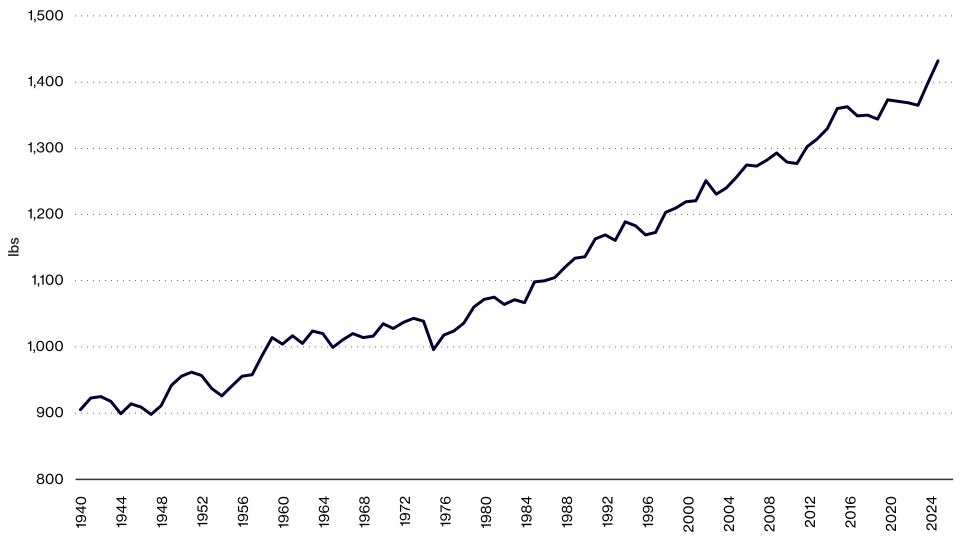
Source: USDA. As of March 31, 2026. For illustrative purposes only.
Recommended subscription
Economics 101
The crux is in the margin. Beef packer economics reduce to the “cutout-to-live” spread, which is the difference between the price of a beef “cutout” and the price paid for live cattle. Record beef prices have not helped as much as one may think. In the U.S., beef packers are not vertically integrated and this point gets muddled in the financial press. High cattle prices are the packer's poison, not its windfall.
It is the ranchers and the cattle feeders who are the ones seeing excellent returns and cashing in. The beef packer is the squeezed middle, buying dear and selling into a retail market it does not control. When cattle are scarce, packers compete fiercely for a shrinking pool of fed animals and that spread collapses. Companies like Tyson Foods and JBS have braced investors for another difficult year for their beef segments. The cash generated from beef sales is not enough to justify the all-in cost to simply run a beef plant (labor, facilities, fabrication, etc.). The math does not work.
In Focus: Tyson Foods Adjusted Operating Income
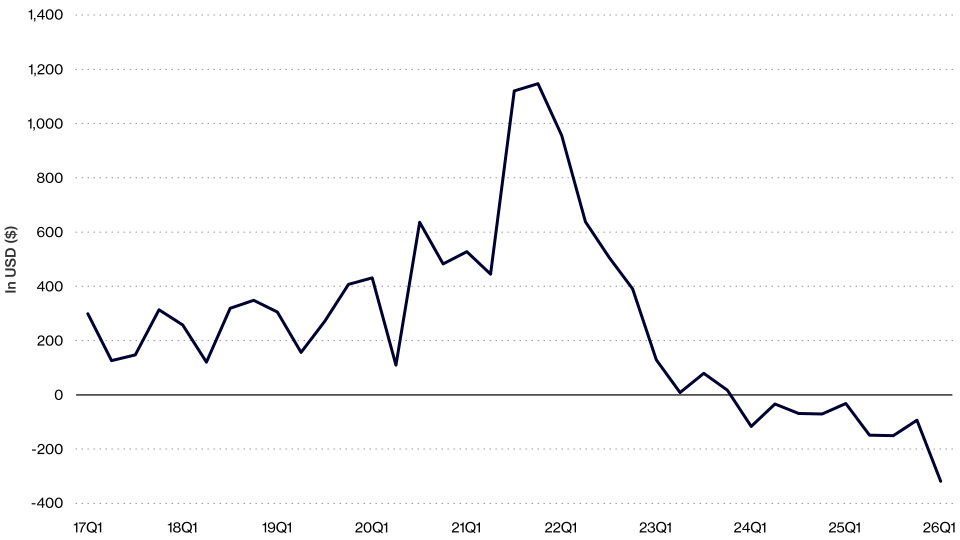
Source: Tyson Foods. Data as of March 31, 2026. For illustrative purposes only.
Too Many Plants, Too Few Cattle
For the first time in a decade, January's USDA cattle inventory numbers showed a small uptick in heifers (females that have not yet given birth), which is a tentative sign that ranchers are contemplating herd expansion. But every heifer held back to breed is a heifer pulled out of the slaughter pipeline, so this first phase of a rebuild makes beef scarcer, not more plentiful. We don't expect genuine herd growth to show up before 2028.
That said, U.S. beef packers are not waiting around and have begun rationalizing capacity. Tyson Foods plans to close its Lexington, NE plant, which is a relatively large one that slaughters about 4,500 head a day, and reduce its Amarillo, TX facility to a single shift, pulling industry capacity down. JBS is following Tyson out the door. Earlier this week, it announced that it would close its Souderton, PA, plant (roughly 2,000 head per day), along with a beef value-added operation in Memphis, TN. Too many plants competing for too few cattle hurts margins, and taking capacity offline is a fix that also guards against a drawn-out slump during the next leg of the cycle.
These are sound, diversified companies, not pure-play beef producers. Chicken, pork, and value-added products (e.g., Dino Nuggets, a favorite in our home) are each generating cash while beef suffers. As capacity tightens and the herd eventually rebuilds, the cutout-to-live spread recovers, and with four meat producers controlling around 85% of processing, pricing discipline returns quickly once the overhang clears. Add in the eventual reopening of Mexican cattle flows, which we expect to happen this year, combined with a contained screwworm, and throughput recovers on top of margin.
This is not a bet on high beef prices. It is a bet on margin normalization and capacity rationalization at financially resilient operators trading near cyclical lows, while the market appears to price trough losses as permanent. Beneath it all is a simple, enduring fact: people have to eat.
To receive more Natural Resources insights, sign up in our subscription center.

IMPORTANT DISCLOSURES
Please note that VanEck may offer investment products that invest in the asset class(es) or industries included in this blog.
This is not an offer to buy or sell, or a recommendation to buy or sell any of the securities, financial instruments or digital assets mentioned herein. The information presented does not involve the rendering of personalized investment, financial, legal, tax advice, or any call to action. Certain statements contained herein may constitute projections, forecasts and other forward-looking statements, which do not reflect actual results, are for illustrative purposes only, are valid as of the date of this communication, and are subject to change without notice. Actual future performance of any assets or industries mentioned are unknown. Information provided by third party sources are believed to be reliable and have not been independently verified for accuracy or completeness and cannot be guaranteed. VanEck does not guarantee the accuracy of third party data. The information herein represents the opinion of the author(s), but not necessarily those of VanEck or its other employees.
All investing is subject to risk, including the possible loss of the money you invest. As with any investment strategy, there is no guarantee that investment objectives will be met and investors may lose money. Diversification does not ensure a profit or protect against a loss in a declining market. Past performance is no guarantee of future results.
© Van Eck Associates Corporation
Related Funds
IMPORTANT DISCLOSURES
Please note that VanEck may offer investment products that invest in the asset class(es) or industries included in this blog.
This is not an offer to buy or sell, or a recommendation to buy or sell any of the securities, financial instruments or digital assets mentioned herein. The information presented does not involve the rendering of personalized investment, financial, legal, tax advice, or any call to action. Certain statements contained herein may constitute projections, forecasts and other forward-looking statements, which do not reflect actual results, are for illustrative purposes only, are valid as of the date of this communication, and are subject to change without notice. Actual future performance of any assets or industries mentioned are unknown. Information provided by third party sources are believed to be reliable and have not been independently verified for accuracy or completeness and cannot be guaranteed. VanEck does not guarantee the accuracy of third party data. The information herein represents the opinion of the author(s), but not necessarily those of VanEck or its other employees.
All investing is subject to risk, including the possible loss of the money you invest. As with any investment strategy, there is no guarantee that investment objectives will be met and investors may lose money. Diversification does not ensure a profit or protect against a loss in a declining market. Past performance is no guarantee of future results.
© Van Eck Associates Corporation