EM, Gold, Action!
January 30, 2023
Read Time 2 MIN
EM and Gold Reserves
We try not to bother our readers with IMF research papers – especially when the market is preoccupied with China’s rebound (and the next batch of activity gauges) and the U.S. Federal Reserve’s (Fed’s) rate-setting meeting (the market expects a slower pace of hikes) – but this one was too good to ignore. The paper is about monetary gold. The report’s title is rather dramatic – Gold as International Reserves: A Barbarous Relic No More? – and it is a gold mine of data (no pun intended) on the subject. It also provides valuable insights into the impact of crises, geopolitical uncertainty and – pay attention! – sanctions on emerging markets (EM) reserve accumulation and diversification.
EM Sovereign Spread
The 1997 global financial crisis was the turning point in EM’s approach to international reserves management. The proliferation of orthodox policies – especially inflation targeting, fiscal discipline and letting currencies float more freely – strengthened the external accounts, boosted reserves and led to major EM sovereign debt spread compression. This is behind Portfolio Manager Eric Fine’s long-standing argument that hard currency debt is particularly well-anchored in EMs with better fundamentals, providing a safer way for investors to express a positive EM view. And now EM central banks are taking the reserve accumulation one step further, being the only “active diversifiers” into gold, according to the IMF. How active? VanEck’s Deputy Portfolio Manager, Gold and Precious Metals, Imaru Casanova drew my attention to the fact that during the third quarter of 2022, central banks bought 400 tonnes of gold net – a quarterly record.
EM Reserves and Sanctions
So, why this sudden urge to buy even more gold now? Well, the IMF’s first argument is perfectly logical – “gold appeals … as a safe haven in periods of … volatility”. But the IMF also used some statistical techniques to demonstrate that “the imposition of financial sanctions by … the main reserve-issuing economies is associated with an increase in the share of central bank reserves held in the form of gold”. The IMF also presented “evidence that multilateral sanctions have a larger impact … on the share of reserves held in gold” than unilateral sanctions. Given that the world geopolitical landscape remains very fluid, the love affair between EMs and gold is unlikely to be over any time soon. Stay tuned!
Chart at a Glance: Central Banks’ Gold Purchases – No End in Sight?
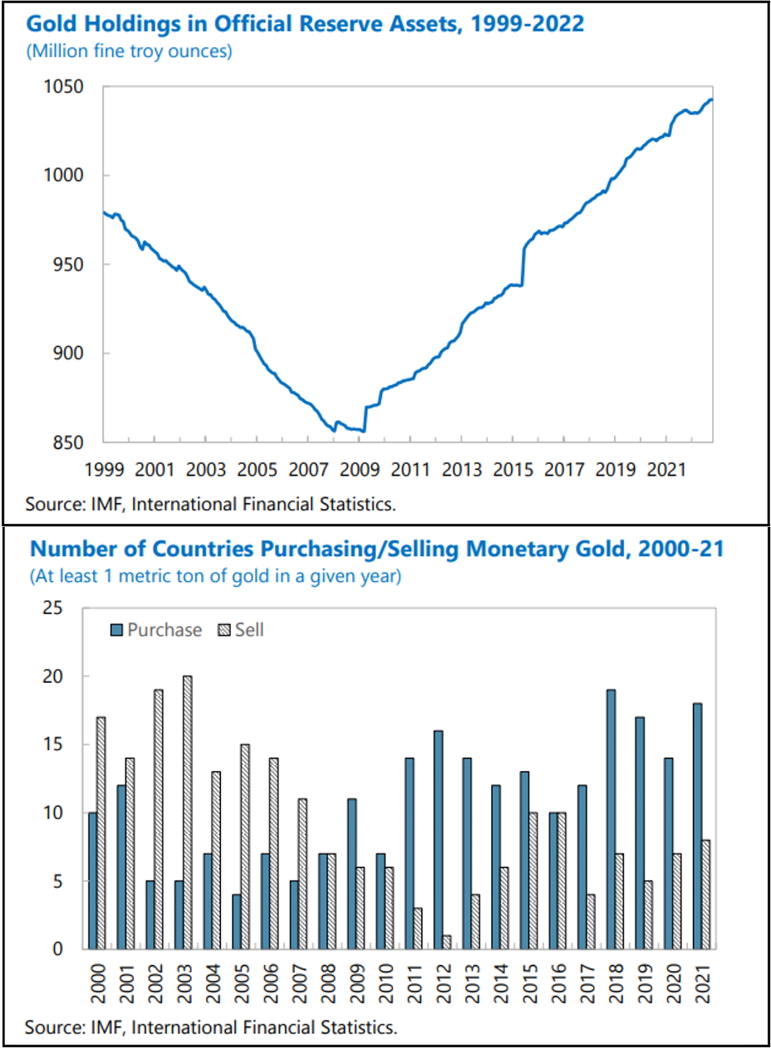
Source: IMF’s Working Paper (WP/23/14) “Gold as International Reserves” A Barbarous Relic No More?
