Why CLOs Still Matter in a Rate-Cutting Cycle
October 29, 2025
Read Time 9 MIN
Key Takeaways:
- CLOs provide diversification and resilience across market and rate cycles.
- CLOs have performed well in past rate-cutting cycles due to high carry and insulation from rate volatility.
- Active management helps capture opportunities across the CLO capital structure.
Why CLOs Still Matter in a Rate-Cutting Cycle
One of the most common questions we receive from investors is: Why would we invest in collateralized loan obligations (CLOs), which pay floating rate coupons, if the Federal Reserve is cutting interest rates?
Our answer is simple: diversification, protection against volatility, higher credit spreads, and lower risk support the case for a strategic allocation to CLOs through market cycles. In addition, changing market environments can provide compelling opportunities for actively managed CLO strategies that can take advantage of higher yields.
Fundamentally, building a diversified portfolio that does not take outsized duration or credit bets can help to achieve better outcomes through market cycles, and we believe including credit-sensitive floating rate instruments like CLOs should be part of that. Their higher yield and low default risk, as well as floating rate nature, have driven this performance through varying market environments. Over the past decade, which has seen both easing and hiking cycles and both recessionary and strong growth periods, investment grade CLOs have outperformed core U.S. fixed income and mezzanine CLOs have outperformed U.S. high yield and leveraged loans.
Strong Performance Through Market Cycles (9/30/2015 to 9/30/2025)

Source: J.P. Morgan and ICE Data Indices as of 9/30/2025. IG CLOs represented by J.P. Morgan CLO Investment Grade Index; Mezz CLO represented by J.P. Morgan Balanced Mezzanine CLO Index; HY Corporates represented by ICE BofA US High Yield Index; US IG Corp represented by ICE BofA US Corporate Index; US Broad Market represented by ICE BofA US Broad Market Index. Leveraged Loans represented by Morningstar LSTA US Leveraged Loan 100 Index. Past performance is no guarantee of future results. Index performance is not representative of fund performance. It is not possible to invest directly in an index.
Recommended subscription
Performance in Easing Cycles
There have been three distinct easing cycles over the history of the J.P. Morgan CLO Index. Looking at these periods is instructive, but each situation is unique. For example, 2019’s “mid-cycle adjustment” was characterized by slowing growth, persistently below target inflation and a flat yield curve. The dramatic easing during COVID was done to maintain financial market stability in a deep recessionary environment – hardly what we are experiencing today. We believe the 2024 easing cycle is most like what we are in now. Similar to today, we expect the current cycle to be fairly shallow. Inflation remains above target, growth has been resilient, the yield curve continues to steepen and many of the same geopolitical and trade tensions exist. During that period, Treasuries underperformed as long-term rates increased, tempering broad market returns. Intermediate duration asset classes like U.S. IG corporates fared better, and the credit environment remained strong. Investment grade CLOs outperformed the broad market but did not benefit from a duration tailwind, while more credit sensitive mezzanine tranches outperformed both leveraged loans and high yield.
| IG CLOs | Mezz CLO | US Broad Market | IG Corporates | Leveraged Loans | US HY | |
| All easing cycles | -1.43% | 13.33% | -0.03% | 7.22% | 8.38% | 10.92% |
| All easing cycles ex. COVID | 1.45% | -2.28% | 0.31% | -3.27% | 0.53% | -2.63% |
| Last easing cycle (Sep. 2024 to Dec. 2024) | 2.34% | 14.42% | -1.76% | 6.37% | 8.15% | 10.53% |
Source: J.P. Morgan and ICE Data Indices. Represents returns from 8/31/2024 to 12/31/2024. IG CLOs represented by J.P. Morgan CLO Investment Grade Index; Mezz CLO represented by J.P. Morgan Balanced Mezzanine CLO Index; HY Corporates represented by ICE BofA US High Yield Index; IG Corporates represented by ICE BofA US Corporate Index; US Broad Market represented by ICE BofA US Broad Market Index. Leveraged Loans represented by Morningstar LSTA US Leveraged Loan 100 Index. Past performance is no guarantee of future results. Index performance is not representative of fund performance. It is not possible to invest directly in an index.
Broadening our perspective, performance since the first rate cut in 2024 until now has been similarly robust. Investment grade CLOs have strongly outperformed other core fixed income asset classes, and mezzanine CLOs (AA-BB) have outperformed high yield bonds and loans.
Fixed Income Returns Since the Last Easing Cycle
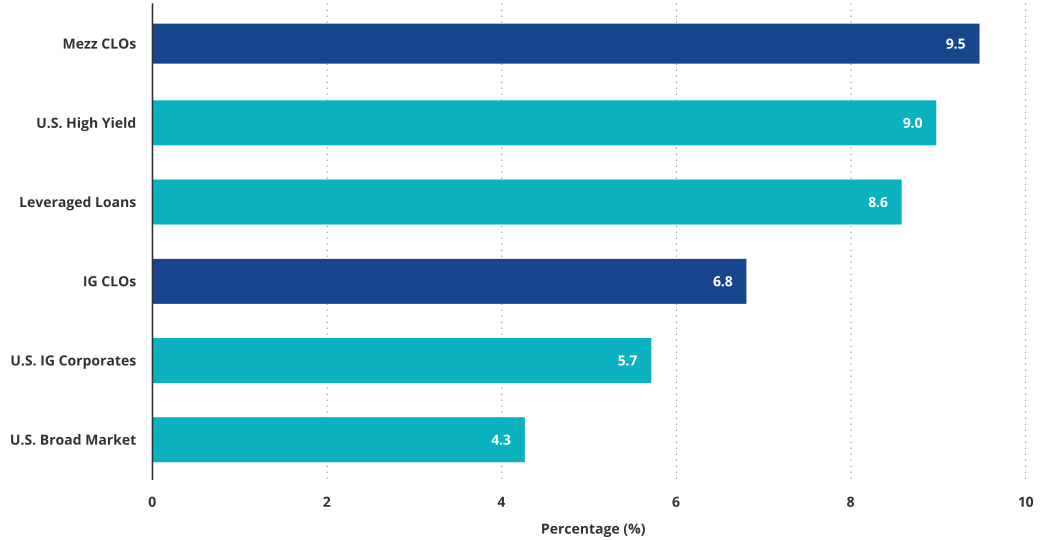
Source: J.P. Morgan and ICE Data Indices. Represents returns from 8/31/24 to 9/30/2025. IG CLOs represented by J.P. Morgan CLO Investment Grade Index; Mezz CLO represented by J.P. Morgan Balanced Mezzanine CLO Index; HY Corporates represented by ICE BofA US High Yield Index; IG Corporates represented by ICE BofA US Corporate Index; US Broad Market represented by ICE BofA US Broad Market Index. Leveraged Loans represented by Morningstar LSTA US Leveraged Loan 100 Index. Past performance is no guarantee of future results. Index performance is not representative of fund performance. It is not possible to invest directly in an index.
Why have CLOs performed well since the last cycle? In short, high carry and diversification. When evaluating CLOs in a rate cutting environment, it’s important to note that because coupons adjust with prevailing short-term rates, CLO prices are not materially impacted by rate declines. Another key point: because CLOs are securitized pools of leveraged loans, returns are largely driven by credit exposure, and that provides unique opportunities when market conditions change – for example when the economy enters a new rate cycle. The spreads achievable on CLOs, particularly within mezzanine tranches, is indicative of this significant credit element. For example, in the case of BB CLOs, the coupon spread above the 3-month Secured Overnight Funding Rate (“SOFR”) is greater than SOFR itself. The ability to take advantage of the full CLO capital structure provides for more attractive opportunities within an income portfolio, versus a AAA-constrained strategy.
CLO Coupons Well Above SOFR

Source: J.P. Morgan and Bloomberg, as of 10/17/2025
Historically, credit spreads tend to be negatively correlated with the direction of interest rates. For example, high yield bond spreads and 3-month T-bill returns have exhibited a correlation of -18% since 12/31/2003, and the relationship is -40% compared to the 10-year U.S. Treasury bond.1 When rates are declining, this means investors may be able to capture higher spreads, particularly in lower rated tranches, allowing for the potential to both participate in upside price recovery and capture high absolute yields. To benefit from this dynamic, however, the ability to dynamically allocate to higher or lower quality tranches is necessary.
Lastly it is worth emphasizing that Fed rate cuts do not necessarily mean lower long-term bond yields. High inflation, fiscal irresponsibility, political dysfunction and attacks on Fed independence may all be factors keeping long-term rates higher even as the Fed eases. Further, the yield curve is not historically steep, as shown below. In this context, and long-term rates may not decline or could even increase. Lastly, higher rates and the end of quantitative easing has meant higher rate volatility in recent years. All of these factors, in our opinion, support an allocation to floating rate, credit sensitive CLOs within a bond portfolio.
Difference Between 10-Year and 2-Year U.S. Treasury Yields

Source: ICE Data Indices as of 9/30/2025. This is not an offer to buy or sell, or a recommendation to buy or sell any of the securities mentioned herein. See index descriptions at the end of presentation. Past performance not indicative of future results. Index performance is not representative of fund performance. It is not possible to invest directly in an index.
Every situation is different, and the reason for rate declines will ultimately drive the opportunity. The current rate cutting cycle, for instance, has so far been characterized by continued economic growth and strong corporate fundamentals, and accordingly, tight credit spreads. Rich valuations may favor a cautious approach in this environment rather than full “risk-on” positioning. Within loans, however, pricing dispersion reflects more challenged fundamentals among certain issuers and sectors. If this becomes a broader trend, spread widening will provide more attractive opportunities than what exists currently. In a more recessionary scenario, we would expect more significant rate cuts and significant widening throughout the capital stack but most acutely in BBB and below. This is when the most attractive opportunities may arise further down in the capital structure, and investors may benefit from both price appreciation and a high level of carry – despite low base rates.
However, one does not need to wait for extreme environments to benefit from the higher spreads that CLOs can provide. CLOs have consistently provided significantly greater spreads versus bonds and loans of the same rating in all rate environments. In other words, CLO investors can earn more while not necessarily taking on additional credit risk.
CLO Investors Can Earn More Without Taking On Additional Credit Risk

Source: JP Morgan and ICE Data Services as of 9/30/2025. Using OAS for corporate bonds and discount margins for CLOs. AAA Rated CLOs represented by J.P. Morgan CLO AAA Index, AA Rated CLOs represented by J.P. Morgan CLO AA Index, A Rated CLOs represented by J.P. Morgan CLO A Index, BBB Rated CLOs represented by J.P. Morgan CLO BBB Index, BB Rated CLOs represented by J.P. Morgan CLO BB Index, B Rated CLOs represented by J.P. Morgan CLO B Index AAA Rated Corps represented by the ICE BofA AAA US Corporate Index, AA Rated Corps represented by the ICE BofA AA US Corporate Index, A Rated Corps represented by the ICE BofA A US Corporate Index, BBB Rated Corps represented by the ICE BofA BBB US Corporate Index, BB Rated Corps represented by the ICE BofA BB US High Yield Index and B Rated Corps represented by the ICE BofA Single-B US High Yield Index. Index descriptions at the end of this presentation. Past performance is not indicative of future results. Index performance is not representative of fund performance. It is not possible to invest directly in an index. This is not an offer to buy or sell, or recommendation to buy or sell any of the securities mentioned herein.
One reason CLOs in aggregate can perform well in differing rate environments is that they have a full capital structure, from AAA to BB, and different tranches can behave differently because of their different exposures to the underlying loan portfolio. Opportunities may arise in one part of the capital structure and become relatively attractive versus other parts. The key is to invest in a strategy that can take advantage of these opportunities within the capital structure. An experienced manager can assess relative value and add or de-risk at the right time, while also adding value through rigorous bottom-up analysis of every unique CLO.
The VanEck CLO ETF (CLOI), launched in June 2022, focuses on investment grade CLOs and offers investors a compelling way to add CLO exposure to their core bond portfolio. For investors seeking greater yield potential and who are able to tolerate additional volatility, the VanEck AA-BB CLO ETF (CLOB) provides a way to access lower rated, or “mezzanine,” tranches between the AAA and equity tranches. Both ETFs are actively managed by PineBridge Investments, which has decades of experience in the CLO market.To receive more Income Investing insights, sign up in our subscription center.

IMPORTANT DISCLOSURES
1 Source: ICE Data Indices, as of 9/30/2025. High yield spread return measured by the return attributed to credit spread movements on the ICE BofA US High Yield Index; T-bill returns represented by the ICE BofA US 3-Month Treasury Bill Index; 10-year U.S. Treasury returns represented by ICE BofA Current 10-Year US Treasury Index.
ICE BofA US Corporate Index (C0A0) tracks the performance of US dollar denominated investment grade corporate debt publicly issued in the US domestic market.
ICE BofA US High Yield Index (H0A0) tracks the performance of U.S. dollar-denominated below investment grade corporate debt publically issued in the U.S. domestic market. Qualifying securities must have a below investment grade rating. Original issue zero coupon bonds, 144a securities, both with and without registration rights, and pay-in-kind securities, including toggle notes, qualify for inclusion. Eurodollar bonds, taxable and tax-exempt U.S. municipal, warrant-bearing, DRD-eligible and defaulted securities are excluded from the Index.
ICE BofA US Broad Market Index (US00) tracks the performance of US dollar denominated investment grade debt publicly issued in the US domestic market, including US Treasury, quasi-government, corporate, securitized and collateralized securities.
Morningstar LSTA US Leveraged Loan 100 Index seeks to mirror the market-weighted performance of the largest institutional leveraged loans as determined by criteria based upon market weightings, spreads, and interest payments.
J.P. Morgan Collateralized Loan Obligation Index (CLOIE) tracks US dollar denominated broadly syndicated, arbitrage CLOs.
J.P. Morgan Investment Grade CLO Index is the investment grade subset of the J.P. Morgan Collateralized Loan Obligation Index.
J.P. Morgan Balanced Mezzanine CLO Index includes AA to BB rated tranches in the J.P. Morgan Collateralized Loan Obligation Index, with each rating bucket equally weighted.
J.P. Morgan CLO AAA Index is a subset of the CLOIE index that only tracks the AAA rated CLO.
J.P. Morgan CLO AA Index is a subset of the CLOIE index that only tracks the AA rated CLO.
J.P. Morgan CLO A Index is a subset of the CLOIE index that only tracks the A rated CLO.
J.P. Morgan CLO BBB Index is a subset of the CLOIE index that only tracks the BB rated CLO.
J.P. Morgan CLO BB Index is a subset of the CLOIE index that only tracks the BB rated CLO.
This is not an offer to buy or sell, or a recommendation to buy or sell any of the securities, financial instruments or digital assets mentioned herein. The information presented does not involve the rendering of personalized investment, financial, legal, tax advice, or any call to action. Certain statements contained herein may constitute projections, forecasts and other forward-looking statements, which do not reflect actual results, are for illustrative purposes only, are valid as of the date of this communication, and are subject to change without notice. Actual future performance of any assets or industries mentioned are unknown. Information provided by third party sources are believed to be reliable and have not been independently verified for accuracy or completeness and cannot be guaranteed. VanEck does not guarantee the accuracy of third party data. The information herein represents the opinion of the author(s), but not necessarily those of VanEck or its other employees.
An investment in the VanEck AA-BB CLO ETF (CLOB) and VanEck CLO ETF (CLOI) may be subject to risks which include, but are not limited to, risks related to Collateralized Loan Obligations (CLO), debt securities, foreign currency, foreign securities, investment focus, newly-issued securities, extended settlement, affiliated fund investment, management and capital preservation, derivatives, currency management strategies, cash transactions, market, Sub-Adviser, operational, authorized participant concentration, no guarantee of active trading market, trading issues, fund shares trading, premium/discount, liquidity of fund shares, non-diversified, seed investor, and new fund risks, all of which may adversely affect the Funds. Investments in debt securities may expose the Fund to other risks, such as risks related to liquidity, interest rate, floating rate obligations, credit, call, extension, high yield securities, income, valuation, privately-issued securities, covenant lite loans, default of the underlying asset and CLO manager risks, all of which may impact the Fund’s performance. Derivatives may involve certain costs and risks such as liquidity, interest rate, and the risk that a position could not be closed when most advantageous.
Investing involves substantial risk and high volatility, including possible loss of principal. An investor should consider the investment objective, risks, charges and expenses of the Funds carefully before investing. To obtain a prospectus and summary prospectus, which contain this and other information, call 800.826.2333 or visit vaneck.com. Please read the prospectus and summary prospectus carefully before investing.
© Van Eck Securities Corporation, Distributor, a wholly-owned subsidiary of Van Eck Associates Corporation.
Related Funds
IMPORTANT DISCLOSURES
1 Source: ICE Data Indices, as of 9/30/2025. High yield spread return measured by the return attributed to credit spread movements on the ICE BofA US High Yield Index; T-bill returns represented by the ICE BofA US 3-Month Treasury Bill Index; 10-year U.S. Treasury returns represented by ICE BofA Current 10-Year US Treasury Index.
ICE BofA US Corporate Index (C0A0) tracks the performance of US dollar denominated investment grade corporate debt publicly issued in the US domestic market.
ICE BofA US High Yield Index (H0A0) tracks the performance of U.S. dollar-denominated below investment grade corporate debt publically issued in the U.S. domestic market. Qualifying securities must have a below investment grade rating. Original issue zero coupon bonds, 144a securities, both with and without registration rights, and pay-in-kind securities, including toggle notes, qualify for inclusion. Eurodollar bonds, taxable and tax-exempt U.S. municipal, warrant-bearing, DRD-eligible and defaulted securities are excluded from the Index.
ICE BofA US Broad Market Index (US00) tracks the performance of US dollar denominated investment grade debt publicly issued in the US domestic market, including US Treasury, quasi-government, corporate, securitized and collateralized securities.
Morningstar LSTA US Leveraged Loan 100 Index seeks to mirror the market-weighted performance of the largest institutional leveraged loans as determined by criteria based upon market weightings, spreads, and interest payments.
J.P. Morgan Collateralized Loan Obligation Index (CLOIE) tracks US dollar denominated broadly syndicated, arbitrage CLOs.
J.P. Morgan Investment Grade CLO Index is the investment grade subset of the J.P. Morgan Collateralized Loan Obligation Index.
J.P. Morgan Balanced Mezzanine CLO Index includes AA to BB rated tranches in the J.P. Morgan Collateralized Loan Obligation Index, with each rating bucket equally weighted.
J.P. Morgan CLO AAA Index is a subset of the CLOIE index that only tracks the AAA rated CLO.
J.P. Morgan CLO AA Index is a subset of the CLOIE index that only tracks the AA rated CLO.
J.P. Morgan CLO A Index is a subset of the CLOIE index that only tracks the A rated CLO.
J.P. Morgan CLO BBB Index is a subset of the CLOIE index that only tracks the BB rated CLO.
J.P. Morgan CLO BB Index is a subset of the CLOIE index that only tracks the BB rated CLO.
This is not an offer to buy or sell, or a recommendation to buy or sell any of the securities, financial instruments or digital assets mentioned herein. The information presented does not involve the rendering of personalized investment, financial, legal, tax advice, or any call to action. Certain statements contained herein may constitute projections, forecasts and other forward-looking statements, which do not reflect actual results, are for illustrative purposes only, are valid as of the date of this communication, and are subject to change without notice. Actual future performance of any assets or industries mentioned are unknown. Information provided by third party sources are believed to be reliable and have not been independently verified for accuracy or completeness and cannot be guaranteed. VanEck does not guarantee the accuracy of third party data. The information herein represents the opinion of the author(s), but not necessarily those of VanEck or its other employees.
An investment in the VanEck AA-BB CLO ETF (CLOB) and VanEck CLO ETF (CLOI) may be subject to risks which include, but are not limited to, risks related to Collateralized Loan Obligations (CLO), debt securities, foreign currency, foreign securities, investment focus, newly-issued securities, extended settlement, affiliated fund investment, management and capital preservation, derivatives, currency management strategies, cash transactions, market, Sub-Adviser, operational, authorized participant concentration, no guarantee of active trading market, trading issues, fund shares trading, premium/discount, liquidity of fund shares, non-diversified, seed investor, and new fund risks, all of which may adversely affect the Funds. Investments in debt securities may expose the Fund to other risks, such as risks related to liquidity, interest rate, floating rate obligations, credit, call, extension, high yield securities, income, valuation, privately-issued securities, covenant lite loans, default of the underlying asset and CLO manager risks, all of which may impact the Fund’s performance. Derivatives may involve certain costs and risks such as liquidity, interest rate, and the risk that a position could not be closed when most advantageous.
Investing involves substantial risk and high volatility, including possible loss of principal. An investor should consider the investment objective, risks, charges and expenses of the Funds carefully before investing. To obtain a prospectus and summary prospectus, which contain this and other information, call 800.826.2333 or visit vaneck.com. Please read the prospectus and summary prospectus carefully before investing.
© Van Eck Securities Corporation, Distributor, a wholly-owned subsidiary of Van Eck Associates Corporation.