Munis in Focus: A Q1 2026 Recap
April 13, 2026
Read Time 5 MIN
Key Takeaways
- Despite a noisy Q1, high-quality munis continued to pay investors their interest and principal as intended.
- Muni yields rose faster than Treasuries in Q1, pushing the 30-year muni/Treasury ratio to near two-year highs, up over 2 points since year-end.
- Credit quality remains excellent with state tax collections still running 10%+ higher in key states. This is a rate story, not a credit story.
What Happened to Municipal Bonds in Q1 2026?
Hard to believe the first quarter is already behind us. And what a quarter it was: geopolitical conflict in the Middle East, another government shutdown, questions around Fed independence, and ongoing noise around AI investment valuations. Markets had a lot to digest in a short amount of time.
Through all of it, high-quality investment-grade municipal bonds did what they’re supposed to do: they kept paying investors their interest and principal. That’s not a small thing when the rest of the market is dealing with elevated volatility across nearly every asset class.
Muni Yields Moved. And That’s Actually Good News
Here’s what’s worth paying attention to from a positioning standpoint heading into Q2. Municipal yields didn’t just move in Q1. They moved more than Treasuries. The 10-year AAA muni rose 30 basis points since the start of the year, nearly double the move in the 10-year Treasury over the same period. That kind of relative underperformance in price terms is frustrating if you’re already in, but for advisors looking to put money to work, it created a better entry point than we started the year with.
Ten Year Look Back on AAA Munis
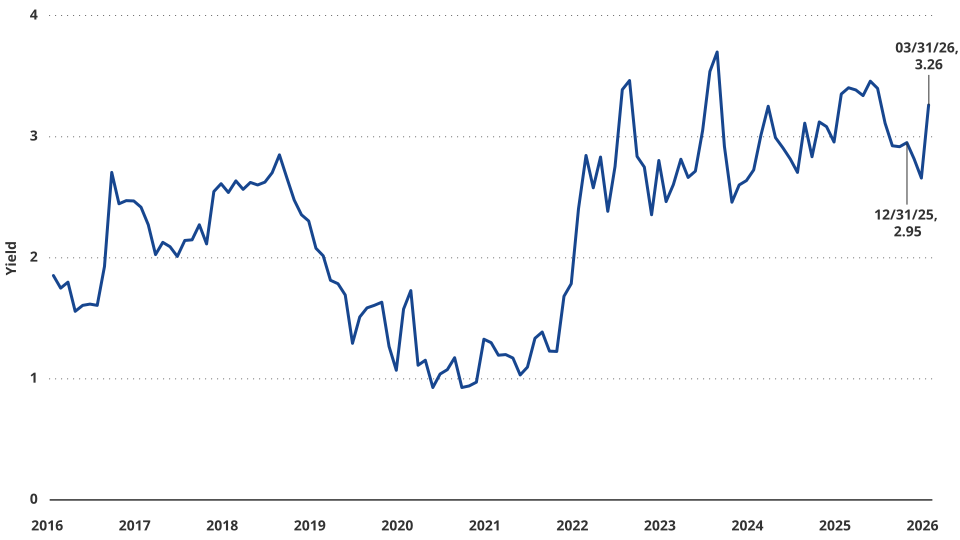
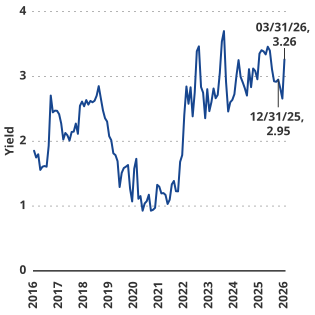
Source: ICE Indices. As of 3/31/26.
At current levels, the 30-year muni/Treasury ratio has climbed over 2 percentage points since year-end and is now near its highest levels in two years. In plain English, munis are cheap relative to Treasuries right now, and history suggests that when ratios get elevated like this, it has tended to be a favorable time to add exposure.
The institutional community is noticing. Major fixed income desks are characterizing this as a meaningfully improved entry point, with some now actively calling for more muni exposure heading into Q2.
Muni Yields Rising vs Treasuries – Since 2024
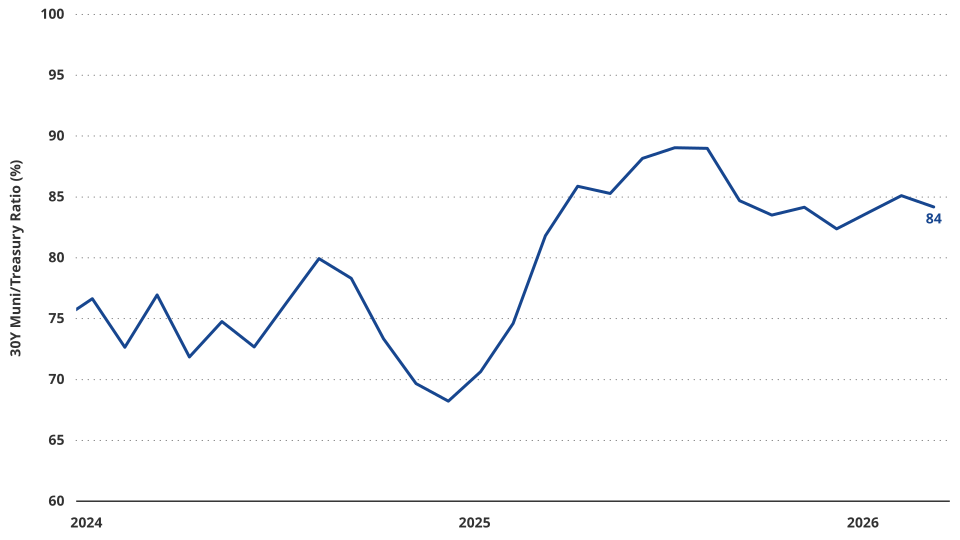
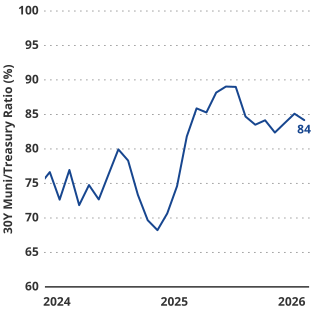
Source: ICE Indices. As of 3/31/26.
Is This a Credit or Rate Problem for Municipal Bonds?
One thing worth emphasizing for advisors: the Q1 selloff was driven by rates, not credit. State and local tax collections are still running more than 10% higher in key states, which means the underlying fiscal health of muni issuers remains solid. That distinction matters a lot. It means you’re not being asked to take on additional credit risk to capture this opportunity. You’re simply being offered better prices on the same high-quality bonds because the broader rate environment moved against them. That’s a cleaner setup than most fixed income entry points you get.
National State and Local Tax Revenue
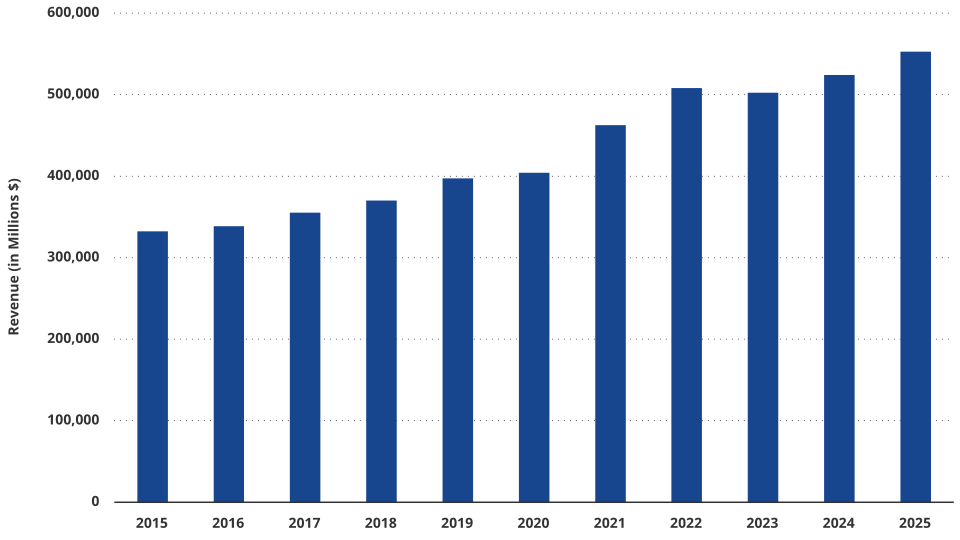
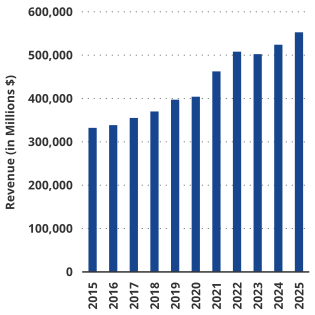
Source: U.S. Census Bureau via FRED. As of March 12, 2026.
Recommended subscription
What Is the Taxable Equivalent Yield on Municipal Bonds in 2026?
For clients in the top federal bracket, factoring in the 37% rate plus the 3.8% net investment income tax — a 4.00% tax-exempt yield translates to roughly a 6.75% taxable equivalent yield. Push out to the 20-year part of the curve and the TEY climbs toward 7%. That’s not a reach-for-yield trade. That’s investment-grade, tax-exempt income at levels that are genuinely competitive with the taxable market.
With the SALT deduction cap now raised to $40,000 under last year’s legislation, some of the deduction-driven urgency around munis has moderated for upper-middle earners. But for clients in the 37% bracket, particularly those in high-tax states, the after-tax math on munis versus taxable alternatives remains a compelling conversation.
Muni Fund Flows Signal About Demand
Seventeen consecutive weeks of fund inflows into the muni space is not noise. That’s a sustained, deliberate rotation by advisors and their clients. Demand has been consistent even as yields have risen and supply has been heavy. That’s a constructive signal.
Municipal Bond Fund Flows – Since 2025
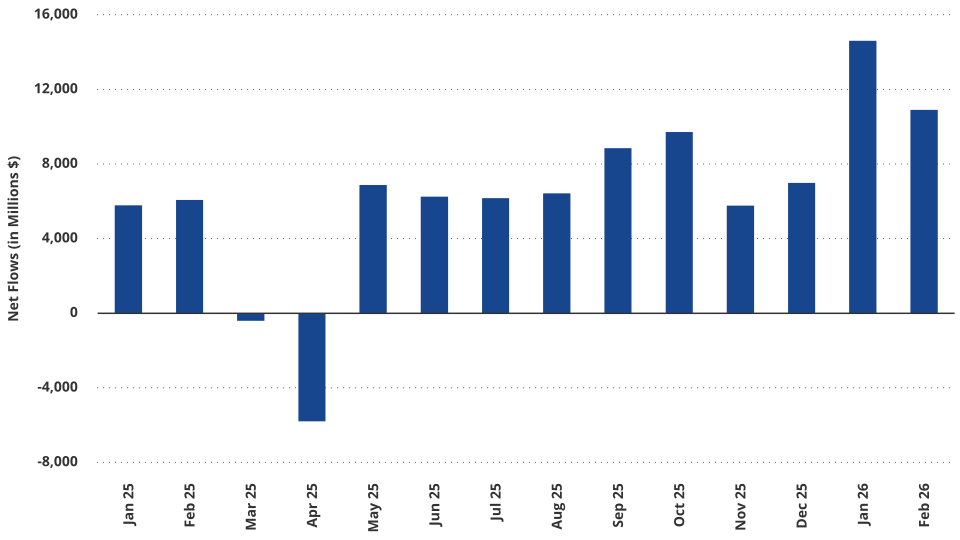
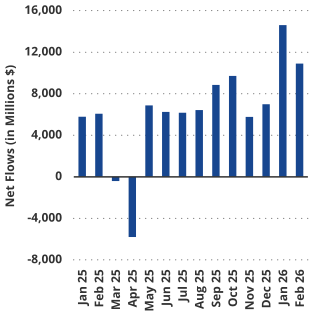
Source: Morningstar. As of February 28, 2026. Flows calculated from both Mutual Funds and ETFs.
On the supply side, Q1 came in roughly on pace with last year at around $120 billion. Some forecasters who projected a record 2026 for issuance are starting to revise those numbers lower, largely because higher rates tend to dampen refunding activity. Slower supply growth against steady demand is generally a supportive backdrop for prices heading into Q2.
Municipal Bond Outlook: Where Do We Go From Here?
Rate forecasting is always a tricky exercise, and the current macro environment makes it even harder. Forward markets are currently pricing in no Fed changes through the end of 2026, but with the conflict in Iran still unresolved, and the Strait of Hormuz very much in the conversation, oil markets, inflation expectations, and the Fed’s next move are all in play. What we do know is that current yields offer an attractive entry point for investors willing to extend duration, and the steep muni curve between 10 and 20 years continues to reward that decision with meaningful additional carry.
For advisors with clients sitting on cash or underweight fixed income, Q1 gave you a better entry point than January 1st did. That’s not nothing, especially when quality, tax-exempt income gives you somewhere to be while the picture clarifies.
To receive more Municipal Bonds insights, sign up in our subscription center.

IMPORTANT DISCLOSURES
This is not an offer to buy or sell, or a recommendation to buy or sell any of the securities, financial instruments or digital assets mentioned herein. The information presented does not involve the rendering of personalized investment, financial, legal, tax advice, or any call to action. Certain statements contained herein may constitute projections, forecasts and other forward-looking statements, which do not reflect actual results, are for illustrative purposes only, are valid as of the date of this communication, and are subject to change without notice. Actual future performance of any assets or industries mentioned are unknown. Information provided by third party sources are believed to be reliable and have not been independently verified for accuracy or completeness and cannot be guaranteed. VanEck does not guarantee the accuracy of third party data. The information herein represents the opinion of the author(s), but not necessarily those of VanEck or its other employees.
ICE Data Indices, LLC and its affiliates (“ICE Data”) indices and related information, the name "ICE Data", and related trademarks, are intellectual property licensed from ICE Data, and may not be copied, used, or distributed without ICE Data's prior written approval. The licensee's products have not been passed on as to their legality or suitability, and are not regulated, issued, endorsed, sold, guaranteed, or promoted by ICE Data. ICE Data MAKES NO WARRANTIES AND BEARS NO LIABILITY WITH RESPECT TO THE INDICES, ANY RELATED INFORMATION, ITS TRADEMARKS, OR THE PRODUCT(S) (INCLUDING WITHOUT LIMITATION, THEIR QUALITY, ACCURACY, SUITABILITY AND/OR COMPLETENESS).
Investing involves substantial risk and high volatility, including possible loss of principal. An investor should consider the investment objective, risks, charges and expenses of a Fund carefully before investing.
© Van Eck Securities Corporation, Distributor, a wholly owned subsidiary of Van Eck Associates Corporation.
666 Third Avenue | New York, NY 10017
© 2026 VanEck. VanEck®, VanEck Access the opportunities®, and the stylized VanEck design® are trademarks of Van Eck Associates Corporation.
Related Funds
IMPORTANT DISCLOSURES
This is not an offer to buy or sell, or a recommendation to buy or sell any of the securities, financial instruments or digital assets mentioned herein. The information presented does not involve the rendering of personalized investment, financial, legal, tax advice, or any call to action. Certain statements contained herein may constitute projections, forecasts and other forward-looking statements, which do not reflect actual results, are for illustrative purposes only, are valid as of the date of this communication, and are subject to change without notice. Actual future performance of any assets or industries mentioned are unknown. Information provided by third party sources are believed to be reliable and have not been independently verified for accuracy or completeness and cannot be guaranteed. VanEck does not guarantee the accuracy of third party data. The information herein represents the opinion of the author(s), but not necessarily those of VanEck or its other employees.
ICE Data Indices, LLC and its affiliates (“ICE Data”) indices and related information, the name "ICE Data", and related trademarks, are intellectual property licensed from ICE Data, and may not be copied, used, or distributed without ICE Data's prior written approval. The licensee's products have not been passed on as to their legality or suitability, and are not regulated, issued, endorsed, sold, guaranteed, or promoted by ICE Data. ICE Data MAKES NO WARRANTIES AND BEARS NO LIABILITY WITH RESPECT TO THE INDICES, ANY RELATED INFORMATION, ITS TRADEMARKS, OR THE PRODUCT(S) (INCLUDING WITHOUT LIMITATION, THEIR QUALITY, ACCURACY, SUITABILITY AND/OR COMPLETENESS).
Investing involves substantial risk and high volatility, including possible loss of principal. An investor should consider the investment objective, risks, charges and expenses of a Fund carefully before investing.
© Van Eck Securities Corporation, Distributor, a wholly owned subsidiary of Van Eck Associates Corporation.
666 Third Avenue | New York, NY 10017
© 2026 VanEck. VanEck®, VanEck Access the opportunities®, and the stylized VanEck design® are trademarks of Van Eck Associates Corporation.