Re-Electrification of the U.S.
May 05, 2026
Read Time 4 MIN
AI-driven electricity demand is forcing a decade of infrastructure spending into five years. The municipal bond market is becoming a primary financing channel for that buildout, creating income opportunity.
Key Takeaways:
- AI is driving a 3.5x surge in electricity demand by 2030. That requires compressing a decade of utility capex into just five years.
- The muni market is the financing channel. Tax-advantaged structures are making municipal bonds the preferred debt vehicle for the next generation of U.S. energy infrastructure.
- High yield munis capture the yield premium. Project-based industrial revenue bonds, many below investment grade, are where the income opportunity is most concentrated.
I recently participated on a panel discussion in Washington, D.C. with leaders from the utilities industry. The topic: the re-electrification of the U.S. Although much is being discussed about this issue, especially as it relates to the stunning current and future growth of AI, I thought I’d offer some perspective that frames both the discussion and the reality that will impact the municipal marketplace.
What Is Driving the Re-Electrification of the U.S.?
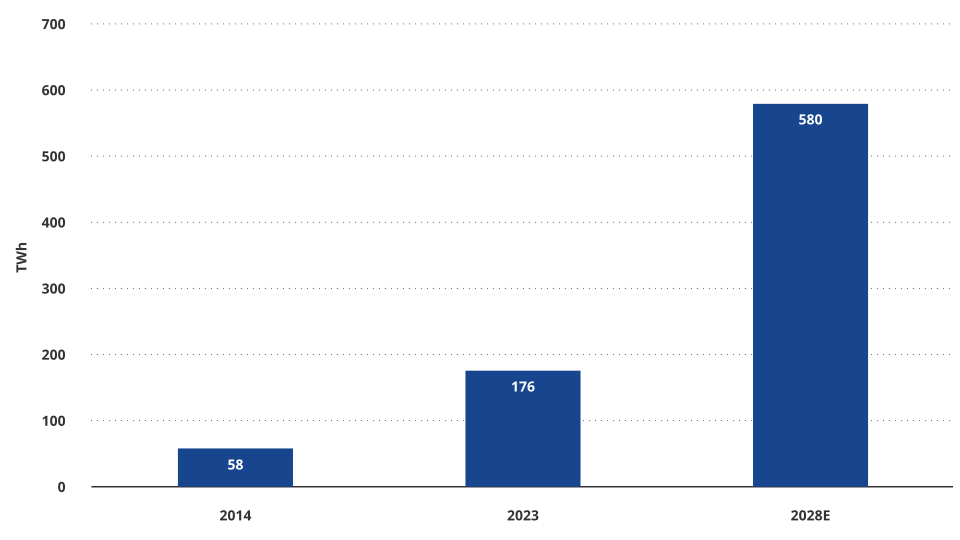
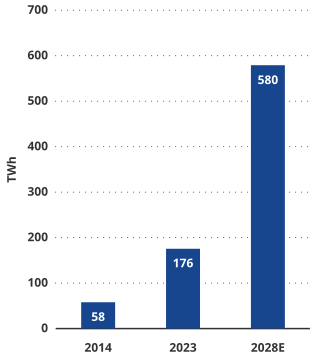
The two charts here frame the conversation nicely. As offered by industry experts, the increase in demand for electricity spurred by known AI (data center) initiatives is poised to increase by 3.5x before the end of the decade. U.S. data center electricity consumption went from 58 TWh in 2014 to 176 TWh in 2023, and is projected to reach 580 TWh by 2028.
U.S. Data Center Electricity Demand (TWh)
Source: Berkeley Lab, 2025.
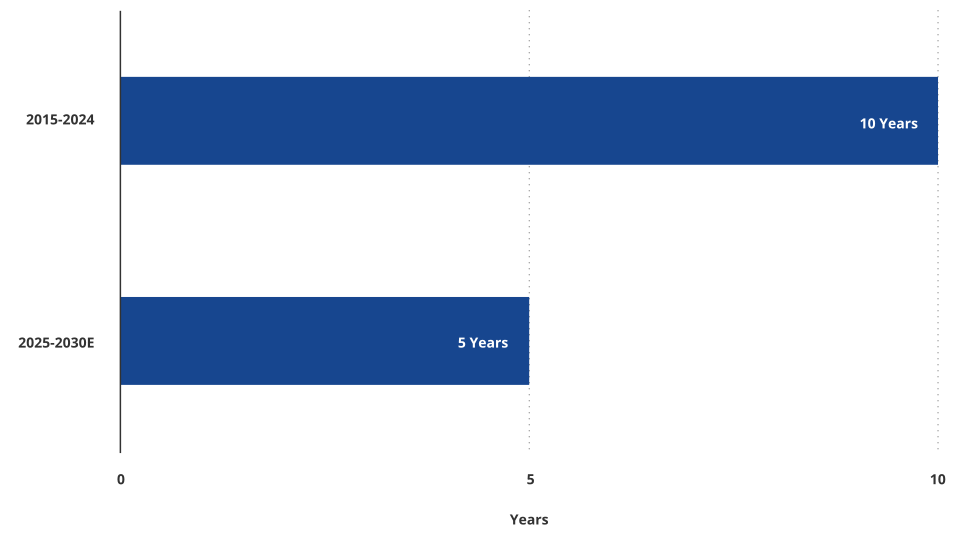
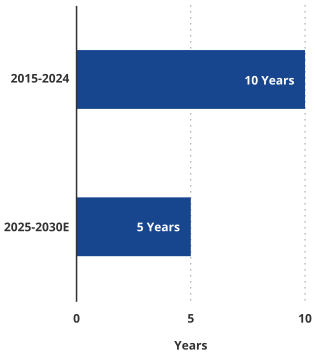
That will, to no one’s surprise, require a doubling of capital expenditure. The utility sector spent roughly $1.3 trillion over the prior decade. The industry now expects to deploy a comparable amount in just five years. This is effectively a decade of infrastructure build compressed into half the time.
$1.3T of Utility Capex: Investment Doubling in Speed
Source: Business Insider, April 2026.
Recommended subscription
How Big Is the Grid Investment Pipeline?
And those numbers keep growing. According to a recent report from PowerLines, capital spending plans across 51 investor-owned utilities have now reached an estimated $1.4 trillion over the next five years, up more than 20% from a year ago. More than 30 of those utilities have specifically cited data centers as a driver of growth and spending through 2030. Nearly as many are investing to harden the grid against severe weather, and others are racing to replace aging equipment at risk of failure. On top of all that, material and labor inflation, plus supply chain backlogs, are pushing project costs even higher. (Source: WSJ, April 2026.)
Why Is the Muni Market Becoming a Primary Financing Channel?
Utilities are still predominantly debt-financed—about 65% debt, 35% equity. So when you translate that into capital markets, you’re looking at hundreds of billions of dollars of incremental debt issuance, and a meaningful portion of that is intersecting with the municipal market.
Traditionally, municipals are viewed as high-grade, tax-backed, and relatively static. That’s changing. Increasingly, the muni market is acting as a conduit for private infrastructure investment, with issues earning both investment grade as well as below-investment-grade (high yield) ratings. As reflected by the panel, the lower cost of capital created by the tax-advantaged municipal structure will result in the municipal market becoming a primary financing channel for the next generation of U.S. infrastructure, particularly in energy and electrification.
Who Pays for the Grid? A Live Political Debate
It’s worth noting that the scale of this build-out is becoming a political issue too. Electricity costs have been outpacing broader inflation, up 4.6% year-over-year as of March versus 3.3% for consumer prices overall. Alabama recently froze electricity rates for regulated utilities through 2029, and Indiana regulators have been touring the state to hear from customers about affordability. Across the country, regulators, utilities, and tech companies are debating who pays for the infrastructure needed to support data centers.
Last month, seven of the largest tech companies voluntarily pledged to pay more for electricity and limit price increases for consumers. This is a live issue, and it’s going to shape how these projects get financed. (Source: WSJ, April 2026.)
What Does Re-Electrification Mean for Muni Bond Investors?
As the municipal marketplace has demonstrated these past two years, demand for tax-advantaged income continues to increase even as supply of new bonds has grown. The data supports the trajectory: industrial revenue bonds outstanding have nearly doubled in market value since 2022, new issuance is shifting toward infrastructure development, and within the high yield municipal index, nearly half of the industrial development revenue bond exposure falls below investment grade or is unrated. That’s precisely where the project-based yield premium gets captured.
As the supply of new bonds inevitably grows from funding the re-electrification, the benefit to investors will be continued value from the high income generated by the sector, especially in high yield.
To receive more Municipal Bonds insights, sign up in our subscription center.

IMPORTANT DISCLOSURES
This is not an offer to buy or sell, or a recommendation to buy or sell any of the securities, financial instruments or digital assets mentioned herein. The information presented does not involve the rendering of personalized investment, financial, legal, tax advice, or any call to action. Certain statements contained herein may constitute projections, forecasts and other forward-looking statements, which do not reflect actual results, are for illustrative purposes only, are valid as of the date of this communication, and are subject to change without notice. Actual future performance of any assets or industries mentioned are unknown. Information provided by third party sources are believed to be reliable and have not been independently verified for accuracy or completeness and cannot be guaranteed. VanEck does not guarantee the accuracy of third party data. The information herein represents the opinion of the author(s), but not necessarily those of VanEck or its other employees.
All investing is subject to risk, including the possible loss of the money you invest. As with any investment strategy, there is no guarantee that investment objectives will be met and investors may lose money. Diversification does not ensure a profit or protect against a loss in a declining market. Past performance is no guarantee of future results.
© 2026 VanEck. VanEck®, VanEck Access the opportunities®, and the stylized VanEck design® are trademarks of Van Eck Associates Corporation.
Related Funds
IMPORTANT DISCLOSURES
This is not an offer to buy or sell, or a recommendation to buy or sell any of the securities, financial instruments or digital assets mentioned herein. The information presented does not involve the rendering of personalized investment, financial, legal, tax advice, or any call to action. Certain statements contained herein may constitute projections, forecasts and other forward-looking statements, which do not reflect actual results, are for illustrative purposes only, are valid as of the date of this communication, and are subject to change without notice. Actual future performance of any assets or industries mentioned are unknown. Information provided by third party sources are believed to be reliable and have not been independently verified for accuracy or completeness and cannot be guaranteed. VanEck does not guarantee the accuracy of third party data. The information herein represents the opinion of the author(s), but not necessarily those of VanEck or its other employees.
All investing is subject to risk, including the possible loss of the money you invest. As with any investment strategy, there is no guarantee that investment objectives will be met and investors may lose money. Diversification does not ensure a profit or protect against a loss in a declining market. Past performance is no guarantee of future results.
© 2026 VanEck. VanEck®, VanEck Access the opportunities®, and the stylized VanEck design® are trademarks of Van Eck Associates Corporation.