March Market Recap: Fragility Returns, Complacency Remains
April 16, 2026
Read Time 6 MIN
Key Takeaways:
- Global fragility has resurfaced: The Iran conflict highlights how quickly supply chains can be disrupted.
- Volatility is back and it’s actionable: Dislocations across energy and commodities are creating opportunities for tactical positioning.
- Market complacency is rising: As risks build, our portfolios are positioned for multiple outcomes, not just the most optimistic ones.
Fragility Returns, Complacency Remains
Cracks in the Foundation
Globalization powered decades of prosperity. It was efficient, scalable, and deflationary.
Until it wasn’t.
The first crack came during COVID, when the complexity behind that system broke under pressure. Supply chains froze. The world was reminded that efficiency and resilience are not the same thing.
The system healed. Trade resumed. Markets moved on.
Now we’re getting the second reminder.
The Second Shock: Fragility Returns
The Iran conflict has exposed the same vulnerability, this time through a different channel. When stronger powers face asymmetry, the response is rarely conventional.
This time, the focus is the Strait of Hormuz.
This is not just another shipping lane.
It is a critical artery.
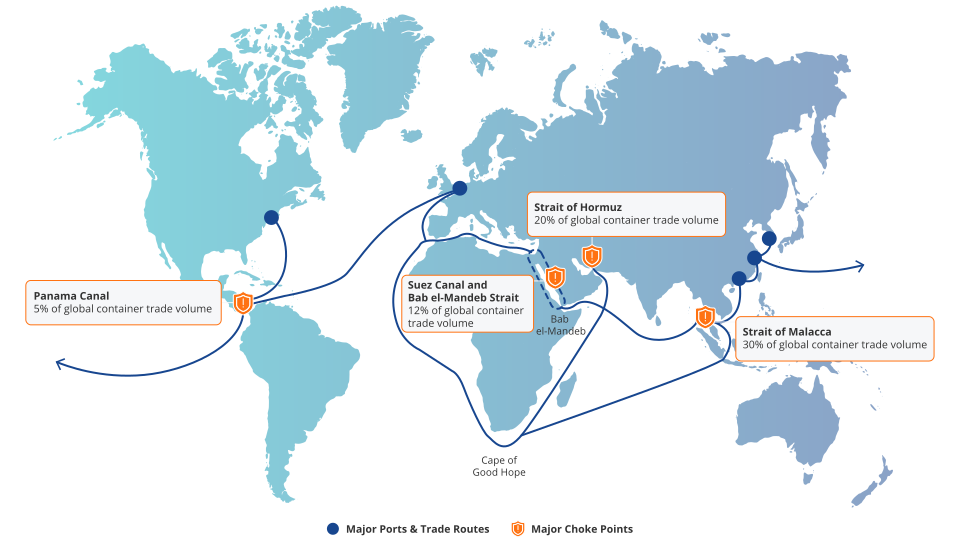
Source: IMF Portwatch.
When it tightened, the system strained.
If it closes, the system breaks.
We recently hosted a webinar on this exact issue. Listen to it. It’s worth your time.
Antonio de Pinho, Senior Analyst specializing in energy research, breaks down why this is not a quick fix.
Webinar Replay: A Macro Playbook for Market Volatility and Geopolitical Conflict
Energy markets are reacting accordingly.
Historically, when energy prices surge, equity markets struggle. Higher energy costs act as a tax on the global economy.
Energy Shocks and Market Selloffs Coincide
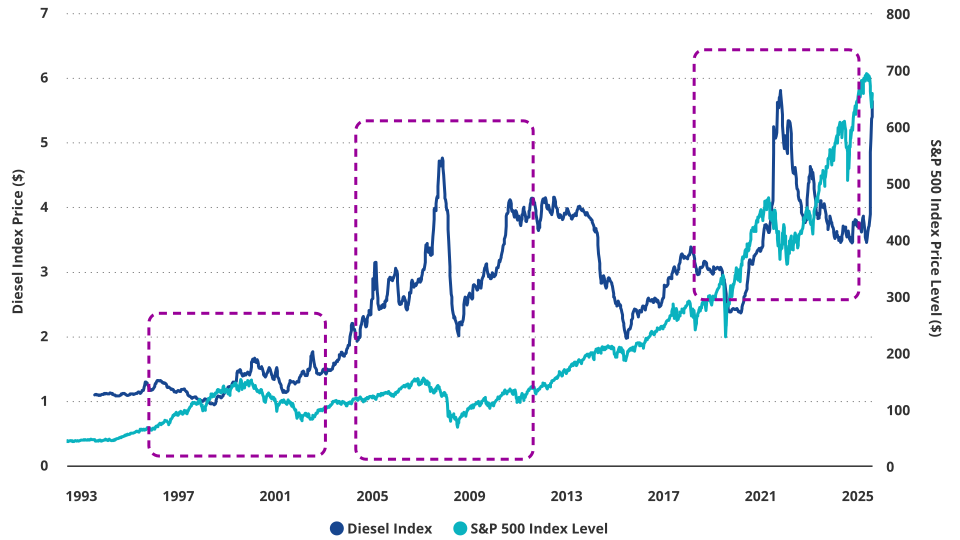
Source: Bloomberg; as of April 2026. Past performance is no guarantee of future results. Index performance is not illustrative of strategy performance. It is not possible to invest directly in an index.
And yet today, equities are hovering near all-time highs.
That is not a coincidence. It is a statement.
Markets are betting this disruption is temporary. That the Strait will reopen quickly. That the system will once again prove resilient.
That may be right.
We are not willing to assume it is.
We have reduced equity exposure across our Wealth Builder models by about 1%. This was based on recognition that risks have shifted, and that taking profits into strength is prudent.
Inflation is Back in the Conversation
At the same time, inflation is no longer theoretical.
CPI has moved to 3.3% year-over-year, with a sharp monthly acceleration. ISM price indices are rising across both services and manufacturing. Survey data shows inflation expectations are moving higher globally.
Could this fade next month? Possibly.
But the direction of travel has changed, and markets are still positioned for the opposite.
Inflation Takes a Turn in the Wrong Direction
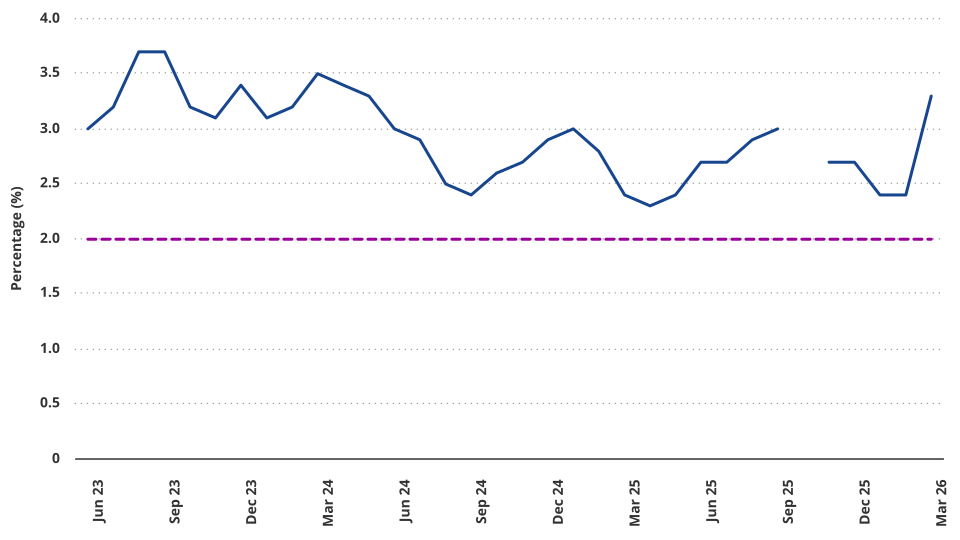
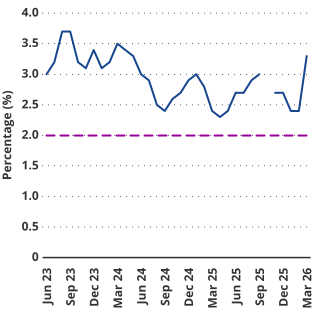
Source: BLS, as of April 2026.
Technology is the Real Driver
For those still unsure how technology will reshape the world over the next five years, look no further than this conflict. Iran is clearly on the wrong side of technology.
This is not just a geopolitical event. It is a case study in disruption.
Technology is compressing time. It is lowering costs. It is changing how power is projected and how systems are challenged.
The gap between those who adapt and those who do not is widening in real time.
That is the real lesson. This is about using technology as force multiplication.
This dynamic does not stop at the battlefield.
It applies to every sector, every industry, every company, and every individual.
The next five years may present challenges for those who are slow to adapt.
Volatility Creates Opportunity
Volatility creates opportunity, and we’ve been active.
This is especially true for the VanEck Commodity Strategy ETF (PIT), a holding within our models. PIT’s strategy is designed to ride momentum and take advantage of overbought and oversold conditions.
Last year, our models viewed gold and other metals as overbought and energy as oversold.
So, we did something about it.
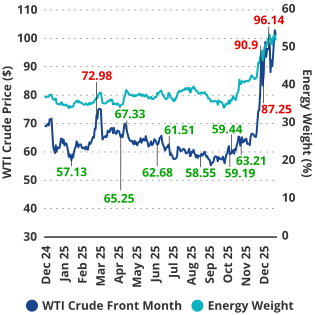
We spent the second half of 2025 working down our gold position and buying energy. We purchased diversified baskets of highly correlated energy holdings, such as WTI, Brent, and heating oil. The chart below tracks our energy trades within PIT — green marks our buys, red marks our sells — illustrated against WTI prices at the time of our transactions. The light blue line shows our total energy weight.
PIT Energy Trades
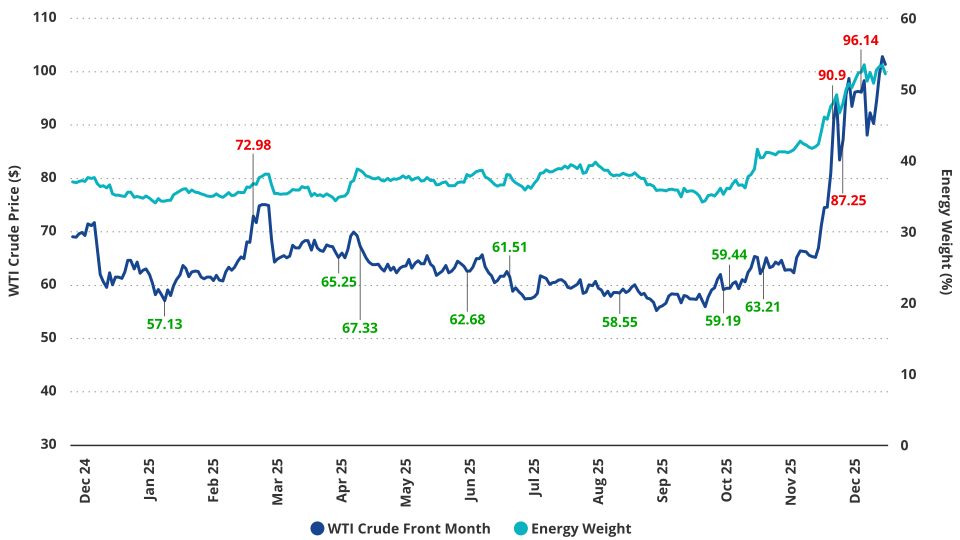
Source: VanEck, Bloomberg; as of April 2026. Past performance is no guarantee of future results.
Recommended subscription
These purchases were funded primarily from sales of metals. We sold diversified baskets of precious and industrial metals, such as gold, silver, and copper. The chart below tracks our metals trades within PIT, shown against gold prices. The dark blue line shows our total metals weight.
PIT Metals Trades
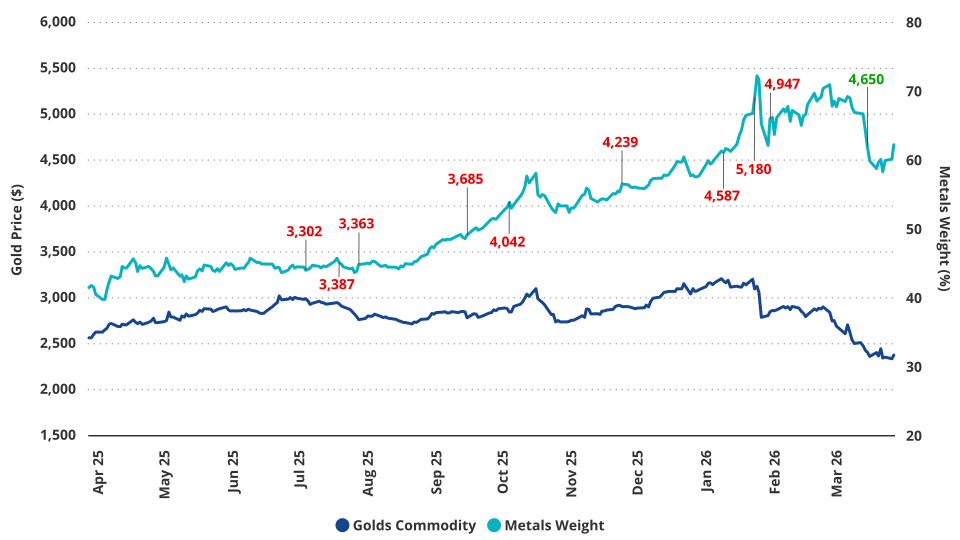
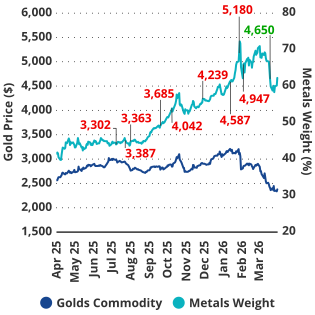
Source: VanEck, Bloomberg; as of April 2026. Past performance is no guarantee of future results.
Recently, we have been going the other way.
To us, energy prices look overbought and precious and base metals look oversold.
But the opportunity is not simply directional. It is structural.
Commodity markets, like equities, are expressing a degree of complacency. The backwardated shape of the futures curve for WTI reflects a market that expects energy prices to fall, with near-term contract prices significantly above those that settle further out. It is even more extreme in Heating Oil/Diesel and European Gas Oil.
PIT's Oil Exposure is Front Heavy
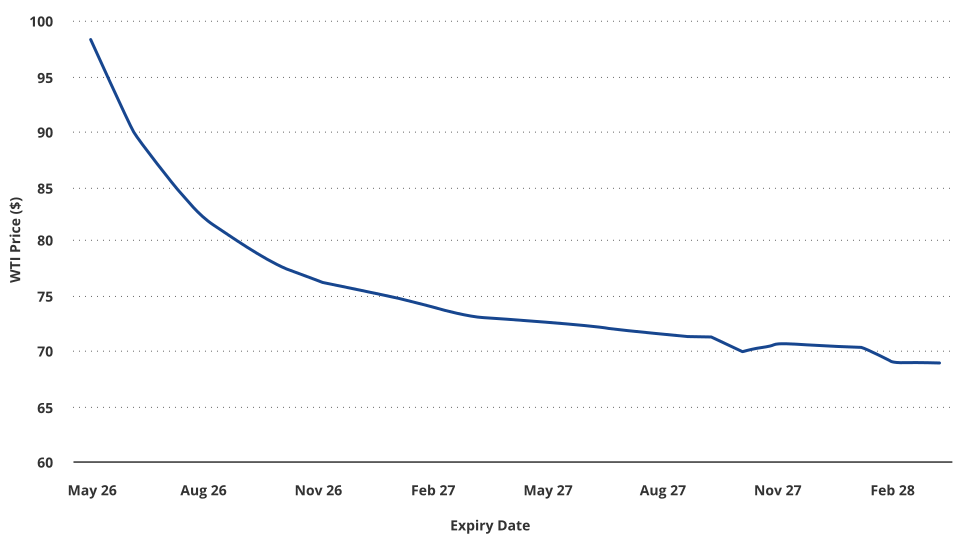
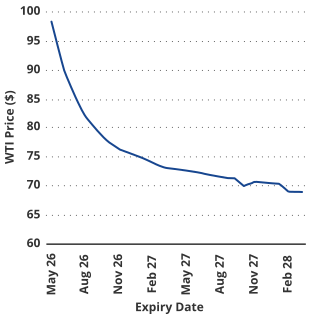
Source: VanEck; as of April 2026.
We are not convinced.
We have shifted a significant portion of our energy exposure in PIT from the front-month to contracts that expire in late summer.
This positioning is intentional.
If higher energy prices prove to be sticky, this positioning benefits. If there is a quick resolution and energy prices fall, the front-month contracts we reduced would be expected to decline more sharply.
Position for Both Outcomes
Markets remain overly complacent.
Equities are near all-time highs. Credit spreads are tight. Energy futures curves are deeply backwardated, suggesting markets expect this to pass quickly.
We are less convinced.
Our job is not to predict outcomes with certainty. It is to define risks and build portfolios that can perform across a range of scenarios.
To receive more Model Portfolio insights, sign up in our subscription center.


Important Disclosures
Index Definitions
The S&P 500 Index consists of 500 widely held common stocks covering the leading industries of the U.S. economy.
The Bloomberg Diesel Index consists of diesel futures contracts and is designed to measure changes in the price of diesel as represented by those futures markets.
Risk Considerations
This is not an offer to buy or sell, or a recommendation to buy or sell any of the securities, financial instruments or digital assets mentioned herein. The information presented does not involve the rendering of personalized investment, financial, legal, tax advice, or any call to action. Certain statements contained herein may constitute projections, forecasts and other forward-looking statements, which do not reflect actual results, are for illustrative purposes only, are valid as of the date of this communication, and are subject to change without notice. Actual future performance of any assets or industries mentioned are unknown. Information provided by third party sources are believed to be reliable and have not been independently verified for accuracy or completeness and cannot be guaranteed. VanEck does not guarantee the accuracy of third party data. The information herein represents the opinion of the author(s), but not necessarily those of VanEck or its other employees.
The models are not mutual funds or other types of securities and will not be registered with the Securities and Exchange Commission as investment companies under the Investment Company Act of 1940, as amended, and no units or shares of the models will be registered under the Securities Act of 1933, as amended, nor will they be registered with any state securities regulator. Accordingly, the models are not subject to compliance with the requirements of such acts.
The portfolio holdings presented represent securities held as of the period indicated and may not be representative of current or future investments. Such data may vary for each client in the strategy due to, but not limited to, asset size, market conditions, client guidelines and the diversity of portfolio holdings. Portfolio holdings are subject to change without notice and are being provided for illustrative purposes only. Nothing contained herein should be construed as (i) an offer to buy any security or (ii) a recommendation as to the advisability of investing in, purchasing or selling any security. This material is being provided for illustrative purposes only. Past performance is no guarantee of future results.
An investment in the strategies may be subject to risks which include, among others, equity securities, market, volatility, futures contract, investments related to bitcoin and bitcoin futures, derivatives, social media analytics, information technology, communication services, consumer discretionary, software and internet software, financials and semiconductor industries, emerging market securities, counterparty, foreign securities, foreign currency, non-U.S. issuers, investment capacity, target exposure and rebalancing, small- and medium-capitalization companies, borrowing and leverage, indirect investment, credit, interest rate, illiquidity, investing in other investment companies, management, non-diversified, operational, portfolio turnover, regulatory, repurchase agreements, tax, cash transactions, authorized participant concentration, no guarantee of active trading market, trading issues, fund shares trading, premium/discount and liquidity of fund shares, U.S. government securities, debt securities, municipal securities, securitized/asset-backed securities, and sovereign bond risks, all of which could significantly and adversely affect the strategies.
Digital asset investments are subject to significant risk and may not be suitable for all investors. Digital asset prices are highly volatile, and the value of digital assets, can rise or fall dramatically and quickly. If their value goes down, there’s no guarantee that it will rise again. As a result, there is a significant risk of loss of your entire principal investment.
All investing is subject to risk, including the possible loss of the money you invest. As with any investment strategy, there is no guarantee that investment objectives will be met and investors may lose money. Diversification does not ensure a profit or protect against a loss in a declining market. Past performance is no guarantee of future performance.
© Van Eck Associates Corporation.
Intelligently-designed exposure across asset classes for diversified portfolios
Important Disclosures
Index Definitions
The S&P 500 Index consists of 500 widely held common stocks covering the leading industries of the U.S. economy.
The Bloomberg Diesel Index consists of diesel futures contracts and is designed to measure changes in the price of diesel as represented by those futures markets.
Risk Considerations
This is not an offer to buy or sell, or a recommendation to buy or sell any of the securities, financial instruments or digital assets mentioned herein. The information presented does not involve the rendering of personalized investment, financial, legal, tax advice, or any call to action. Certain statements contained herein may constitute projections, forecasts and other forward-looking statements, which do not reflect actual results, are for illustrative purposes only, are valid as of the date of this communication, and are subject to change without notice. Actual future performance of any assets or industries mentioned are unknown. Information provided by third party sources are believed to be reliable and have not been independently verified for accuracy or completeness and cannot be guaranteed. VanEck does not guarantee the accuracy of third party data. The information herein represents the opinion of the author(s), but not necessarily those of VanEck or its other employees.
The models are not mutual funds or other types of securities and will not be registered with the Securities and Exchange Commission as investment companies under the Investment Company Act of 1940, as amended, and no units or shares of the models will be registered under the Securities Act of 1933, as amended, nor will they be registered with any state securities regulator. Accordingly, the models are not subject to compliance with the requirements of such acts.
The portfolio holdings presented represent securities held as of the period indicated and may not be representative of current or future investments. Such data may vary for each client in the strategy due to, but not limited to, asset size, market conditions, client guidelines and the diversity of portfolio holdings. Portfolio holdings are subject to change without notice and are being provided for illustrative purposes only. Nothing contained herein should be construed as (i) an offer to buy any security or (ii) a recommendation as to the advisability of investing in, purchasing or selling any security. This material is being provided for illustrative purposes only. Past performance is no guarantee of future results.
An investment in the strategies may be subject to risks which include, among others, equity securities, market, volatility, futures contract, investments related to bitcoin and bitcoin futures, derivatives, social media analytics, information technology, communication services, consumer discretionary, software and internet software, financials and semiconductor industries, emerging market securities, counterparty, foreign securities, foreign currency, non-U.S. issuers, investment capacity, target exposure and rebalancing, small- and medium-capitalization companies, borrowing and leverage, indirect investment, credit, interest rate, illiquidity, investing in other investment companies, management, non-diversified, operational, portfolio turnover, regulatory, repurchase agreements, tax, cash transactions, authorized participant concentration, no guarantee of active trading market, trading issues, fund shares trading, premium/discount and liquidity of fund shares, U.S. government securities, debt securities, municipal securities, securitized/asset-backed securities, and sovereign bond risks, all of which could significantly and adversely affect the strategies.
Digital asset investments are subject to significant risk and may not be suitable for all investors. Digital asset prices are highly volatile, and the value of digital assets, can rise or fall dramatically and quickly. If their value goes down, there’s no guarantee that it will rise again. As a result, there is a significant risk of loss of your entire principal investment.
All investing is subject to risk, including the possible loss of the money you invest. As with any investment strategy, there is no guarantee that investment objectives will be met and investors may lose money. Diversification does not ensure a profit or protect against a loss in a declining market. Past performance is no guarantee of future performance.
© Van Eck Associates Corporation.